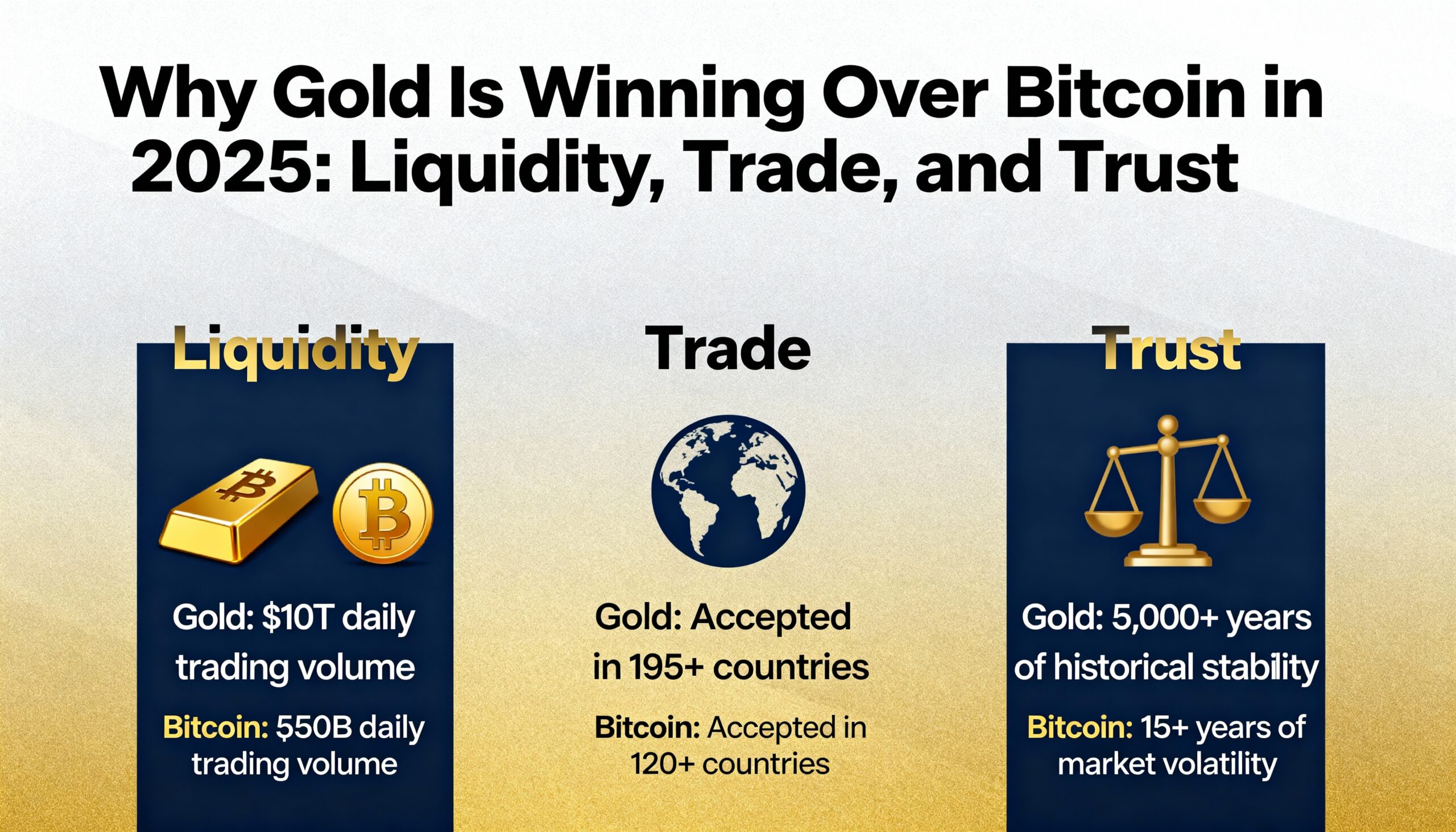
Despite the buzz around bitcoin ETFs, central banks and major investors continue to favor gold for reserves and trade.
Gold is outperforming bitcoin not only in price but in investor confidence. Since spot bitcoin ETFs launched in early 2024, bitcoin has struggled to maintain momentum, while gold has quietly surged. Bitcoin is down roughly 12% over the period, whereas gold has climbed 58%.
Mark Connors, founder and chief macro strategist at Risk Dimensions and former global head of risk advisory at Credit Suisse, attributes the gap to bitcoin’s relative immaturity. “The buyers that matter — central banks, sovereign wealth funds, large asset allocators — they still prefer gold,” he told CoinDesk.
The reason isn’t only volatility or regulatory uncertainty. Gold benefits from centuries of trust, established infrastructure, and ready-made accounts at central banks, while bitcoin remains outside the traditional financial system. “Some of these institutions haven’t exactly called Unchained and said, ‘Can I get a wallet?’ They just aren’t there yet,” Connors said.
The preference is also visible among BRICS nations, including China, India, and Russia, which are accelerating gold accumulation and even using it for oil settlement — a role bitcoin has yet to assume. “There’s a trade component to gold that brings real demand. Bitcoin doesn’t have that yet,” Connors noted.
Recent performance highlights the divergence. Bitcoin is down over 30% from its July peak, while gold steadily trades above $4,100 per ounce. Connors also cites U.S. fiscal policy and liquidity constraints, which disproportionately impact leveraged assets like bitcoin.
While bitcoin’s appeal may grow as trust in fiat currencies declines, Connors cautions that gold remains the preferred asset for institutions. “Gold’s been around forever. Bitcoin is still growing up,” he said.