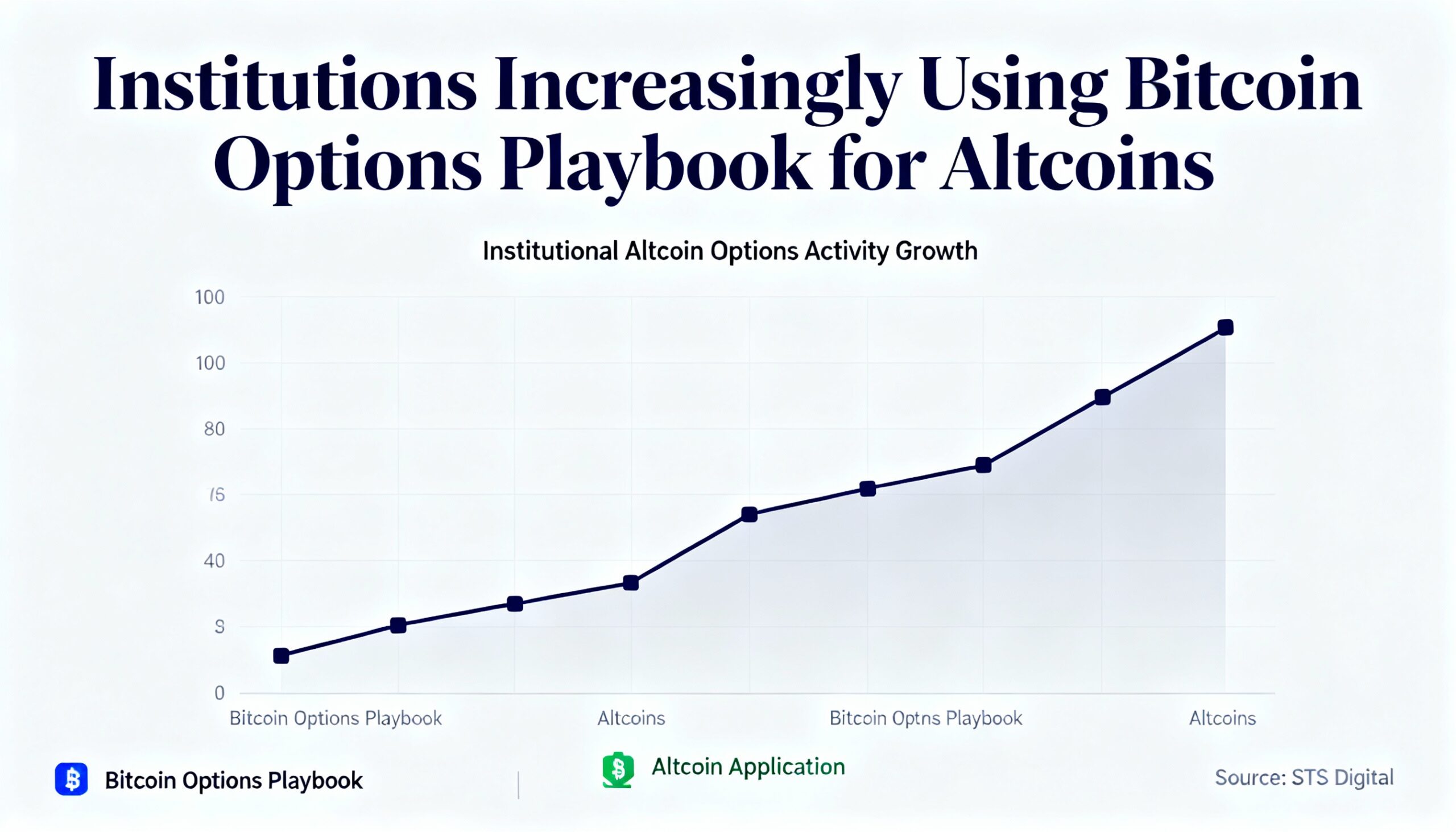
Institutional investors are increasingly applying options strategies developed in bitcoin markets to altcoins as they look to manage volatility and enhance returns, digital assets derivatives trader STS Digital told CoinDesk.
Strategies long used in bitcoin options markets — including covered calls, put selling and downside hedging — are now being adopted across a wider range of cryptocurrencies, according to STS Digital co-founder and CEO Maxime Seiler. The firm’s client base includes token projects and foundations, large holders, venture capital firms and asset managers positioning around liquidity events.
“Historically, many of these strategies were concentrated in bitcoin,” Seiler said. “We’re now seeing institutions and other large market participants extend that playbook to altcoins as they seek more sophisticated ways to manage exposure.”
Options are derivative contracts that give buyers the right, but not the obligation, to buy or sell an asset at a predetermined price on a future date. Call options offer upside exposure, while put options provide protection against price declines. Sellers of options effectively collect a premium in exchange for taking on that risk, similar to writing insurance.
In bitcoin markets, institutions have frequently sold call options above spot prices — a strategy known as covered calls — to generate income on existing holdings. Since the early 2020 market crash, this approach has become a core institutional strategy, alongside selling puts to boost yield during rallies, buying puts to hedge downside risk and purchasing calls to maintain upside exposure.
According to STS Digital, the same approaches are now gaining traction in altcoins. The shift has been reinforced by recent market stress events, including the Oct. 10 selloff, when forced liquidations and auto-deleveraging mechanisms amplified losses across derivatives markets.
“Beyond covered calls, institutions are actively using put selling for yield, downside hedging and call buying to gain upside with defined risk,” Seiler said. “These strategies are increasingly being applied to altcoins as investors look to manage exposure without taking on the forced liquidation risk that drove the October 10 crash.”
STS Digital operates as a regulated digital asset trading firm and principal dealer, providing liquidity and pricing across options, spot markets and structured products for more than 400 cryptocurrencies. The firm settles billions of dollars in altcoin options annually through bilateral trades, acting as the counterparty to clients to provide immediate execution.
While centralized platforms such as Deribit dominate options trading in major tokens like bitcoin, ether, XRP and solana, STS Digital’s broader coverage has positioned it to meet rising institutional demand for options linked to a wider set of digital assets.
Seiler expects options adoption across bitcoin and altcoins to continue growing in the years ahead as institutions increasingly favor derivatives as a risk management tool.
“Periods of consolidation and lower volatility are increasingly viewed as attractive entry points,” he said. “Institutional adoption has accelerated sharply over the past year, and we expect options to remain the preferred way to manage digital asset exposure ahead of the next wave of market catalysts.”