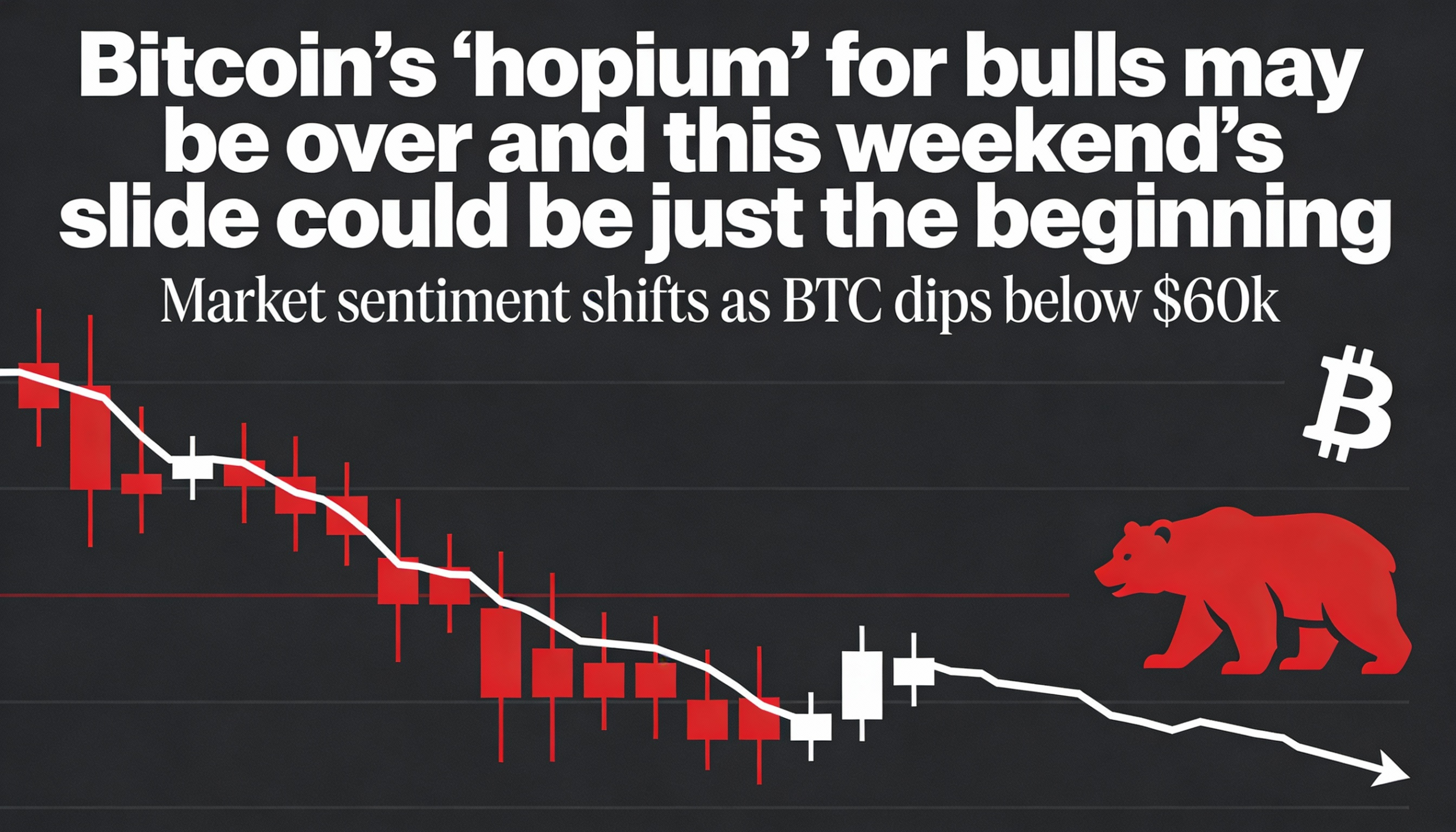
Bitcoin’s Weekend Slide Sparks Liquidations as Analysts Warn of Extended Downtrend
Bitcoin’s sharp decline over the weekend, dipping below $78,000 — its lowest level since April — triggered fresh liquidations and raised concerns about further downside. Profit-taking collided with thinning liquidity and a scarcity of new buyers, leaving the market vulnerable.
Traders told CoinDesk that rallies once supported by corporate demand, particularly from Strategy’s (MSTR) Bitcoin purchases, have lost momentum, exposing markets to forced selling and derivative liquidations.
For some analysts, Saturday’s drop fits a broader bearish trend that has been developing for months. Eric Crown, former NYSE Arca options trader, has argued since late October that Bitcoin is in a sideways-to-downside phase and that hopes for a return to new highs — or a rotation from metals back into crypto — represent misplaced “hopium” for bulls.
“It’s been my view since the end of October that BTC is in a sideways and downside phase… I do not think 80K is a macro low for Bitcoin,” Crown, who now provides market updates to over 200,000 subscribers, told CoinDesk, suggesting the recent price action is part of a larger corrective regime.
Options market activity reflects this bearish sentiment. Traders are increasingly betting that Bitcoin will fall below $75,000 while abandoning bullish $100,000 call positions. The dollar value of $75,000 put options on Deribit now stands at $1.159 billion, nearly matching the $1.168 billion in $100,000 calls, signaling growing downside conviction.
Technical indicators also point to potential further declines. The monthly MACD crossed down in November, a rare signal historically preceding extended downturns. The weekly 21 vs. 55 EMA recently turned bearish, typically followed by multi-month losses, while the 2025 yearly chart closed with a “shooting star” candlestick pattern, often signaling medium-term reversals.
Compounding bearish pressure, Bitcoin has diverged from traditional markets since October, falling while equities and other risk assets held steady — a pattern Crown identifies as late-cycle risk-off behavior. “People generally sell the more speculative assets first,” he said.
Crown also points to the speculative washout from October’s $19 billion crash, which liquidated many leveraged altcoin positions and left traders hesitant to re-enter at higher levels.
While not as extreme as some cyclical bears, Crown warns Bitcoin could fall further — potentially into the mid-$50,000 to low-$60,000 range — before stabilizing. He notes that this zone may present a value-accumulation opportunity for long-term investors rather than signaling the end of crypto’s broader cycle.