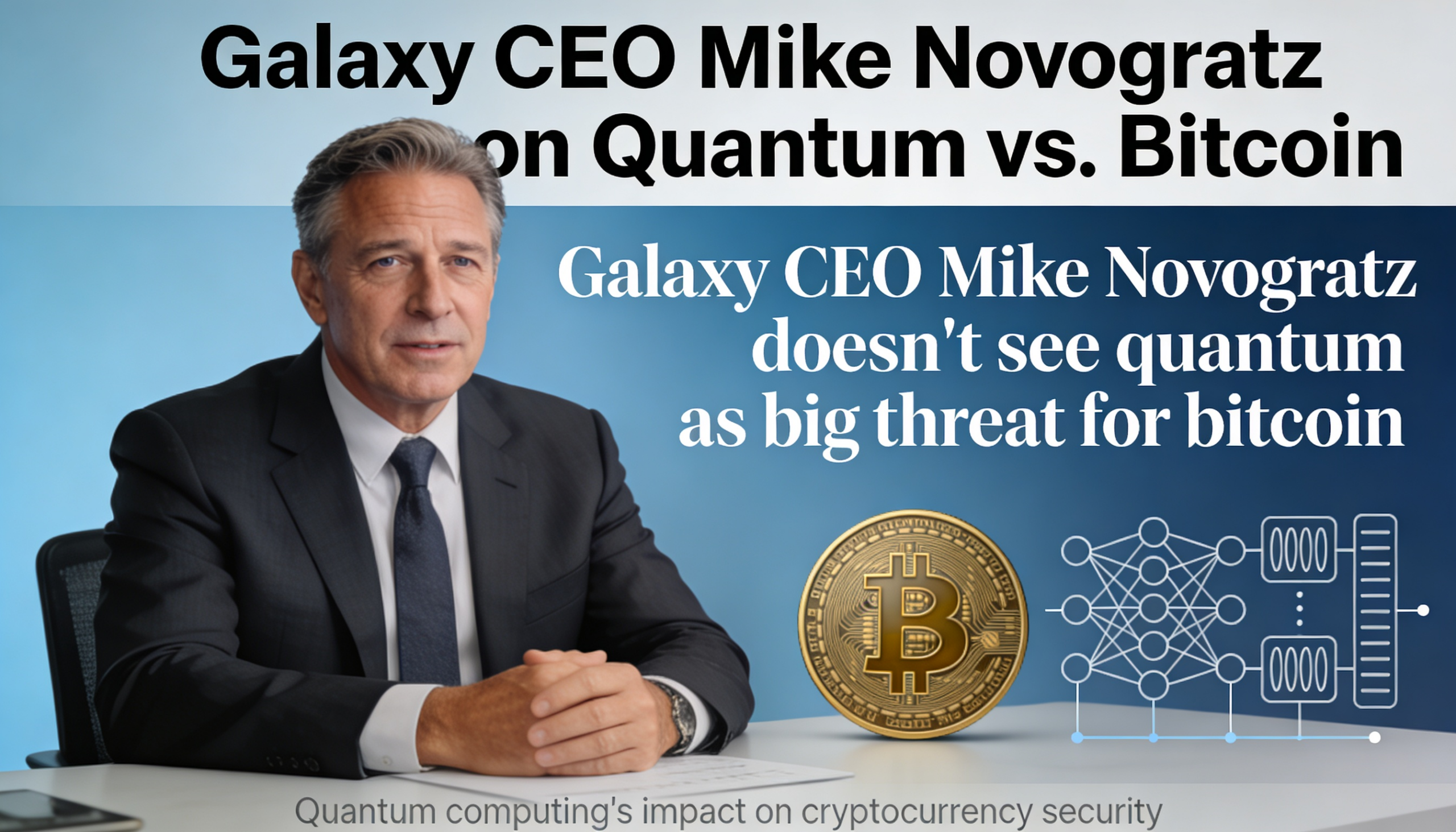
Galaxy Digital CEO Mike Novogratz says profit-taking by early Bitcoin adopters is real, signaling a gradual erosion of the once-sacrosanct “HODLing” mindset that defined the cryptocurrency’s earliest believers.
Speaking during the firm’s earnings call on Tuesday, Novogratz pushed back on growing concerns that quantum computing poses an existential threat to Bitcoin, suggesting instead that the narrative has become a convenient justification for selling.
“Quantum has been the big excuse for people,” he said, adding that the technology is being overstated as a near-term risk. “I think in the long run, quantum will not be a huge issue for crypto. It’ll be a big issue for the world, but crypto—Bitcoin especially—will be able to handle it. But that’s been the excuse [for selling].”
The debate around quantum computing and its potential to compromise Bitcoin’s cryptography has intensified in recent months. Last month, Jefferies’ global head of equity strategy, Christopher Wood, removed a 10% Bitcoin allocation from his model portfolio, citing quantum-related risks. Coinbase has also acknowledged quantum computing as a possible long-term threat to the crypto market, while the Ethereum Foundation elevated post-quantum security to a strategic priority this month by forming a dedicated Post-Quantum team.
Still, Novogratz argued that while quantum computing is a legitimate technological concern, it remains in its infancy—and Bitcoin will have time to adapt. “As we get closer to quantum, we’re going to get closer to quantum-resistant,” he said. “And you will have the Bitcoin code changed in time.”
Some Bitcoin developers echo that view, noting that machines capable of breaking Bitcoin’s cryptography do not exist today and are unlikely to for decades. Even so, for certain investors, the theoretical risk is enough to challenge Bitcoin’s long-held “store of value” narrative.
OGs taking profit
Novogratz also addressed growing questions around whether long-term Bitcoin holders—often referred to as “OGs”—are cashing out.
The debate gained momentum last year after Galaxy disclosed it had facilitated the sale of more than 80,000 bitcoin, worth roughly $9 billion at the time, for a Satoshi-era investor. The firm said the transaction, one of the largest in Bitcoin’s history, was driven by estate planning considerations.
That sale reignited concerns that the early Bitcoin community—long defined by an almost religious commitment to holding through volatility—was beginning to lose conviction. Novogratz said the shift is real, and once selling begins, it tends to accelerate.
“You sell a little more, you sell a little more, and it is so hard to HODL,” he said. “There were a tremendous amount of these religious believers in this concept of HODLing and not letting go of your bitcoin. And somehow that fever broke, and you started seeing some selling.”