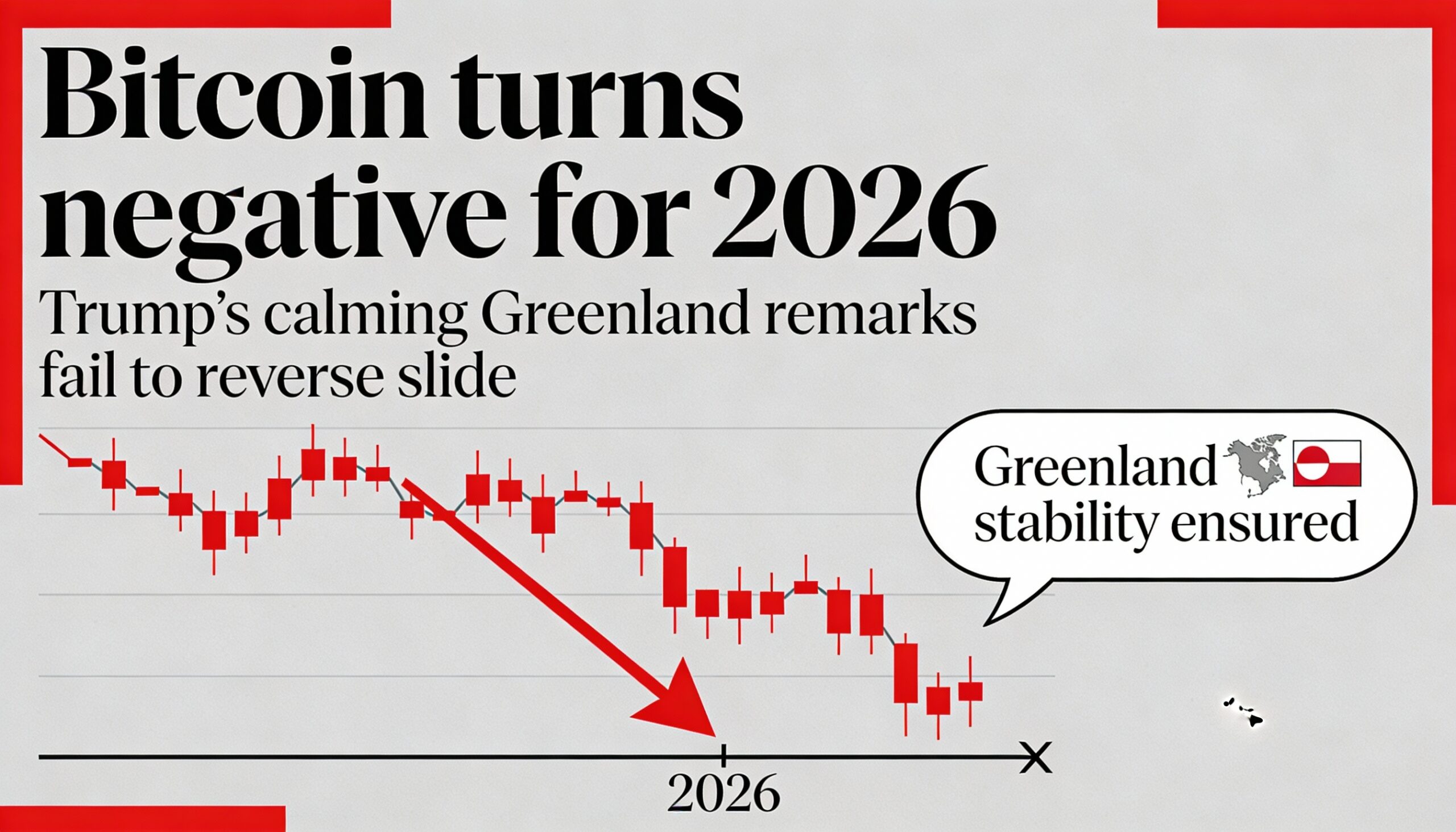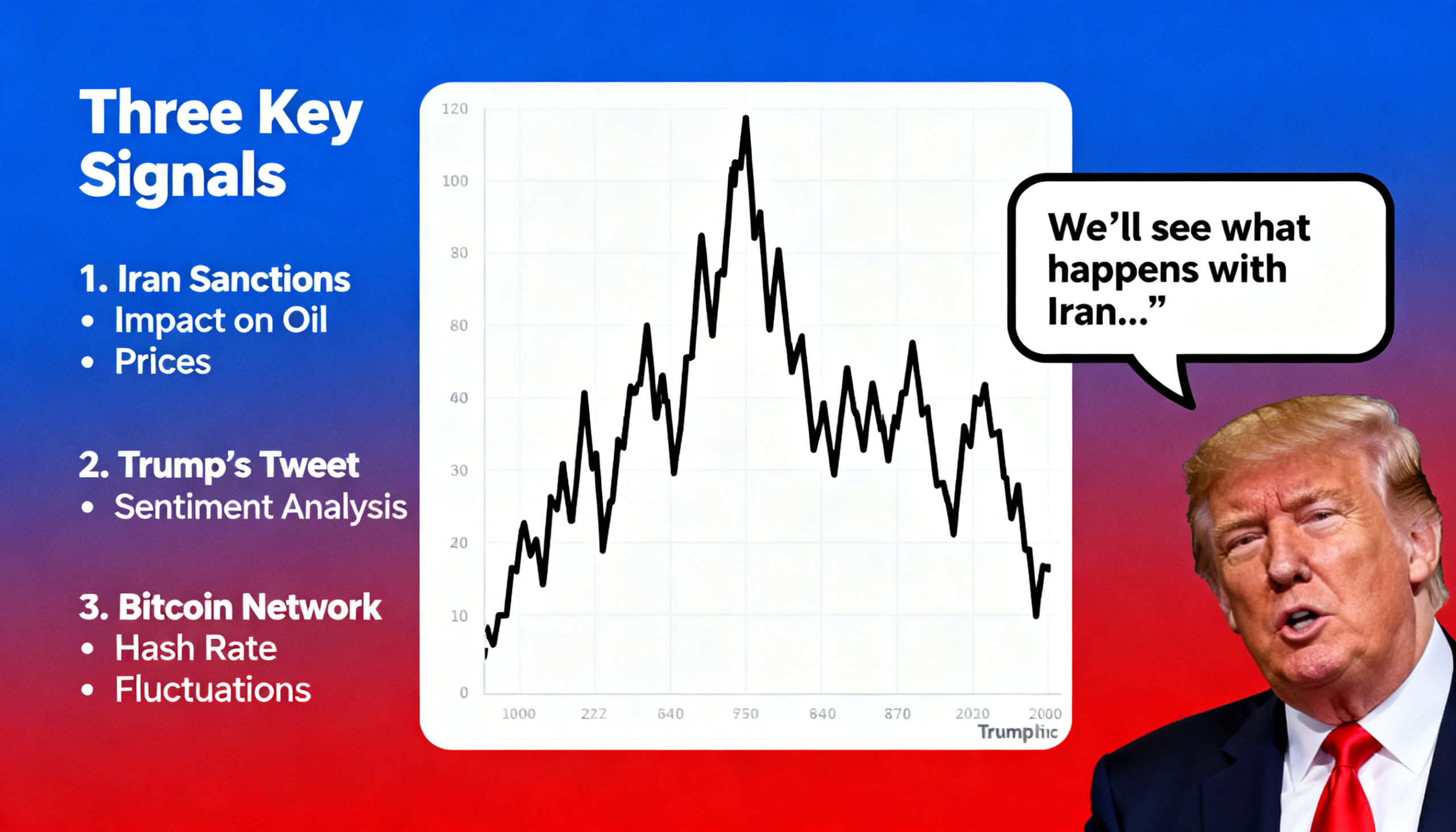
Bitcoin and other risk assets have been caught in a relentless cycle of gains and losses as President Donald Trump’s shifting rhetoric on Iran continues to dominate market sentiment. With prices reacting to headlines rather than fundamentals, traders are finding it increasingly difficult to navigate the volatility.
In recent weeks, bitcoin has whipsawed between rallies and selloffs. Optimistic signals around a potential de-escalation have lifted crypto and equities while pushing oil lower, only to be quickly reversed by more hawkish comments that send crude higher and risk assets back down. The result is a market driven by uncertainty, where direction changes almost daily.
Against this backdrop, a few key indicators provide a clearer picture of underlying risks—and they point to growing pressure on global markets.
At the center is the disruption in oil supply. Since the conflict began in late February, flows through the Strait of Hormuz—which accounts for about 20% of global seaborne oil trade—have nearly collapsed. To cushion the impact, the International Energy Agency coordinated a record release of strategic reserves, injecting more than 400 million barrels into the market.
These reserves have helped offset a supply shortfall of roughly 4.5 to 5 million barrels per day. However, they are expected to be depleted within weeks. If shipping through Hormuz does not resume, the deficit could expand sharply to as much as 10 to 11 million barrels per day, creating a significant supply shock.
Such a development would likely trigger broad risk aversion across both crypto and traditional markets, regardless of political messaging. In effect, the trajectory of bitcoin may hinge less on rhetoric and more on whether physical oil supply is restored.
Shipping insurance premiums offer another important signal. The cost of insuring vessels through the Strait of Hormuz has surged from under 1% of a ship’s value before the conflict to as high as 7.5%. For a $100 million tanker, that represents millions of dollars per trip.
A meaningful decline in these premiums—particularly below 2%—would indicate improving conditions and could signal a safer environment for risk-taking. Until then, elevated costs underscore ongoing disruption and uncertainty.
For now, there is little evidence of normalization. Despite suggestions that the route could reopen, tanker traffic remains severely constrained, with only a fraction of the usual volume passing through the strait compared to pre-conflict levels.
Ultimately, while headlines continue to drive short-term price swings, a sustained recovery in bitcoin and other risk assets will likely depend on tangible improvements in these real-world indicators. Until oil flows stabilize and shipping activity resumes, volatility is expected to remain a defining feature of the market.