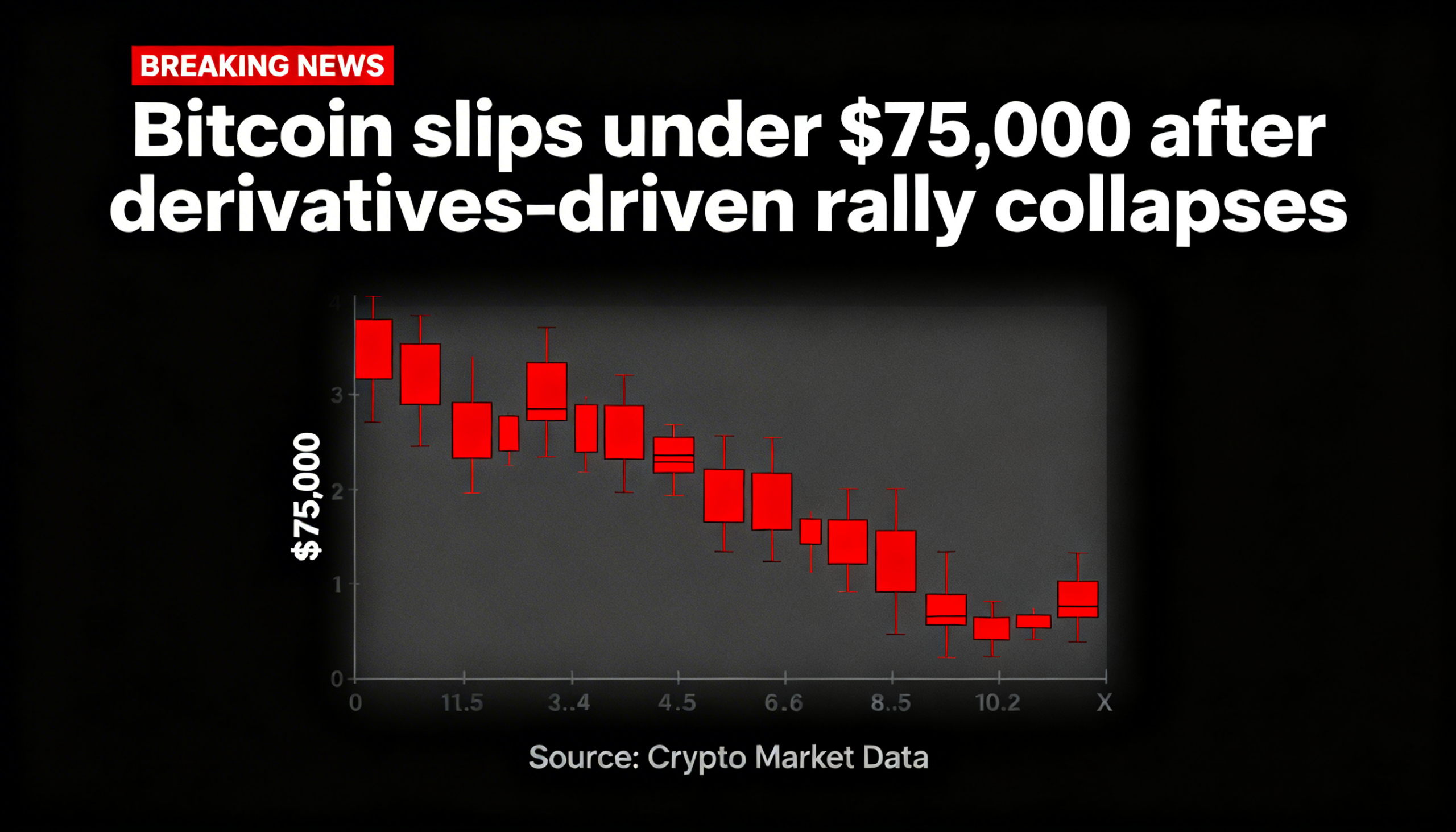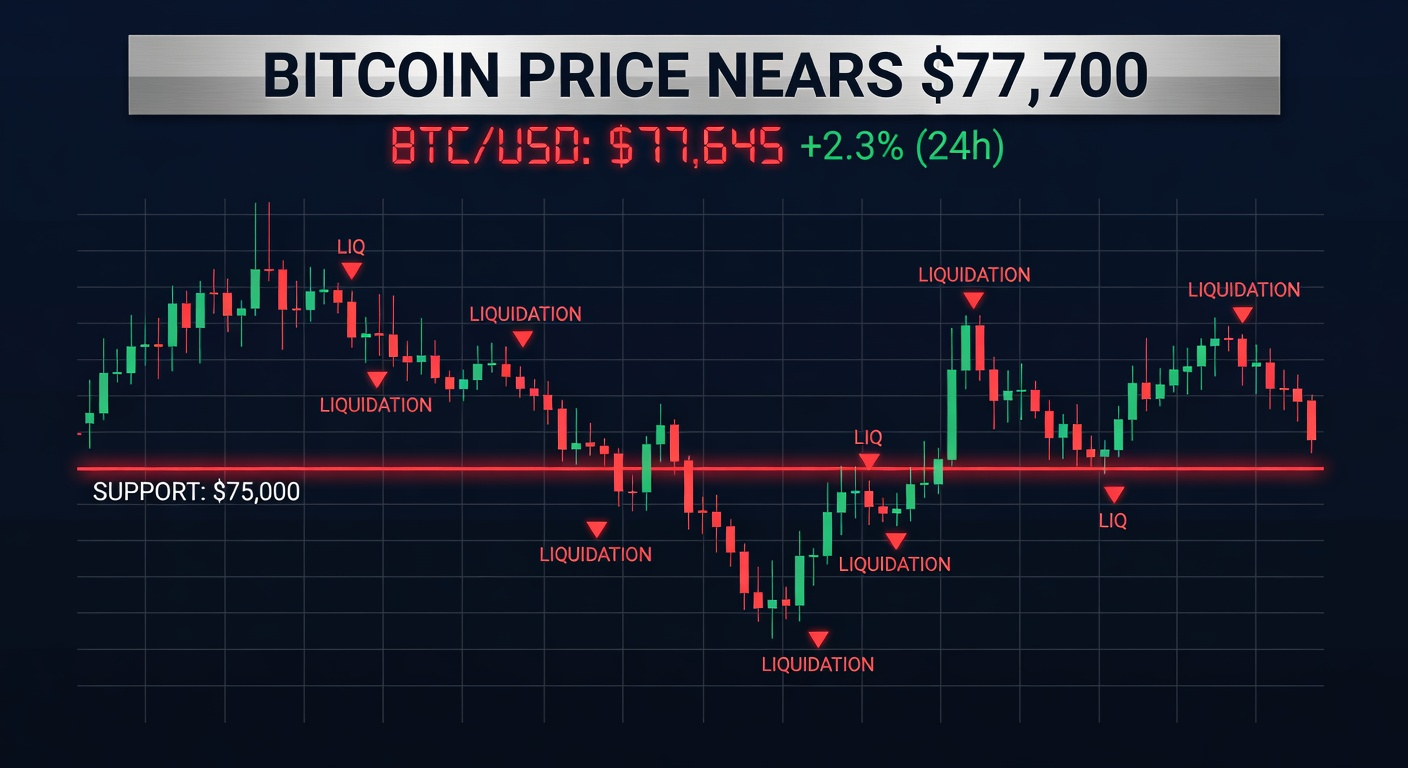
Bitcoin traded near $77,733 during midday Hong Kong hours, holding relatively steady over the past 24 hours after briefly dipping to $76,685 and failing to sustain levels above $78,000 during U.S. trading sessions, according to CoinDesk data.
The broader move came amid a liquidation-heavy session in crypto markets, though derivatives indicators suggest the downturn was driven more by leverage unwinding than by a structural shift in sentiment.
Open interest, which tracks outstanding leveraged futures positions, remained largely stable throughout the selloff. Funding rates also stayed subdued or turned negative, indicating that traders were not heavily positioned on the long side ahead of the move. According to HashKey Group senior researcher Tim Sun, this points to positioning being relatively cautious rather than overly bullish going into the decline.
Sun noted that the absence of excessive leveraged long buildup suggests the recent liquidations were concentrated among short-term traders attempting to “buy the dip,” rather than a broad market unwind. He added that current price action does not indicate a deeper trend reversal, with a near-term support range around $75,000–$77,000 remaining intact.
However, he emphasized that macroeconomic conditions remain the dominant headwind. Rising long-term yields, persistent inflation concerns, and elevated oil prices are contributing to a risk-off environment, with investors showing limited appetite for new capital deployment into speculative assets.
Data from CoinGlass showed roughly $200 million in crypto liquidations over the past 24 hours, split nearly evenly between long and short positions, suggesting a volatile two-way flush rather than a one-sided market collapse.
Sun highlighted the recent move in the U.S. 30-year Treasury yield above 5% as a key pressure point. Higher yields increase the opportunity cost of holding non-yielding assets such as bitcoin while tightening overall financial conditions across risk markets.
Looking ahead, he said geopolitics could act as a key catalyst. A de-escalation in U.S.-Iran tensions, for example, could ease oil prices and inflation expectations, potentially softening yield pressures and supporting a recovery in bitcoin.
Until then, if yields remain elevated and geopolitical risks persist, bitcoin is likely to remain range-bound in a defensive structure, with the $75,000 to $77,000 zone acting as a critical short-term support area.