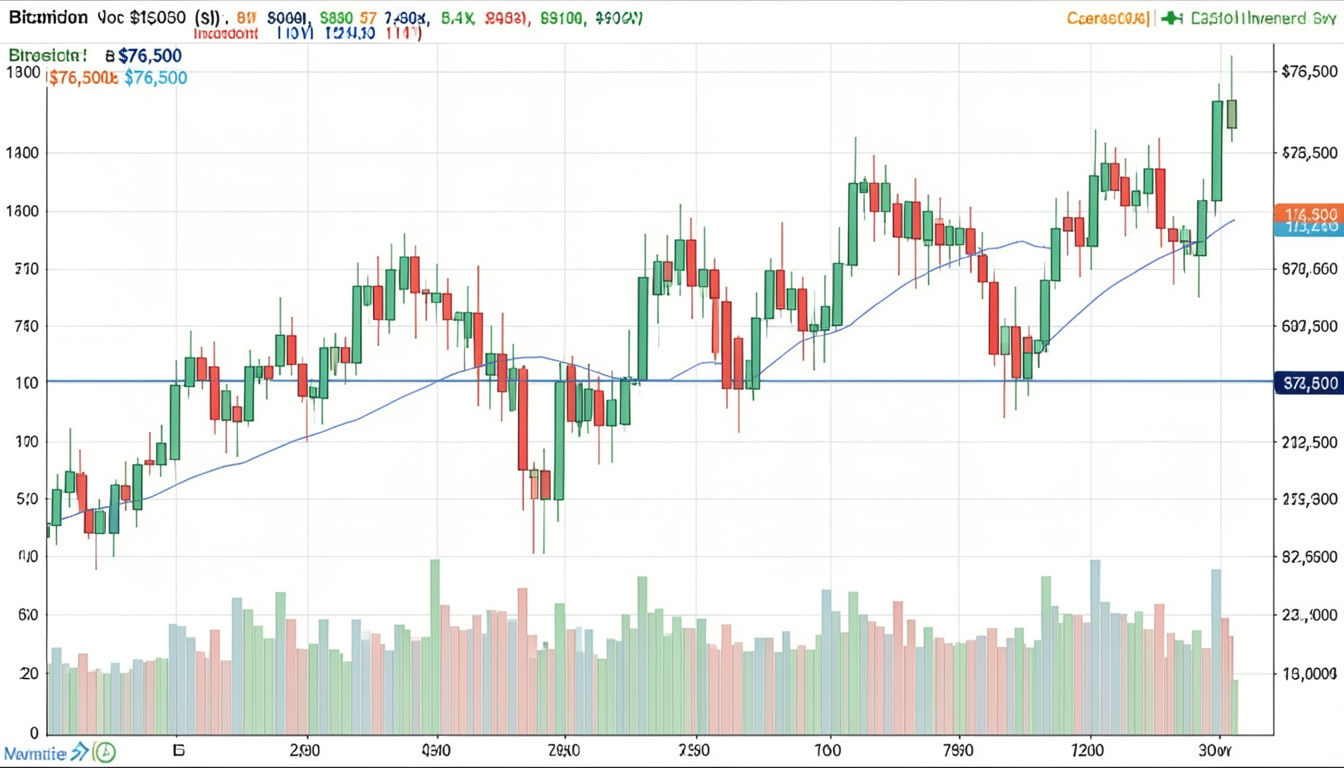
Bitcoin hovered around $76,500 during mid-day trading in Hong Kong, holding within a tight range as market activity remained subdued following the long U.S. weekend, according to CoinDesk data.
Market participants appear cautious, with prediction platform Polymarket indicating a 60% probability that BTC will close the week above $76,000, while maintaining support above $74,000. Despite this, liquidity remains thin. Singapore-based market maker Enflux noted that while buying interest exists, traders are hesitant to increase position sizes.
On-chain data from Glassnode reflects a similar dynamic. Its latest weekly report suggests that buying and selling pressures are becoming more balanced, but overall activity has weakened—signaling a market waiting for a clear macroeconomic trigger.
Traders are neither aggressively hedging for a downside move nor positioning for a breakout, reinforcing the current state of indecision.
According to Enflux, Bitcoin’s recent price behavior highlights not just what the asset has done, but what it hasn’t. Even amid significant macro developments—such as Moody’s downgrade of U.S. sovereign debt and warnings from Walmart بشأن الضغط على margins due to geopolitical fuel costs and softer consumer demand—Bitcoin has shown limited reaction.
While some interpret this stability as resilience, Enflux suggests it may point more toward market fatigue.
A key missing factor appears to be fresh institutional inflows. After attracting $2.44 billion in April, U.S. spot Bitcoin ETF demand has slowed. Meanwhile, exchange reserves remain near decade lows at approximately 2.3 million BTC, indicating a structurally tight supply environment. However, constrained supply alone has not been enough to drive prices higher without renewed demand.
Attention now turns to next week’s Personal Consumption Expenditures (PCE) inflation report, the Federal Reserve’s preferred measure of inflation. A stronger-than-expected reading could reinforce expectations of prolonged higher interest rates, potentially boosting the U.S. dollar and Treasury yields while weighing on Bitcoin.
Conversely, a softer inflation print could revive expectations for monetary easing, potentially drawing institutional investors back into the crypto market.