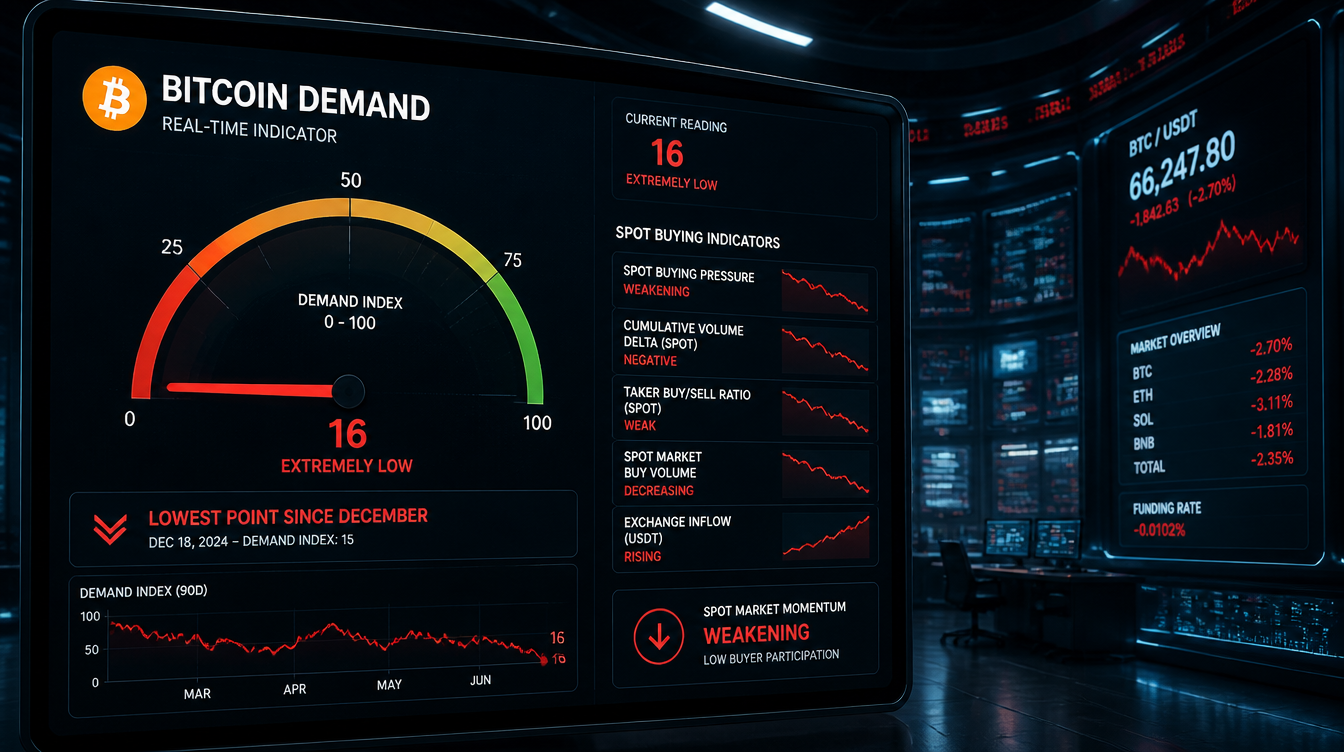
Bitcoin’s recent rebound is running into a clear demand shortfall, raising questions about the strength of the current move.
According to CryptoQuant, the 30-day apparent demand metric has dropped to -147,000 BTC, its weakest level since December 2025. This comes even as bitcoin continues to trade in the mid-$70,000 range after recovering from April lows near $65,000.
The indicator measures the balance between new supply — including freshly mined coins and older bitcoin returning to circulation — and the amount being absorbed by the market. Positive readings suggest buyers are effectively soaking up supply, while negative readings indicate excess coins are hitting the market without sufficient demand to match.
That imbalance is now weighing on the rally.
While bitcoin has staged a strong recovery from its April lows, the move has not been supported by robust spot demand, which is typically needed to sustain longer-term uptrends. Earlier in May, the metric had improved significantly, rising from around -91,000 BTC in April to near -11,000 BTC — close to equilibrium. The latest drop back to deeply negative territory suggests that progress has reversed.
The data implies that derivatives markets have been the primary driver of the recent price bounce. Rallies fueled by futures positioning tend to be more fragile, as leveraged trades can unwind quickly when funding rates shift or liquidations occur. In contrast, spot buying is generally more durable, as it reflects full capital commitment and actual accumulation of bitcoin.
This doesn’t necessarily mean an immediate downside move is imminent. Weak demand conditions can persist while prices consolidate within a range. However, it does leave the market increasingly reliant on fresh spot inflows if bulls are to push prices higher.
Absent that demand, the $70,000 level remains a key area to watch. CryptoQuant identifies this zone as the short-term holder realized price — a level where recent buyers’ unrealized gains begin to vanish, potentially reducing selling pressure but also limiting upward momentum.