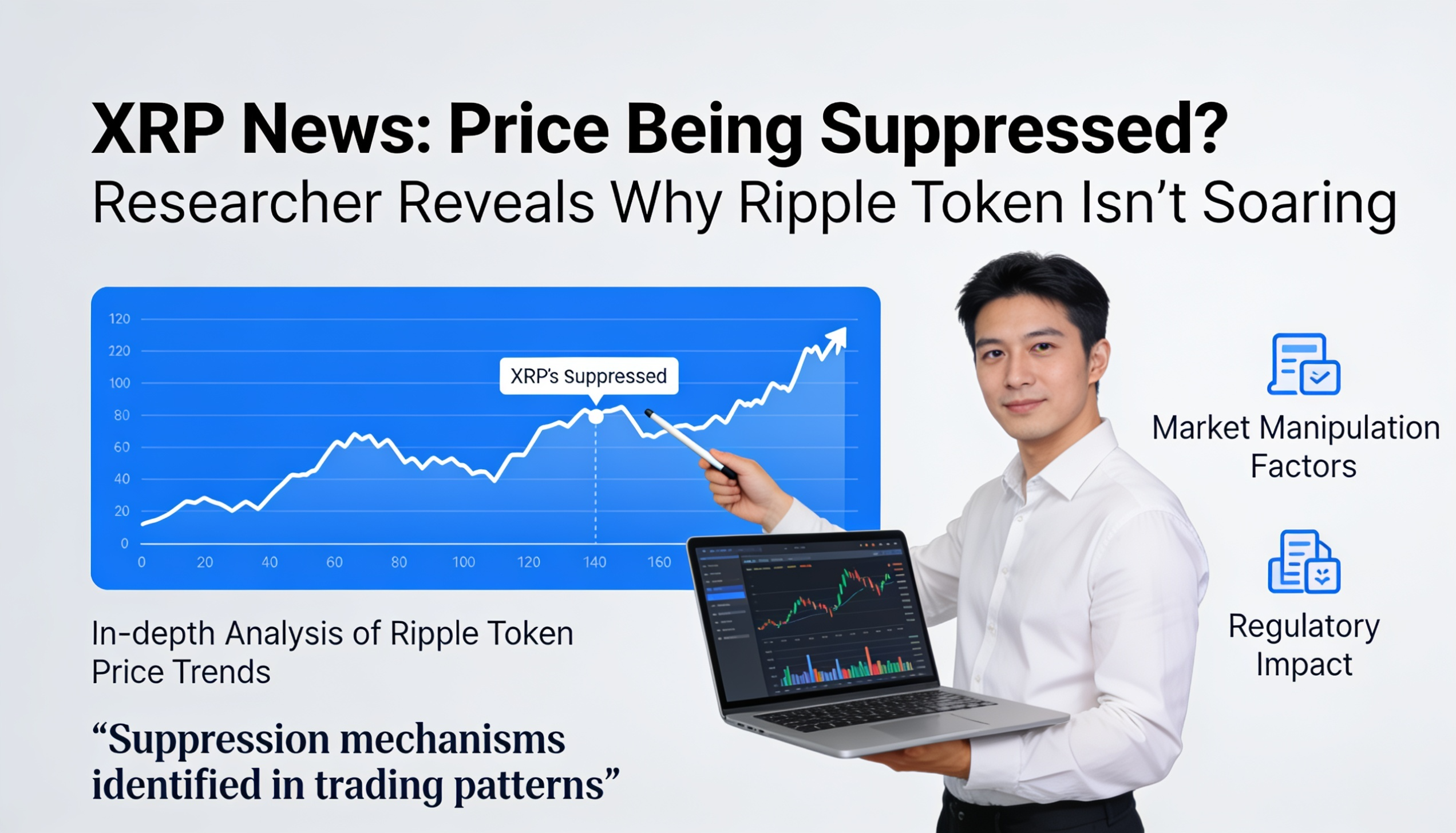
Jesse from Apex Crypto has sparked debate by suggesting that XRP’s price may be intentionally restrained. His argument centers on a 2021 Citibank paper that initially referenced a “Regulated Internet of Value” before the term was later changed to “Regulated Liability Network.” Jesse contends that the revision was made to distance the concept from Ripple, as the original language drew a more direct connection to the company’s vision.
Considering Ripple’s extensive institutional partnerships and the ambitions of the Interledger Protocol, XRP’s relatively subdued price performance raises questions for some market observers. Citibank’s Tony McLaughlin has described the Regulated Liability Network as a shared-ledger system designed for tokenized bank deposits—a framework that closely aligns with the type of financial infrastructure Ripple has sought to build since its inception.
Discover: The Best Crypto to Diversify Your Portfolio
Beyond XRP News: Examining the Citibank Paper and Institutional Motivations
Jesse’s thesis follows a clear sequence. He argues that Citibank’s 2021 use of the phrase “Regulated Internet of Value” mirrored Ripple’s long-standing Internet of Value concept and the Interledger Protocol. According to his interpretation, the later rebranding to “Regulated Liability Network” effectively removed the apparent association with Ripple.
The theory extends beyond terminology. McLaughlin has publicly stated that the Regulated Liability Network and the broader shared-ledger model represent essentially the same vision. Meanwhile, the Bank for International Settlements has explored the idea of a unified ledger system capable of modernizing cross-border payments, potentially reducing reliance on traditional correspondent banking networks and even challenging SWIFT’s role in global settlements.
Under Jesse’s reasoning, if XRP—or technology derived from Ripple’s ecosystem—ultimately supports such infrastructure, major financial institutions would have little interest in seeing the underlying asset experience extreme price volatility.
Ripple CEO Brad Garlinghouse has previously argued that XRP’s multi-billion-dollar daily trading volume makes it far too liquid for any single participant to manipulate. Similarly, Ripple CTO David Schwartz has noted that XRP’s market performance has generally moved in line with other large-cap altcoins.
It is also important to note that the SEC’s approximately 18-month investigation preceding its 2020 enforcement action against Ripple did not produce evidence of price manipulation. Jesse’s case relies primarily on document analysis and perceived institutional connections rather than direct proof, such as trading records, internal communications, or regulatory disclosures.
As Jesse himself acknowledges, the issue remains open to interpretation. Nevertheless, the discussion has gained traction within the crypto research community, where comparisons between emerging institutional settlement frameworks and XRP’s long-term price behavior are increasingly being examined rather than dismissed.