The rally lacks a clear catalyst, with no announcements to explain it, little movement across other dog-themed tokens, and trading activity largely concentrated on South Korean exchanges.
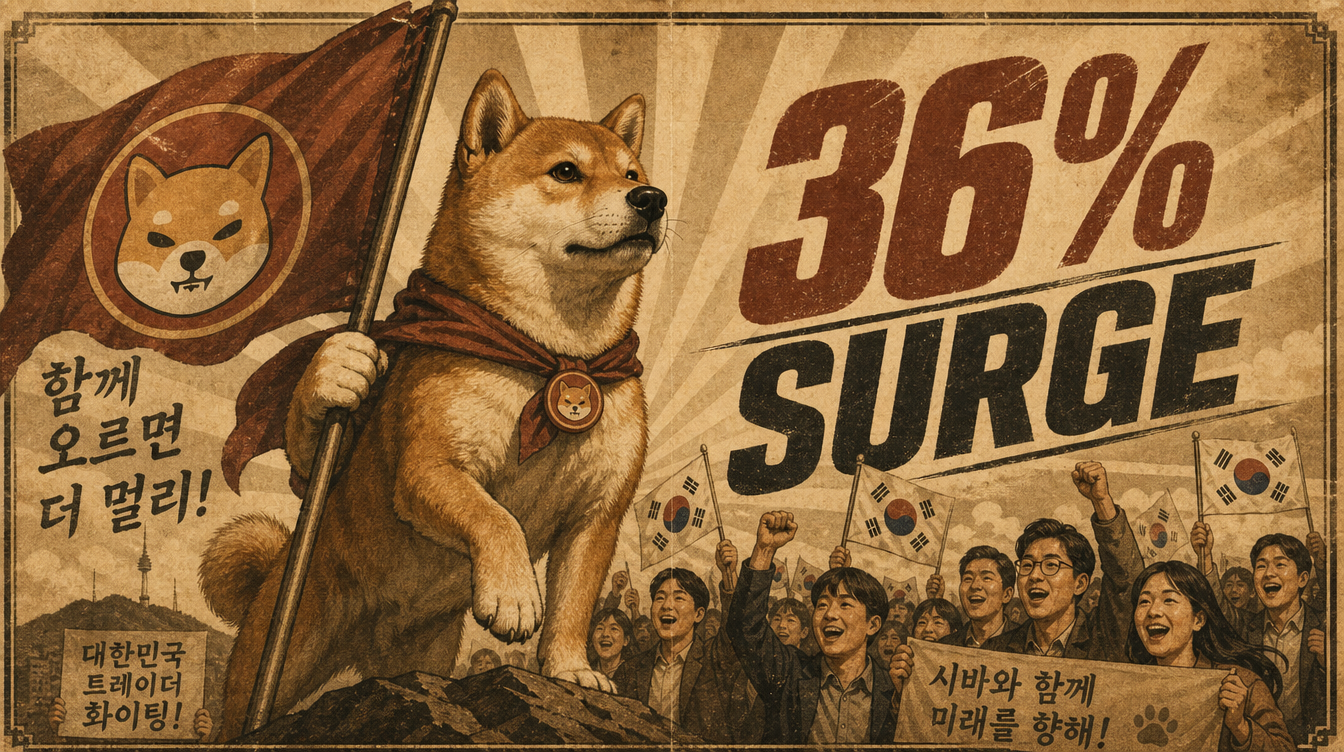
Shiba Inu surged 36% on Sunday to roughly $0.0000057, adding close to $1 billion to its market capitalization in a single day despite no obvious news or development driving the move.
The token now has a market cap of about $3.4 billion, supported by nearly $380 million in daily trading volume — its highest level in months.
There have been no significant updates from Shibarium, the project’s layer-2 network, and the broader memecoin sector has underperformed. Dogecoin rose just 6% over the same period, while smaller tokens gained up to 10%, suggesting the rally is largely isolated to SHIB rather than part of a broader memecoin trend.
South Korean demand stands out as a key factor. The SHIB/KRW pair on Upbit is the largest market, accounting for about $62 million in volume — more than 10% of global trading — and trades at a slight premium compared to Binance and other USD-based exchanges.
Traders in South Korea are known for driving sharp, momentum-fueled rallies in volatile assets, and SHIB’s price action reflects that pattern: an initial spike late Saturday, a period of consolidation, followed by another push during Asian trading hours.
Short sellers were caught in the move, with roughly $6 million in SHIB and 1000SHIB positions liquidated across about 2,300 traders. Around $5 million of those were short positions, with the largest wave of liquidations occurring during the second leg of the rally. However, these liquidations appear to have followed the price rise rather than triggered it and are too small to fully explain the scale of the move.
Shiba Inu was launched in August 2020 as an Ethereum-based token created by the anonymous developer Ryoshi, marketed as a “Dogecoin killer” without a clear underlying product.
Since then, the project has introduced Shibarium, a layer-2 network, and expanded its ecosystem. Still, SHIB remains well below its 2021 peak and continues to trade largely on retail-driven sentiment rather than fundamental developments.