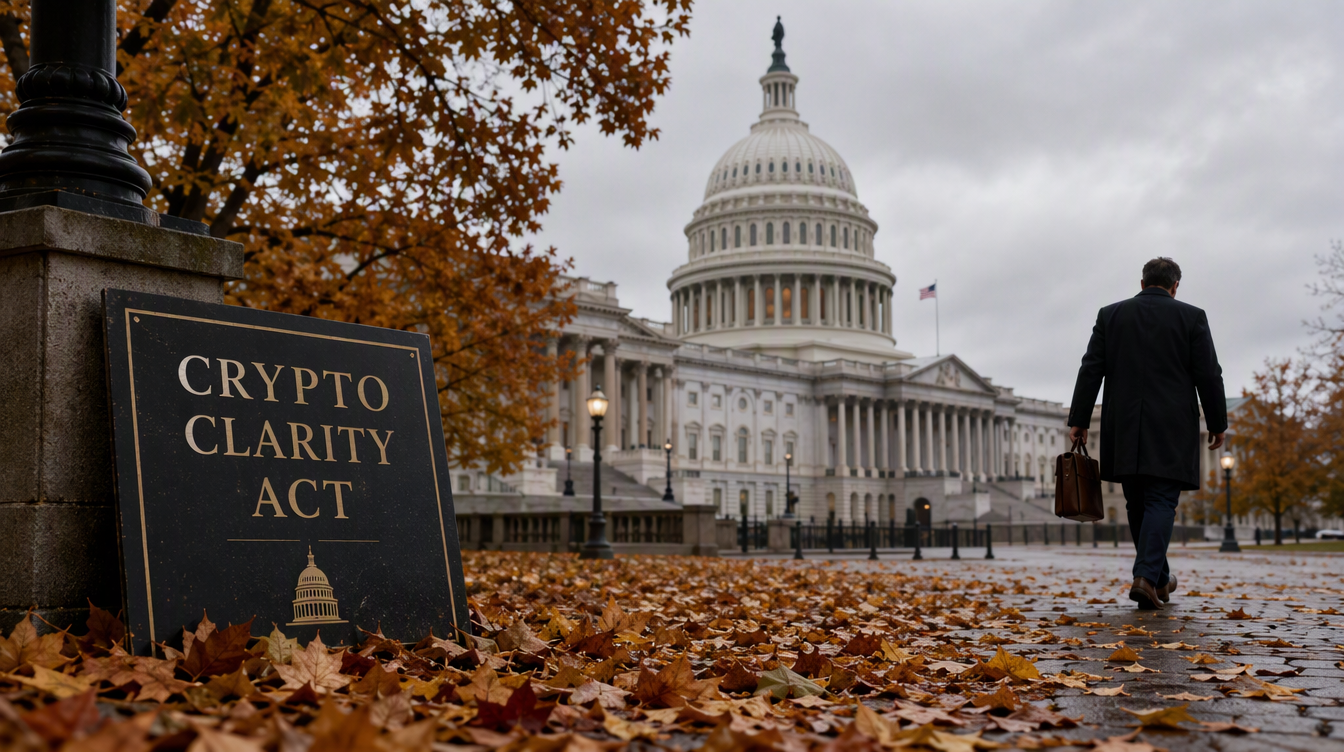
The U.S. Senate is putting the crypto Clarity Act on hold for now as lawmakers prioritize other legislative matters, leaving the digital asset industry waiting for a chance to advance its key regulatory proposal.
The Digital Asset Market Clarity Act has been temporarily sidelined while Senate leaders focus on unrelated priorities, including Russia sanctions legislation and federal nominations. The delay further pushes back the crypto industry’s main policy initiative amid a crowded legislative calendar with limited time available.
Senate Majority Leader John Thune began the week by advancing a package of nominations and is expected to move toward a Russia sanctions bill next, beginning the cloture process. Under Senate procedures, which involve several debate stages and waiting periods, only one major contested bill can typically move forward at a time. As a result, the Clarity Act is unlikely to receive consideration until those matters are completed, potentially taking several days.
The Russia sanctions measure would target Russia’s leadership and impose tariffs on certain trading partners. The bill is also being dedicated to the late Senator Lindsey Graham, a longtime supporter of the legislation. His funeral services in Washington and South Carolina are expected to limit Senate activity on Tuesday and Wednesday.
Given the current schedule, the Clarity Act is unlikely to reach a vote before next week, leaving only a short window before the Senate begins its summer recess on August 8. The legislation also still faces unresolved issues, including a controversial ethics provision that would restrict senior government officials, including President Donald Trump, from participating in crypto-related ventures.
Although Thune has expressed interest in moving the bill before the recess, he has acknowledged that the Senate must first determine whether enough votes exist to proceed.
With the legislative calendar nearing its break, every hour of Senate floor time has become increasingly valuable. The unresolved debate over government ethics provisions remains one of the biggest obstacles, and continued disagreements could reduce the chances of the Clarity Act becoming law in 2026.
If the bill fails to advance, the crypto industry may need to look toward other regulatory pathways, including the rollout of the GENIUS Act and ongoing policy initiatives from the Securities and Exchange Commission and Commodity Futures Trading Commission.
For the Senate, the industry’s best remaining opportunity may be to begin the cloture process shortly before lawmakers leave for recess.
While a similar version of the Clarity Act has already passed through the House of Representatives, the Senate has remained the primary challenge for the legislation. Earlier disputes centered on how stablecoin rewards should be treated, eventually resulting in a compromise limiting programs that could compete with traditional bank deposits. The debate later shifted toward restrictions on government officials’ involvement in digital assets.
Progress appeared possible last week after Trump agreed to consider limits on his crypto-related activities. White House officials described the move as a significant ethics commitment, while Democrats argued the restrictions did not go far enough. Both sides, however, agreed to continue negotiations.
Congress is expected to return briefly in September, but available floor time will be limited. Following the November elections, lawmakers will enter the “lame duck” session, a period that can either produce last-minute agreements or become stalled by political disagreements.
Even if the Senate approves the Clarity Act, the bill would still need another vote in the House, where internal Republican disputes have recently slowed other legislative efforts. If both chambers approve the measure, it would then move to the president’s desk for final approval.
Trump has recently blocked unrelated bipartisan legislation while pushing lawmakers to address voter identification requirements before the midterm elections. Although he has supported advancing the Clarity Act, it remains uncertain whether the bill would receive his signature. If an approved bill receives no presidential action within 10 days, it would automatically become law.