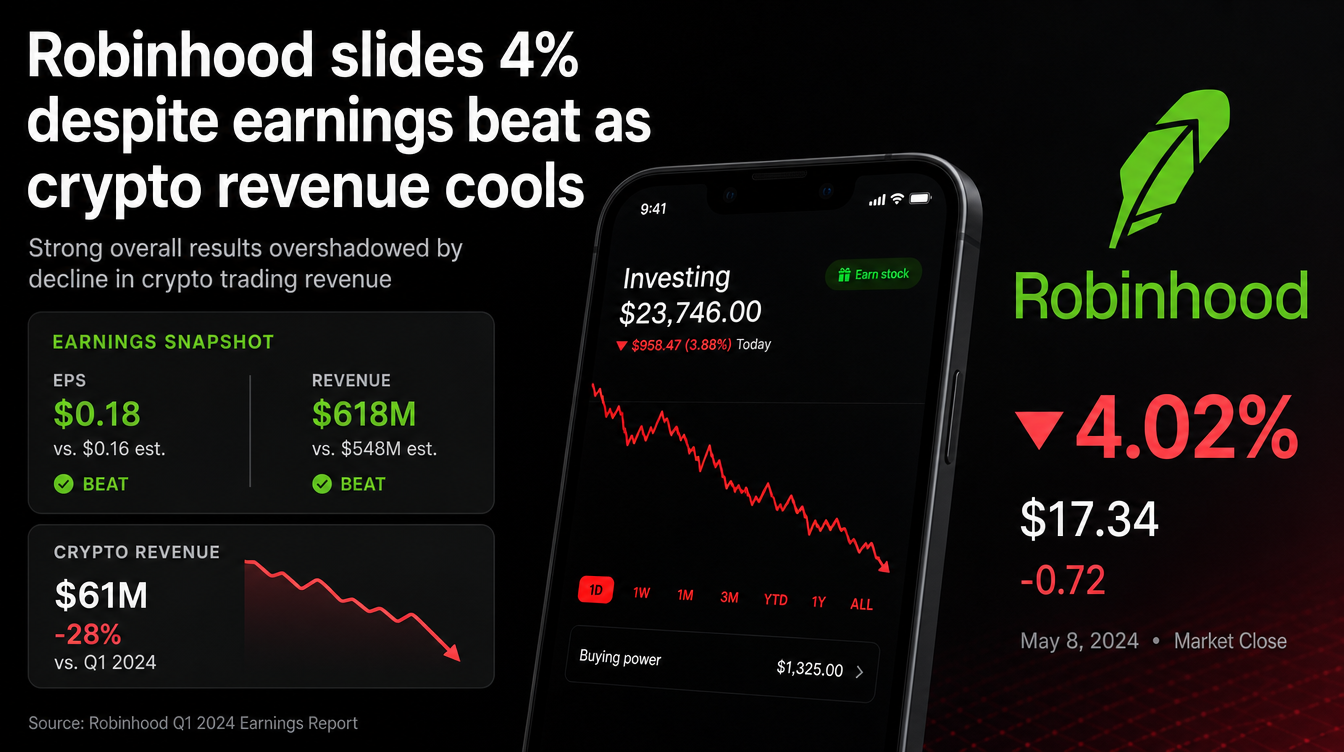
Robinhood generated $100 million in cryptocurrency trading revenue during the second quarter, representing a 38% decline compared with the same period last year. The slowdown in crypto activity was offset by stronger results from options, stock trading, and prediction markets.
Shares of Robinhood (HOOD) dropped about 4% in after-hours trading despite the company reporting better-than-expected second-quarter results. The decline followed a 3.1% fall in regular trading on Wednesday.
The brokerage posted adjusted earnings of $0.62 per share, beating analysts’ estimate of $0.43. Revenue increased 32% from a year earlier to a record $1.31 billion, narrowly surpassing Wall Street’s forecast of $1.29 billion.
The quarterly performance reflected momentum across Robinhood’s expanding product portfolio, although cryptocurrency demand weakened. Crypto transaction revenue fell from $160 million to $100 million year over year, while revenue from other trading products benefited from increased participation in options, equities, and prediction markets.
Robinhood CEO and Chairman Vlad Tenev said the company’s latest products, including Robinhood Chain, Robinhood Ventures, and Trump Accounts, are focused on a broader mission of expanding ownership opportunities for customers.
The quarter also marked one of Robinhood’s most significant product expansion periods. The company launched Robinhood Chain, a blockchain network designed to enable tokenized trading of U.S. stocks as part of its strategy to move traditional assets onto blockchain infrastructure.
Since going live, the network has seen rapid adoption, recording hundreds of millions of dollars in daily decentralized exchange volume. Tokenized versions of assets tied to companies such as GameStop, Nvidia, and SpaceX have become among the platform’s most active real-world assets. Although memecoins and stablecoins still represent a large portion of activity, tokenized equity trading has continued to gain momentum.
Robinhood also introduced Agentic Trading, an artificial intelligence-based toolset that allows users to connect external AI assistants to their brokerage accounts. The feature enables AI systems to track markets and execute trades based on customer instructions while maintaining user control through separate accounts, spending limits, and approval requirements.
The results provide an early indicator ahead of Coinbase’s second-quarter earnings report. While Robinhood and Coinbase operate different businesses, both rely heavily on retail trading trends and cryptocurrency market activity. Investors will be watching whether stronger crypto prices and trading volumes during the quarter translated into higher transaction revenue for Coinbase.
Robinhood is scheduled to hold its investor call at 5 p.m. ET.