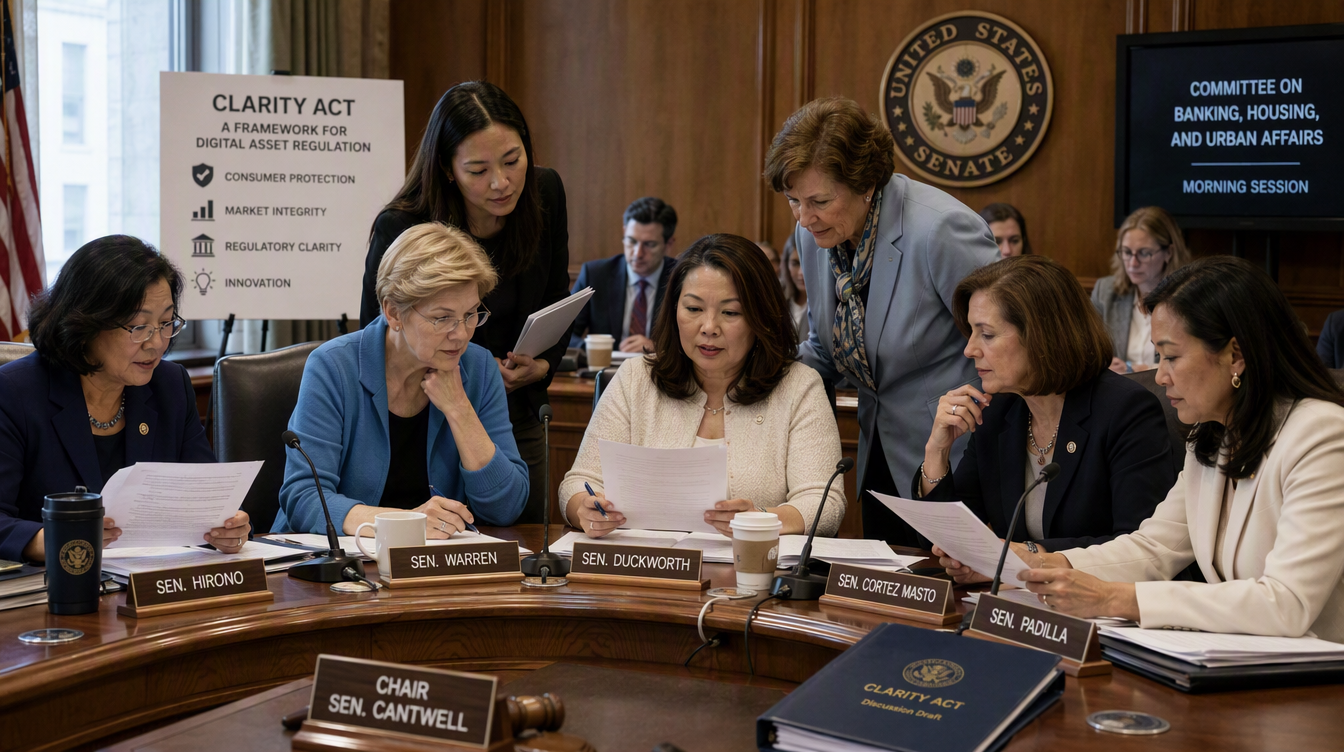
The Senate has begun the procedural process needed to move the crypto Clarity Act forward, giving the legislation another opportunity to reach a vote when lawmakers return in September.
U.S. Senate leadership moved early Saturday to formally begin floor proceedings on the Digital Assets Market Clarity Act, marking the bill’s most significant step forward yet in the push to establish a federal regulatory framework for the cryptocurrency industry.
The move came after the legislation failed to secure a vote before the Senate entered its summer recess, leaving only a narrow path for the bill to advance in September. Without the latest procedural step, the legislation would have faced little prospect of passing during the current congressional session.
The Senate clerk read a motion seeking to end debate on the measure and allow the chamber to proceed with H.R. 3633, which would establish rules governing digital commodities under the oversight of the Securities and Exchange Commission and Commodity Futures Trading Commission.
The bill must now navigate the Senate’s lengthy cloture procedure, which includes several votes, waiting periods, and other procedural requirements before lawmakers can consider final passage. It will also compete with other pending legislation for limited floor time during the Senate’s three-week September session.
That September window could be the chamber’s last major opportunity to act before lawmakers shift their focus toward the November midterm elections. Majority Leader John Thune’s decision to start the process means the Senate could hold its first procedural vote shortly after returning, potentially on the second day of the session.
Negotiators have several weeks to resolve remaining disputes over the legislation. Among the key sticking points are safeguards against illicit finance, rules governing stablecoin rewards, and provisions concerning government ethics.
The Clarity Act will probably need support from at least 10 Senate Democrats to reach the 60 votes required to overcome the chamber’s procedural hurdle. Democratic support remains uncertain, particularly because of disagreements over a provision that would restrict senior government officials, including President Donald Trump, from backing cryptocurrency ventures.
A bipartisan group of senators has prepared revised language for that provision, but the proposal has reportedly been awaiting a response from the White House for at least a week. Trump’s approval could be important to preserving the bill’s bipartisan backing.
Despite the disagreements, talks are continuing. Senate and industry representatives said Friday that a September vote remains achievable if lawmakers settle the outstanding issues. Because the Senate only needs several days to complete the required procedures, the limited September schedule does not necessarily prevent a vote.
Thune had previously indicated that a final vote before the August recess was unlikely, with the Senate instead prioritizing issues such as federal funding, Russia-related sanctions, and nominations. Those matters dominated Friday night’s lengthy voting session.
The decision to initiate the Clarity Act process at the last possible moment may indicate that Senate leadership still sees a chance for the legislation to advance.
The motion filed Saturday allows the Senate to begin debating the proposed crypto market structure. Since the bill does not have enough support for unanimous approval, lawmakers must use the cloture process to advance it.
The upcoming procedural vote could produce one of two outcomes. If negotiators reach an agreement before the vote, enough Democrats could support the measure to keep it moving toward final passage.
If the negotiations fail, the vote could instead force senators to publicly take positions on the legislation. That could turn the Clarity Act into a significant political issue ahead of the midterms and give crypto-focused groups such as Fairshake information to guide future campaign spending.
If Democrats and Republicans remain divided, the bill is unlikely to become law this year. A new Congress will take office in 2027, potentially with Democrats controlling at least one chamber, which could force the cryptocurrency industry to restart the legislative effort under a different political landscape.