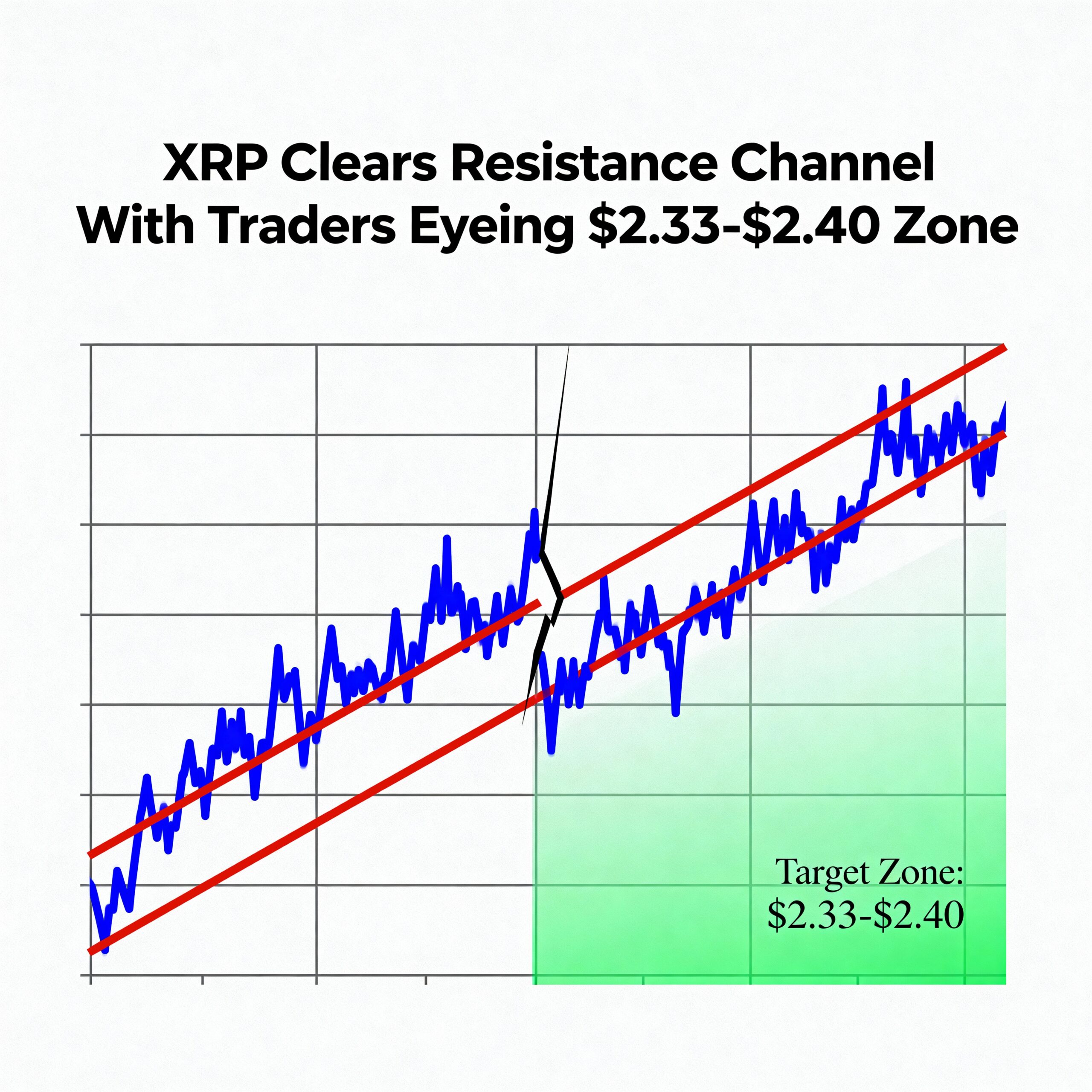
Bitcoin has been trading within a tight $62,000-$66,000 range for several weeks, while Deribit options activity indicates traders have committed around $2.5 million in premiums to bets that BTC will rise above $70,000 by late September.
The positioning comes as the latest U.S. Consumer Price Index report could provide the catalyst needed to determine which direction Bitcoin takes next.
A weaker-than-expected inflation reading could reinforce the risk-on environment in equities, while a hotter CPI report could revive expectations of another Federal Reserve rate increase in September. Either outcome could push Bitcoin out of its prolonged consolidation, with $64,000 remaining an important support level.
CPI Report Could Trigger Bitcoin’s Next Breakout
Market forecasts from Reuters, Dow Jones and Bloomberg call for headline CPI to increase 0.1% month over month and 3.4% year over year, compared with June’s 3.5% annual rate. Core CPI is expected to rise 0.2% monthly and 2.5% annually.
With forecasts closely aligned, even a modest deviation could cause markets to reassess expectations for the Fed’s upcoming rate decisions.
The inflation data arrives as Bitcoin’s price range has become increasingly compressed. Traders appear to be positioning ahead of the report in anticipation of a potentially large move once the economic uncertainty clears.
According to Laevitas, a significant portion of recent BTC options activity on Deribit has centered on the Sept. 25 expiry at the $70,000 strike. Traders purchasing these calls stand to lose the premium if BTC remains below the strike at expiration, while the contracts offer leveraged exposure to an upside move.
The options flow does not guarantee that Bitcoin will reach $70,000. Concentrated call buying reflects bullish positioning from a group of derivatives traders but does not necessarily represent the broader market view. It also provides no indication of how quickly BTC would need to climb for those contracts to become profitable.
TDX Strategies is taking a more neutral approach, recommending December strangles on Bitcoin and Solana. The strategy seeks to benefit from a large move in either direction instead of predicting an upside or downside breakout.
The contrasting strategies highlight the uncertainty surrounding the CPI release. Some traders are positioning for an upside move, while others are betting primarily on increased volatility.
Bitcoin Faces a Seasonal Headwind
Historical performance could also complicate the bullish outlook. STS Digital managing partner Jeff Anderson has identified September as Bitcoin’s weakest month, with the cryptocurrency averaging a decline of roughly 4% since 2013.
Anderson expects volatility to expand rapidly if Bitcoin decisively breaks either side of its current range. However, the historical weakness of September contrasts with the September call positioning, as traders are betting on an upside breakout during a month that has typically produced negative returns.
Market flows are also giving mixed signals. Nansen reported $49.7 million in Ether net outflows from exchanges over 24 hours and $164.6 million over the past week. Such withdrawals are often interpreted as evidence of accumulation.
In contrast, Hyperliquid data shows smart-money traders holding net short positions worth about $46.8 million in Bitcoin and $20.9 million in Ether.
The conflicting signals between spot flows and derivatives positioning leave Bitcoin’s next direction uncertain. With the CPI report approaching, the data could become the catalyst that finally determines whether BTC breaks out of its $62,000-$66,000 range or remains stuck in consolidation.