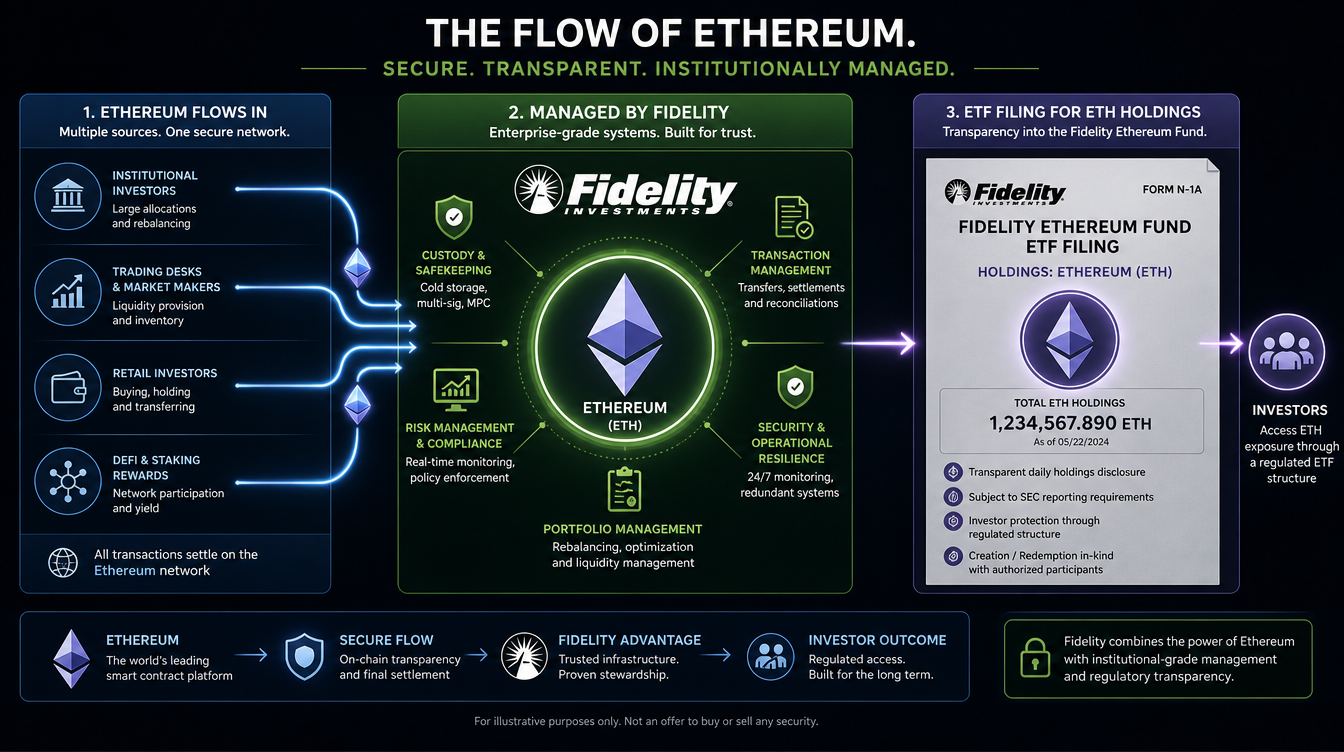
Fidelity has filed paperwork that could allow its Ethereum ETF, FETH, to stake up to 100% of its ETH holdings, although the fund must wait for the SEC to declare its registration statement effective before staking can begin.
FD Funds Management LLC, the sponsor of the Fidelity Crypto Ethereum Fund (FETH), filed a pre-effective amendment to its Form S-3 registration statement with the U.S. Securities and Exchange Commission on July 24, 2026. The amendment adds provisions that would enable the fund to stake as much as all of its ether holdings.
The filing does not introduce any new securities. Instead, it updates a previous S-1 registration statement that the SEC declared effective on July 31, 2025.
The proposed change represents an effort by Fidelity to add staking rewards to its spot Ethereum ETF, which launched without the feature. The filing indicates that FETH would only begin staking once the registration statement becomes effective.
How FETH’s Proposed Staking Model Would Work
Under the proposed framework, FETH would stake ETH through custodians and node operators during normal operations. The fund would retain a portion of its ether for redemptions, expenses and liquidity needs through its Liquidity Program.
FETH would keep 85% of the gross staking rewards, while the remaining 15% would be collected as a staking fee and shared between the sponsor, custodians and node operators. The staking fee would be separate from the existing 0.25% annual sponsor fee charged on the fund’s ether holdings.
Anchorage Digital Bank NA, BitGo Bank & Trust and Fidelity Digital Assets, N.A. are identified as custodians in the filing.
The proposal also details several risks tied to staking. These include slashing penalties and temporary limits on transferring staked ETH during activation and withdrawal periods. Fidelity could respond to potential liquidity constraints by extending redemption settlement times or using cash to meet redemption requests.
SEC Approval Remains the Key Hurdle
Filing an S-3 provides a framework for future share issuance but does not automatically authorize FETH to begin staking.
The registration statement is still preliminary, and the prospectus says shares cannot be sold until the filing becomes effective. Fidelity also says it expects to begin staking as soon as reasonably practical after effectiveness, confirming that staking has not yet started.
By establishing the necessary disclosure and operational framework ahead of time, Fidelity appears positioned to activate staking relatively quickly once the SEC makes the registration effective.
The fund also proposes making quarterly cash distributions from net staking rewards. However, those payments would not be guaranteed and could be modified or suspended.
For investors, the structure highlights the difference between holding FETH and staking ETH directly. While direct ETH staking already generates blockchain rewards, an ETF must navigate additional custody, liquidity, regulatory and operational requirements before those rewards can reach shareholders.