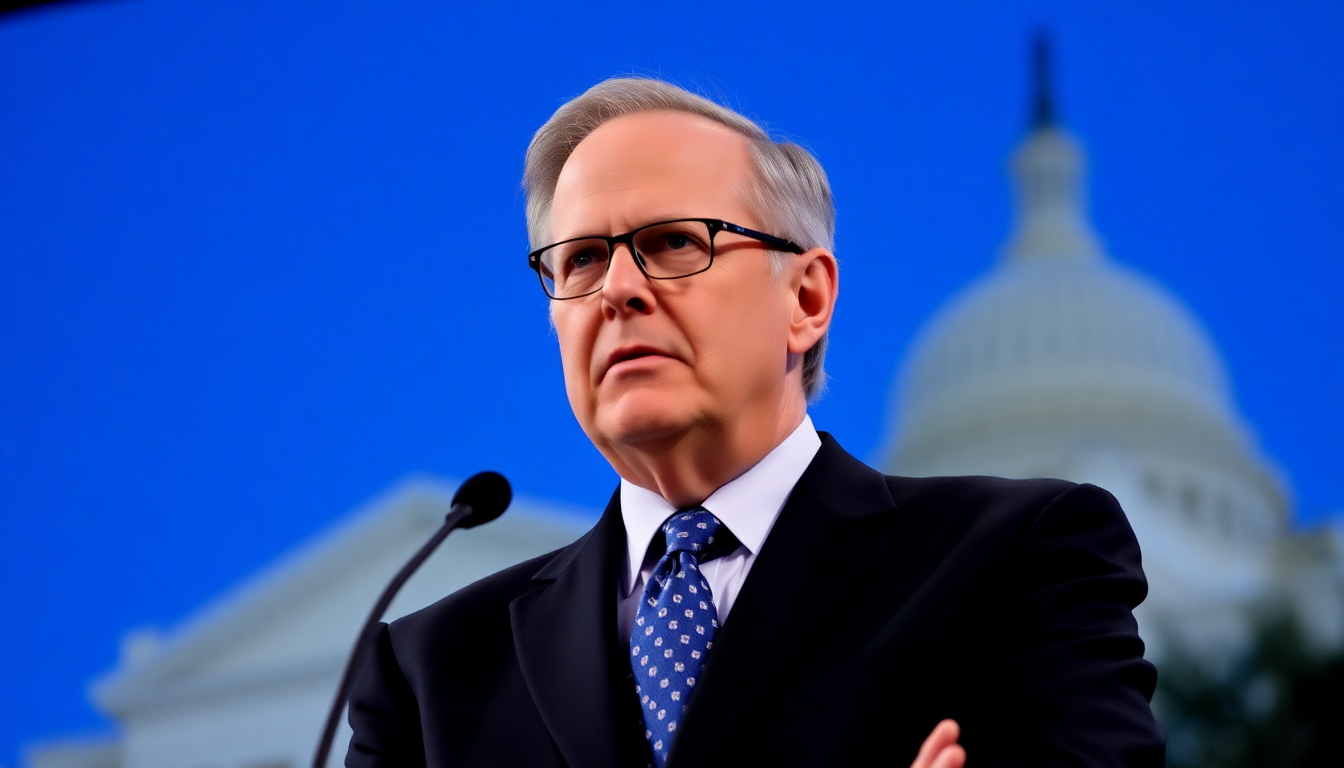
Billionaire investor Stanley Druckenmiller has criticized the Treasury’s expanded bond-buyback program, arguing that government intervention could weaken an important market check on borrowing and ultimately increase financial risks.
Druckenmiller, who previously mentored Treasury Secretary Scott Bessent, said policymakers cannot indefinitely override the forces that determine market prices.
His comments came after the Treasury, under Bessent, increased its planned purchases of longer-term government bonds to $4 billion. The move is intended to ease pressure on long-duration Treasury yields, which have recently climbed to their highest levels since 2007.
According to Druckenmiller, buybacks could offer temporary relief but cannot eliminate the underlying reasons yields are rising. He pointed to nominal economic growth, persistent fiscal deficits and the expanding U.S. debt burden, which has now surpassed $40 trillion.
Writing in The Wall Street Journal, Druckenmiller argued that attempts by governments to hold prices away from fundamental levels ultimately fail. He also said rising interest rates can provide an important warning about future economic problems, while artificially restraining them could make those risks worse.
Druckenmiller believes markets are better than policymakers at processing the large amount of information needed to determine appropriate prices. He also views long-term Treasury yields as a natural constraint on government borrowing because higher rates make excessive debt more expensive.
Removing that constraint, he warned, could reduce the pressure on lawmakers to maintain fiscal discipline.
Druckenmiller Questions the Need for Buybacks
Druckenmiller also challenged the idea that the current level of Treasury yields requires intervention. He argued that the 10-year yield is broadly in line with nominal economic growth, meaning financial conditions remain relatively supportive rather than restrictive.
In his view, conditions would become restrictive only if borrowing costs rose above the economy’s nominal growth rate.
The 10-year Treasury yield has increased about 50 basis points this year to around 4.70%. The 30-year yield has risen roughly 34 basis points to 5.22% after reaching 5.335%, its highest level in about 19 years.
Since the Treasury announced the larger buyback program, yields have remained relatively stable, while Bitcoin and gold have posted strong gains as investors anticipate the possibility of further policy support.
Druckenmiller’s position mirrors concerns raised by other market observers who expect the buybacks to temporarily limit increases in Treasury yields but do little to change the underlying forces pushing them higher.
The argument suggests the program may provide short-term assistance to the bond market without addressing the broader fiscal and economic factors shaping long-term borrowing costs.