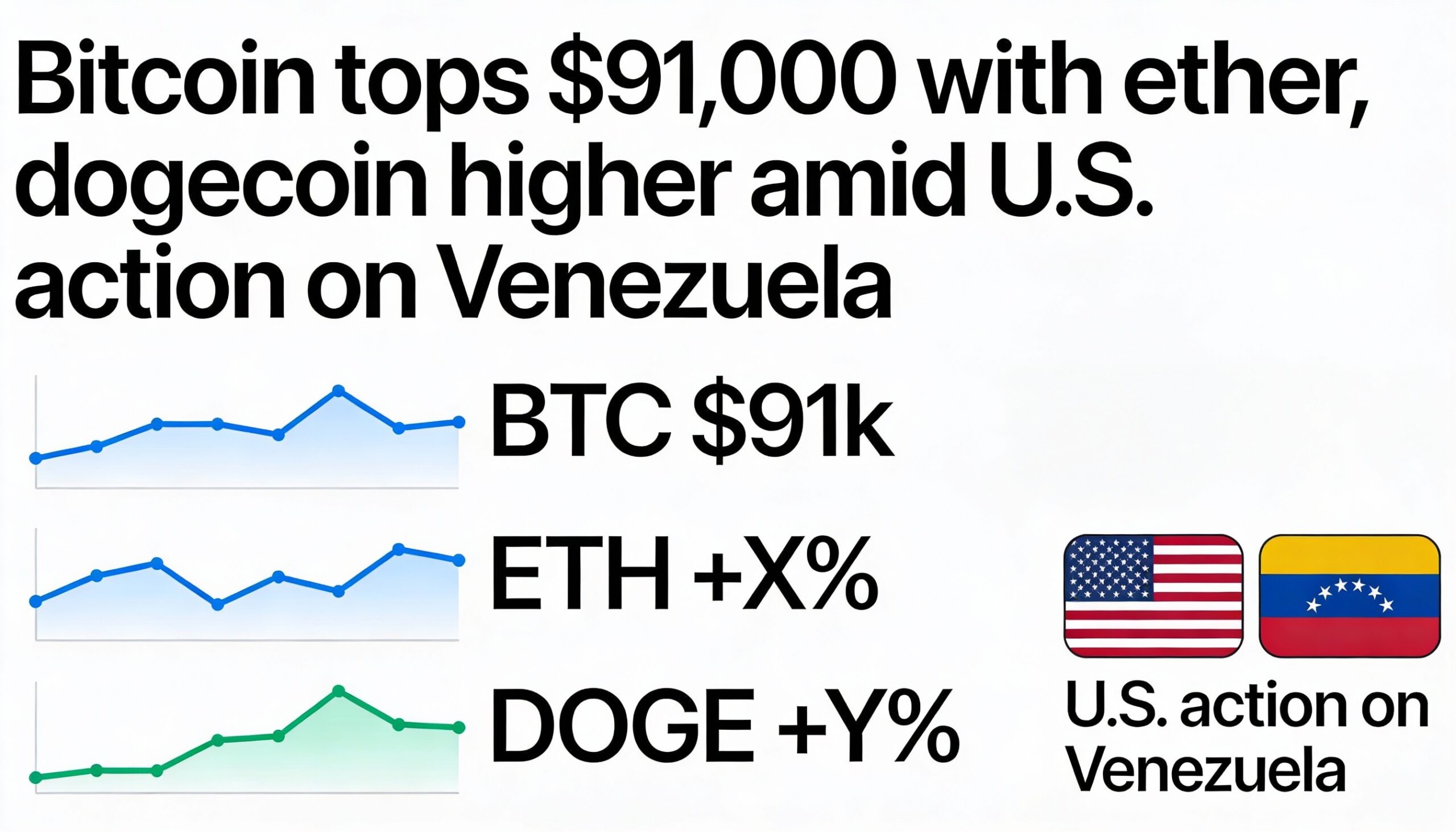
Bitcoin and Ethereum have started recovering from their recent market losses, but the broader financial environment remains uncertain, raising questions about whether the rebound can continue. Bitcoin returned above $60,000 over the weekend after briefly touching approximately $55,250. Ethereum also advanced, recovering part of its losses following several days of heavy selling. Although the recovery has improved sentiment among crypto investors, concerns about the global economy and weakening risk appetite remain unresolved.
The pressure on traditional markets has added another layer of uncertainty. U.S. stocks experienced a sharp decline on Friday, with the Nasdaq losing more than 5% as investors reassessed the valuations of AI-related companies and the growing costs of artificial intelligence investments. Asian markets extended the losses on Monday, even as Bitcoin moved higher. This divergence suggests that cryptocurrency buyers are returning, but broader investor confidence has not fully recovered.
The upcoming trading sessions on Wall Street could determine whether the crypto market maintains its upward momentum. Technology shares, oil prices, Treasury yields, and expectations for future Federal Reserve decisions will be closely monitored. A stronger recovery will require sustained buying activity rather than gains driven primarily by short sellers covering positions or traders taking advantage of discounted prices.
Bitcoin’s Rebound Faces Pressure From Institutional Outflows
Bitcoin’s recovery followed a significant liquidation wave that briefly pushed its price toward $55,000, marking its weakest level since September 2024. Such events can sometimes create favorable conditions for a rebound because leveraged positions are eliminated, weaker market participants are forced to exit, and short sellers begin closing their trades. Lower prices may also attract investors who have been waiting for an opportunity to enter the market.
However, the latest recovery is not yet supported by stronger institutional demand. U.S. spot Bitcoin exchange-traded funds continued to record substantial withdrawals toward the end of the week, with total outflows reaching $582 million. BlackRock’s iShares Bitcoin Trust (IBIT) accounted for $541 million of those withdrawals in a single session.
Technically, Bitcoin needs to hold the $60,000 level to demonstrate that buyers are regaining control. If this threshold becomes reliable support, the cryptocurrency could attempt another move toward $62,000. Such a breakout would strengthen the short-term outlook and indicate improving demand. However, failure to defend $60,000 could bring the recent lows back into focus and increase the possibility of another round of selling.
Ethereum’s recovery also deserves attention, particularly in relation to Bitcoin’s performance. An improvement in the ETH/BTC ratio could indicate that traders are gradually increasing their exposure to riskier digital assets. If Ethereum continues underperforming Bitcoin, however, it would suggest that investors remain cautious and are prioritizing the largest cryptocurrency over alternative tokens.
Stocks, Oil, Gold, and Federal Reserve Policy Remain Key Market Drivers
Developments in traditional financial markets could have a significant influence on the next direction of Bitcoin and Ethereum. Friday’s sell-off was particularly severe for technology companies, pushing the Nasdaq down 5.3% and placing the S&P 500 in correction territory. Investor concerns about the profitability of massive artificial intelligence investments have contributed to the broader decline in risk-sensitive assets.
Bitcoin has increasingly followed the performance of high-growth technology stocks during periods of market stress. When investors reduce their exposure to equities with higher valuations, cryptocurrencies can experience similar pressure. Therefore, a recovery in technology shares could help improve sentiment across the digital asset market and encourage investors to return to riskier investments.
Oil prices are another important consideration. Brent crude is trading around $92 per barrel, while West Texas Intermediate (WTI) is near $83. Both benchmarks recorded weekly declines. Further weakness in energy prices could help ease inflation concerns and potentially give the Federal Reserve additional room to adjust interest rates. Lower bond yields and improving liquidity conditions would generally create a more supportive environment for cryptocurrencies.
Gold has also begun recovering after experiencing its sharpest weekly decline since March. Prices moved higher as investors reconsidered their expectations for interest rates, although the broader outlook remains uncertain. A simultaneous recovery in gold, equities, and cryptocurrencies could indicate that selling pressure is easing across financial markets. Positive geopolitical developments could further support this improvement in sentiment.
Nevertheless, continued weakness in technology stocks or another increase in bond yields could quickly reverse the recent gains. This leaves Bitcoin and Ethereum vulnerable despite their latest recovery.
For now, the rebound in Bitcoin and Ethereum represents an encouraging development, but it is too early to consider it confirmation of a new bullish trend. Bitcoin must maintain support above $60,000, institutional ETF flows need to show improvement, and traditional financial markets must stabilize. Until these conditions are met, investors may continue treating the latest gains as a temporary relief rally rather than evidence that the broader crypto downturn has ended.