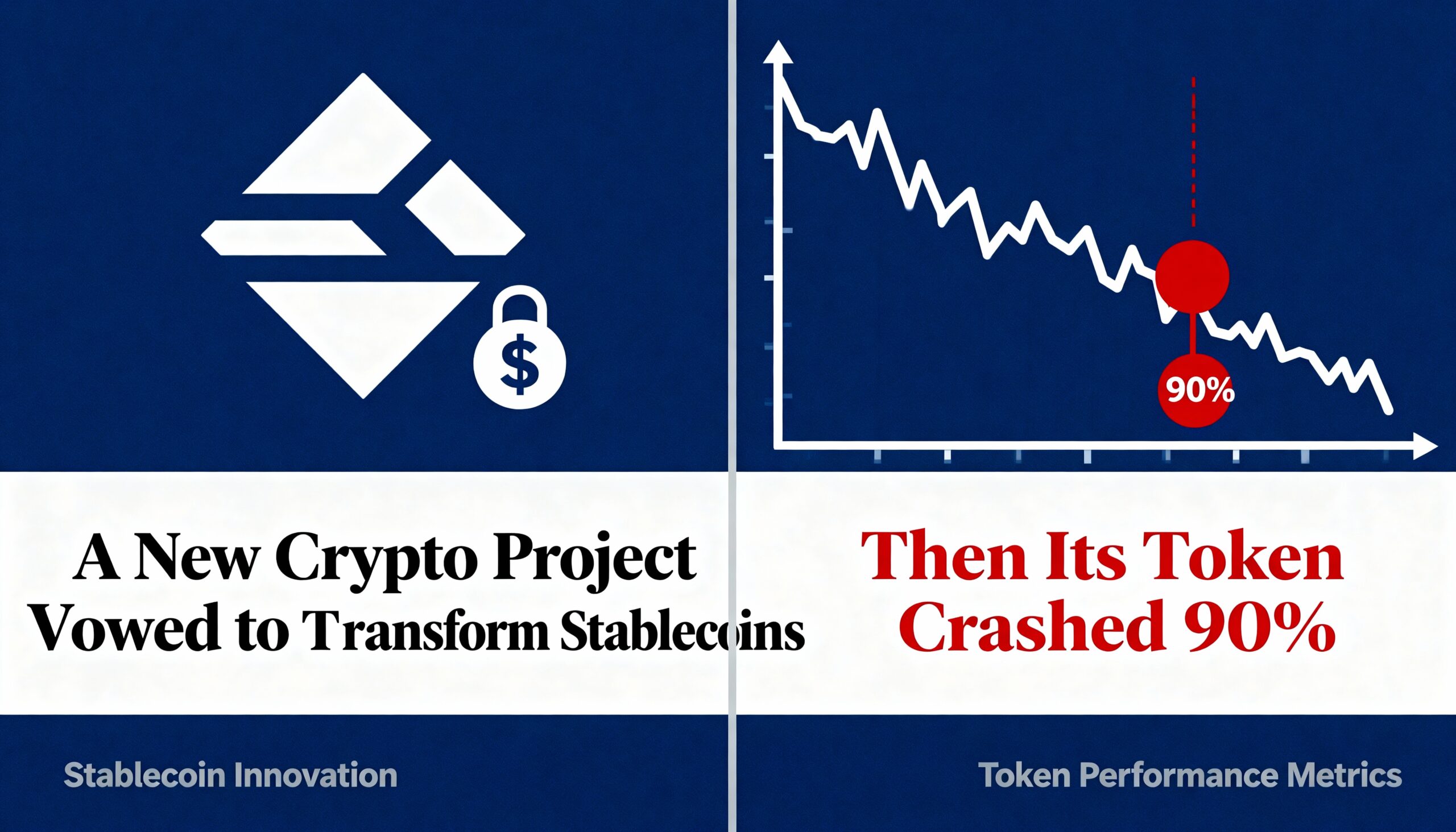
Plasma’s Stablecoin Ambitions Falter as XPL Falls Nearly 90%
Plasma’s high-profile push into stablecoin infrastructure is losing momentum. XPL, the network’s native token, now trades close to 90% below its early peak as low usage, supply pressure, and limited communication from the team fuel uncertainty about the project’s future.
The Layer 1 blockchain launched its mainnet in late September to roaring enthusiasm. Its public token sale had raised $500 million — ten times the intended target — and the project quickly emerged as a leading bet in what many considered crypto’s hottest trend for 2025: dedicated stablecoin infrastructure.
Plasma marketed itself with the usual claims: ultra-fast throughput, instant payments, smooth scalability. It highlighted integrations with Binance Earn and Chainlink Scale, and partnerships with firms like Elliptic. On paper, it appeared perfectly positioned to become a key settlement layer for stablecoins. Instead, it has become one of the cycle’s most striking early flops.
XPL climbed to about $1.67 on Sept. 27, pushing Plasma’s valuation above $2 billion, according to CoinMarketCap. But the rally unraveled within weeks. By late October, XPL had slid over 80% to around $0.31, and it has since drifted into the $0.18–$0.20 range — an 88–90% collapse from its debut.
Now that the token has stabilized at lower levels, a critical question remains: is this a bottom, or merely a pause before another leg down?
Part of the early excitement came from how quickly the team in Milan built the chain — under a year from concept to launch. Even Plasma acknowledged the pace carried trade-offs for long-term scalability. Still, the pitch of a dedicated stablecoin settlement chain with zero-fee USDT transfers and a self-custodial, bank-like payments experience sparked heavy speculative interest.
That enthusiasm faded fast. With no immediate on-chain catalysts and a crypto market prone to rotating between new narratives, traders moved on, accelerating the decline.
Network activity reflects the loss of momentum. Over the past 10 minutes, Plasma has averaged just 3.6 transactions per second — a small fraction of the 1,000 TPS it once touted as potential.
Token design also weighed on sentiment. Plasma entered the market with 1.8 billion XPL in circulation — 18% of its 10-billion total supply — and meaningful allocations reserved for team members, early investors and ecosystem incentives. With more unlocks ahead, traders feared sustained supply pressure.
The mix of low usage, high expectations, and substantial circulating supply left Plasma vulnerable to a sharp correction the moment hype cooled. That appears to be exactly what unfolded, leaving mostly long-term loyalists still holding XPL while speculators exit.
A November Update That Failed to Reignite Interest
Earlier this month, Plasma published a detailed November progress report. While the update outlined seven weeks of post-launch engineering and operational work, it did little to shift market sentiment.
The team reported a codebase refactor, expanded testing, and a rebuilt peer discovery layer. But its primary focus remains “Plasma One,” the project’s wallet and payments platform intended to become the ecosystem’s main real-world use case.
Plasma One — pitched as a neobank-style wallet offering stablecoin-based yield — has long been framed as the feature that will set Plasma apart. Yet the new update did not translate into any notable increase in on-chain activity. For now, investors still see a roadmap, not a working product ecosystem.
Silence From the Team Adds to Market Anxiety
A major criticism of Plasma has been the team’s limited communication. Unlike most crypto projects, which maintain constant engagement with users, Plasma communicates infrequently and with a tone more akin to a traditional financial institution than a Web3 startup.
In a market that trades around the clock, that silence can be costly.
CoinDesk made several attempts to speak with the team. After nearly two weeks of coordination, Plasma agreed to a video interview — then canceled it the night before without offering a reason, suggesting a written interview instead. When questions were sent, the spokesperson later replied that Plasma was “not in a position to comment at the moment.”
After further requests, a spokesperson offered only a brief statement saying the team would share updates and engage with media “when we have significant product developments to share and progress made toward that vision.”
For now, the reality is simple: no one outside the team knows what is happening inside Plasma — and that opacity continues to hang over XPL as the token struggles to find direction.