Bhutan appears to be steadily trimming its Bitcoin reserves, with the country’s once-large holdings shrinking sharply over the past year.
Blockchain data from Arkham Intelligence shows that Bhutan transferred another 175 BTC—worth roughly $11.85 million—late Monday. The funds were sent to the same bc1q wallet that received 184 BTC, valued at about $14.09 million, in February, suggesting the presence of a regular over-the-counter trading or treasury management counterparty.
The transactions were carried out by Druk Holding and Investments (DHI), the country’s state-owned investment arm responsible for managing Bhutan’s bitcoin mining operations.
February’s activity involved several transfers rather than a single movement. Arkham data indicates four separate outflows that month, including the 184 BTC transfer, two deposits totaling roughly 200 BTC—worth around $15 million—sent to a merchant deposit address associated with QCP Capital, and a $1.5 million transfer of Tether to a hot wallet at Binance.
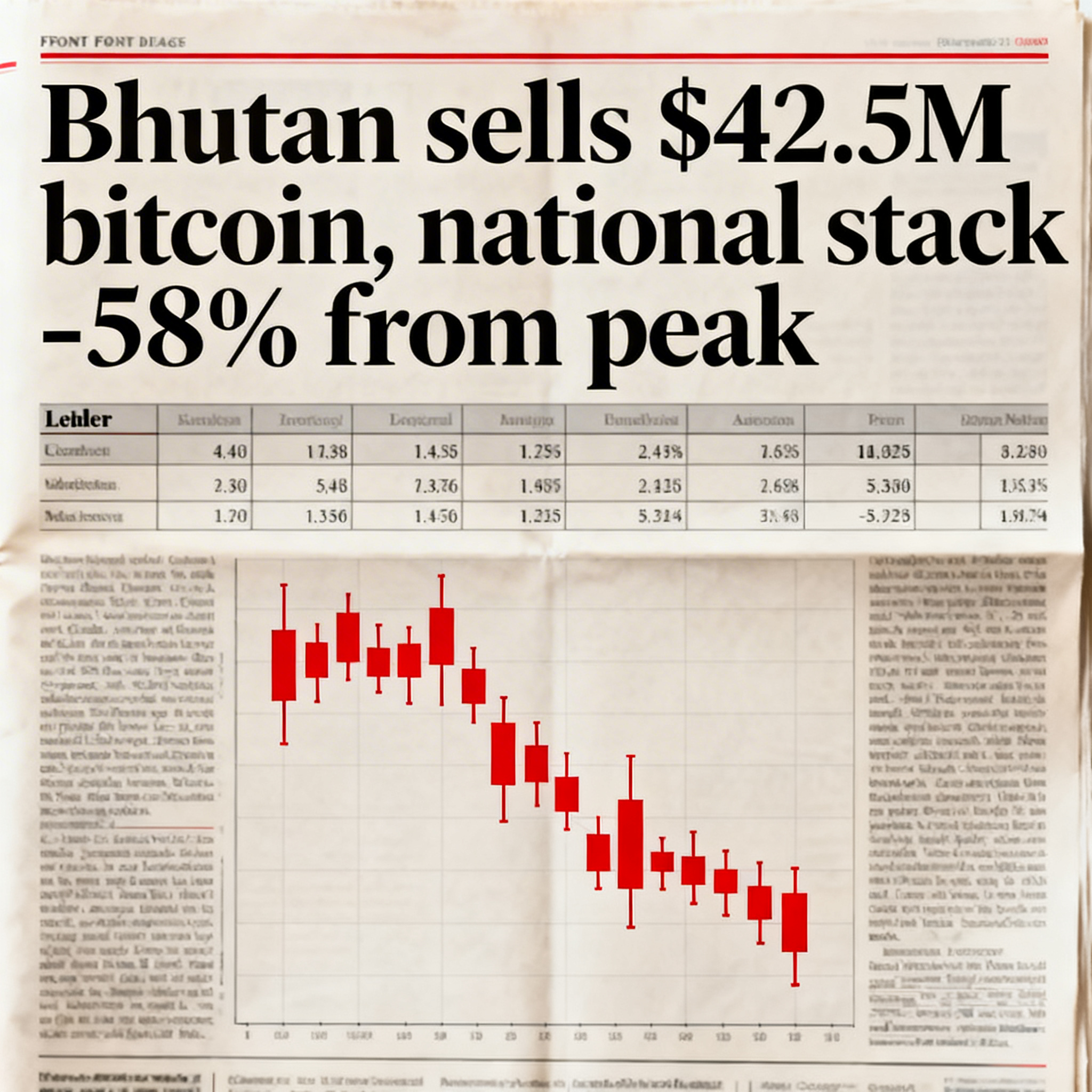
Those transactions amounted to about $30.7 million in February. Combined with Monday’s $11.85 million transfer, Bhutan’s crypto outflows in 2026 have reached approximately $42.5 million.
The transfers to QCP Capital stand out because sending bitcoin to a trading firm’s deposit address multiple times in a single month suggests more than routine wallet management. The activity points to possible OTC sales or structured liquidity operations rather than simple internal fund movements.
The broader trend in Bhutan’s bitcoin reserves reveals a dramatic shift. The country’s holdings peaked at around 13,000 BTC in late 2024, built over several years through state-backed mining powered by surplus hydropower. Since October 2024, however, the reserves have been steadily reduced.
Bhutan’s stack has dropped from about 13,000 BTC to just under 5,400 BTC—representing a decline of roughly 58%. The total value has also been impacted by bitcoin’s price fall from roughly $119,000 at its peak to around $69,000 today.
At its height, the country’s bitcoin position was likely worth more than $1.5 billion. The remaining holdings are now valued at approximately $374 million.
Despite the drawdown, Bhutan has continued to explore broader uses for digital assets. In December, the government announced a Bitcoin Development Pledge committing up to 10,000 BTC to support the development of Gelephu Mindfulness City, a special economic zone intended to integrate digital assets into its financial reserves.
Bhutan mined most of its bitcoin using excess hydropower, effectively giving the country a near-zero cost basis. Unlike corporate treasuries such as Strategy that purchased bitcoin on the open market, Bhutan does not face pressure to sell at specific price levels—meaning any liquidation represents profit.
Blockchain balance data shows the broader trajectory: steady accumulation from near zero in early 2021, consistent mining through the bear market, a surge to about 13,000 BTC by late 2024, and a sharp drawdown since then.
The pattern of transfers—similar sizes sent repeatedly to the same counterparties—suggests a structured treasury strategy rather than reactive selling tied to market volatility.
Druk Holding and Investments did not immediately respond to a request for comment from CoinDesk during Asian morning hours.