Bitcoin’s latest decline fits a familiar pattern: the asset tends to sell off during sudden geopolitical shocks, only to stabilize or recover once initial panic subsides. Because Bitcoin trades around the clock, it remains one of the few large, liquid assets investors can offload over the weekend when traditional markets are closed.
The cryptocurrency briefly climbed back above $65,000 before slipping to around $64,700 as tensions tied to the Iran conflict intensified on Saturday. Iranian state media reported at least 70 fatalities in Hormozgan province, according to Al Jazeera, including casualties from a strike on an elementary school. Israel activated air raid sirens after identifying additional missile launches from Iran.
Former U.S. President Donald Trump told The Washington Post that his priority was “freedom for the people.” Meanwhile, NATO said it was closely monitoring developments, China called for an immediate ceasefire, and Turkey signaled its willingness to mediate.
Bitcoin’s failure to sustain gains above $65,000 suggests sellers still hold the upper hand in the short term. At the same time, the relatively contained price action given the severity of the headlines may reflect thin weekend liquidity rather than aggressive new selling. With U.S. markets set to reopen, headline risk remains elevated for BTC traders.
What happened earlier
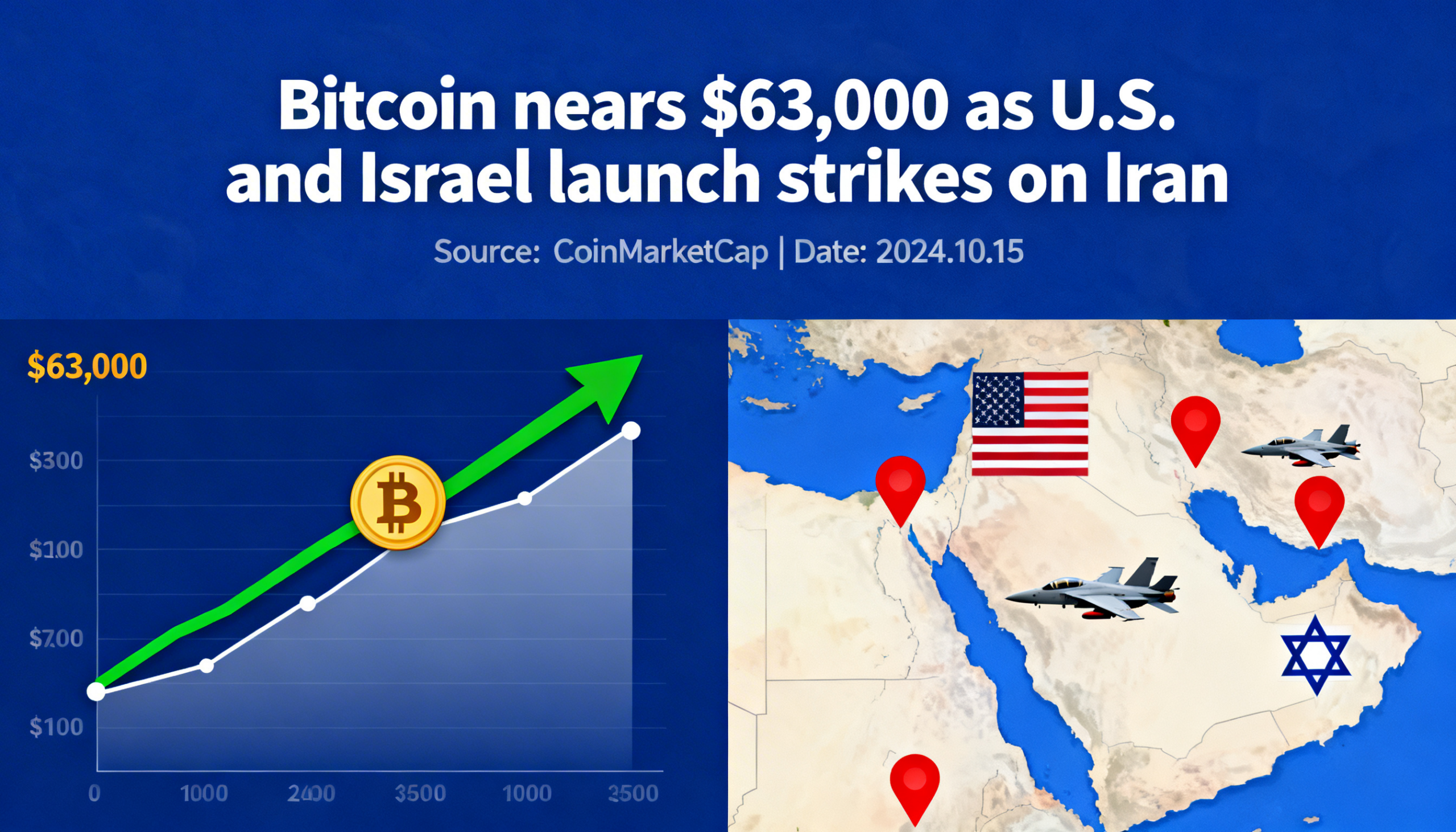
Earlier Saturday, bitcoin approached $63,000 after the U.S. and Israel carried out military strikes on Iran. The move pushed the token down roughly 3% within hours, compounding what had already been a challenging weekend for risk assets. At its low, bitcoin traded at levels not seen since the Feb. 5 crash, when it briefly fell below $60,000.
Israeli Defense Minister Israel Katz declared an immediate nationwide state of emergency. A U.S. official confirmed American involvement in the strikes, according to The Wall Street Journal.
The market reaction follows a well-established dynamic. While equity and bond markets shut down for the weekend, bitcoin continues to trade 24/7. That makes it one of the only major assets investors can quickly sell when geopolitical tensions flare outside normal trading hours.
As a result, bitcoin frequently acts as a release valve for broader risk-off sentiment during weekend crises, absorbing flows that might otherwise hit stocks, commodities, or currencies if those markets were open.
The escalation raises the risk of a wider regional conflict in one of the world’s most economically sensitive areas, following weeks of U.S. military buildup and stalled negotiations over Iran’s nuclear program.