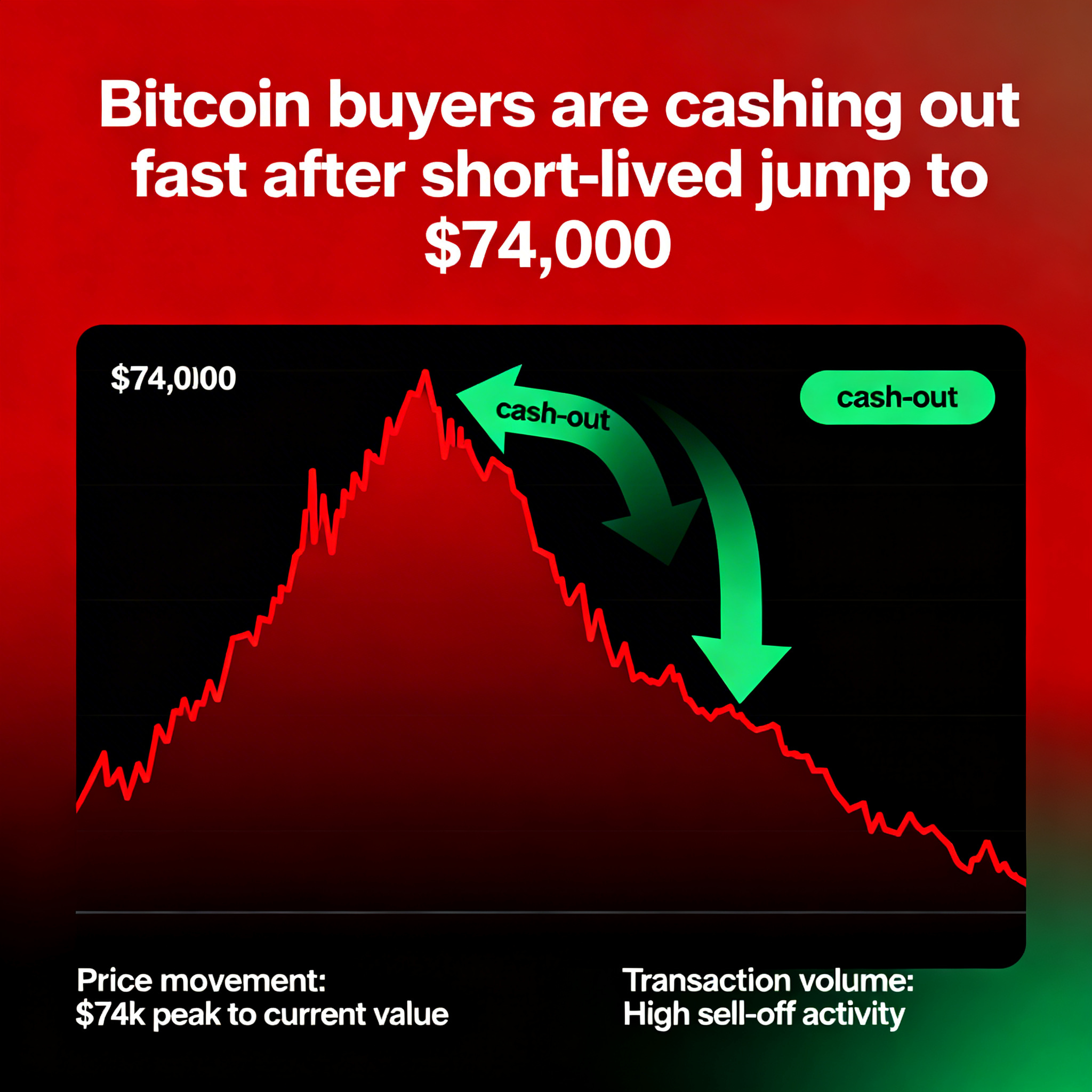
Bitcoin’s rally to a one-month high near $74,000 earlier this week prompted a surge in profit-taking from short-term traders, according to on-chain data from CryptoQuant.
The leading cryptocurrency has since retreated and is now hovering around $69,000 after losing momentum following Wednesday’s breakout above the $70,000 level.
According to CryptoQuant analyst Darkfost, short-term holders transferred more than 27,000 BTC — roughly $1.8 billion — to exchanges at a profit over the past 24 hours, marking one of the largest spikes in selling activity in recent months.
At present, the only short-term investors sitting in profit are those who accumulated Bitcoin between one week and one month ago, with an estimated realized price near $68,000. This suggests some of the most recent buyers are choosing to secure gains rather than extend their exposure.
Short-term holders are often the most reactive participants in the market, and the latest selling wave reflects lingering caution as geopolitical tensions surrounding Iran continue to weigh on sentiment.
Earlier this week, analysis from CoinDesk flagged the possibility of a bull trap, pointing to similarities with January’s price action when bitcoin briefly surged to $98,000 before reversing lower.
That downward move took shape on Friday and was accelerated after comments from Donald Trump calling for Iran’s unconditional surrender, remarks that also helped push oil prices sharply higher.
Despite the bout of profit-taking, broader market dynamics are still supporting bitcoin’s uptrend, according to Adrian Fritz, chief investment strategist at 21Shares.
Fritz said investors are increasingly betting that the Clarity Act — a U.S. bill aimed at establishing a market structure for digital assets — could pass before the end of the year. Prediction markets currently place the odds at roughly 70%, though Fritz cautioned that these markets remain relatively illiquid.
He also pointed to rising geopolitical tensions and sustained institutional demand as important forces supporting the market.
Some investors are beginning to treat bitcoin as a “gold beta” trade, rotating into the digital asset following the recent rally in Gold. Meanwhile, spot bitcoin exchange-traded funds have remained relatively resilient, with holdings declining only about 5% during the recent pullback while still attracting more than $700 million in net inflows this week.
While political developments may have helped ignite the latest move, Fritz said the rally is increasingly being underpinned by geopolitical hedging and growing institutional confidence in bitcoin