The war entered its fifth week with its broadest escalation so far, as Iran-backed forces opened a new front and additional U.S. troops moved into the region.
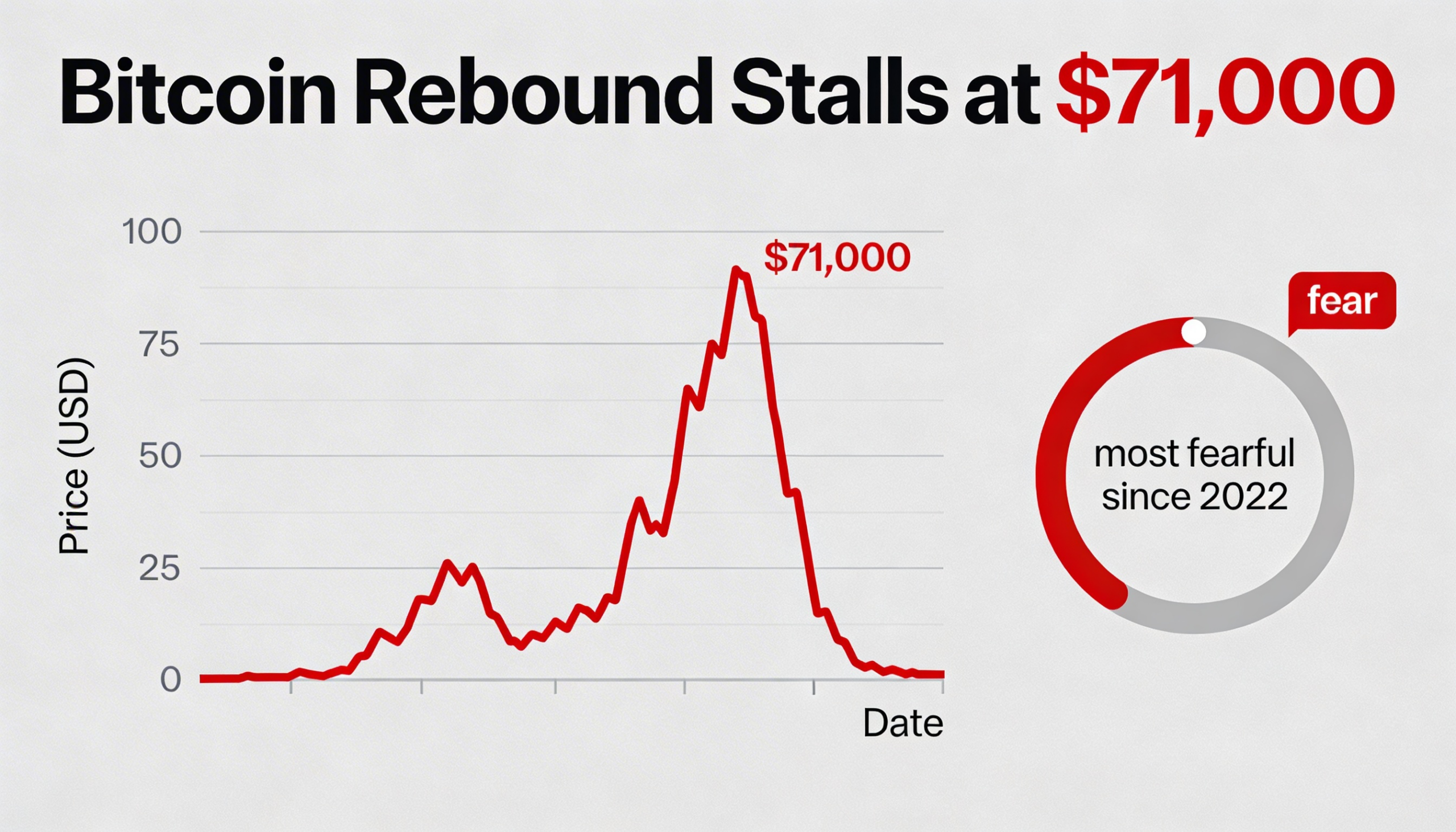
Bitcoin reacted with a sharp but short-lived sell-off. The asset slipped to $65,112 early Monday — its lowest level since the February downturn — before rebounding to $67,402 as Asian trading began, according to CoinDesk data.
The 24-hour range between $65,112 and $67,389 underscores a market that initially sold off on escalating geopolitical headlines but quickly found demand near $65,000, a level not tested since the first weekend of the conflict five weeks ago.
Major altcoins also stabilized. Ethereum rose 2% to $2,044, Solana gained 0.9% to $83.48, and XRP climbed 1.4% to $1.35. However, the broader weekly trend remains under pressure, with bitcoin down 1%, ethereum 0.9%, XRP 1.9%, and Solana 3.7%. Tron continues to stand out, up 2.6% on the day and 4.6% over the week, outperforming the broader market.
This latest escalation came from multiple directions. Iran-backed Houthi forces joined the conflict, opening a new theater beyond the core U.S.-Israel-Iran axis, while the arrival of additional U.S. troops heightened concerns about a potential ground operation.
The Wall Street Journal reported that President Donald Trump is weighing a military plan to remove enriched uranium from Iran — a critical component in nuclear weapons — though no final decision has been made. At the same time, Iran reportedly targeted two aluminum production facilities, pushing prices for the metal up as much as 6% and extending the economic fallout beyond energy markets.
Brent crude rose 2.5% to around $115 per barrel, bringing its year-to-date gains to roughly 90%. Asian equities declined sharply, with South Korea’s benchmark falling 3.2% amid a tech sell-off and Japan’s Nikkei dropping 3.4%. U.S. stock futures, however, trimmed earlier losses and were trading near flat, suggesting some stabilization after the initial reaction.
From a technical perspective, bitcoin’s dip to $65,112 is notable, as it sits close to the $64,000 low recorded on Feb. 28, when the war began. Over the past five weeks, bitcoin has consistently formed higher lows during each escalation — progressing from $64,000 to $66,000, $68,000, $69,400, and $70,596.
Monday’s break below $66,000 disrupts that pattern for the first time, raising the question of whether bitcoin can re-establish its uptrend or if the range that has held since the conflict began is starting to give way.
Meanwhile, the rise in oil prices and the spike in aluminum following direct attacks on production facilities indicate that inflationary pressures are spreading beyond energy into industrial supply chains. This adds complexity to the Federal Reserve’s policy outlook and further delays expectations for rate cuts.