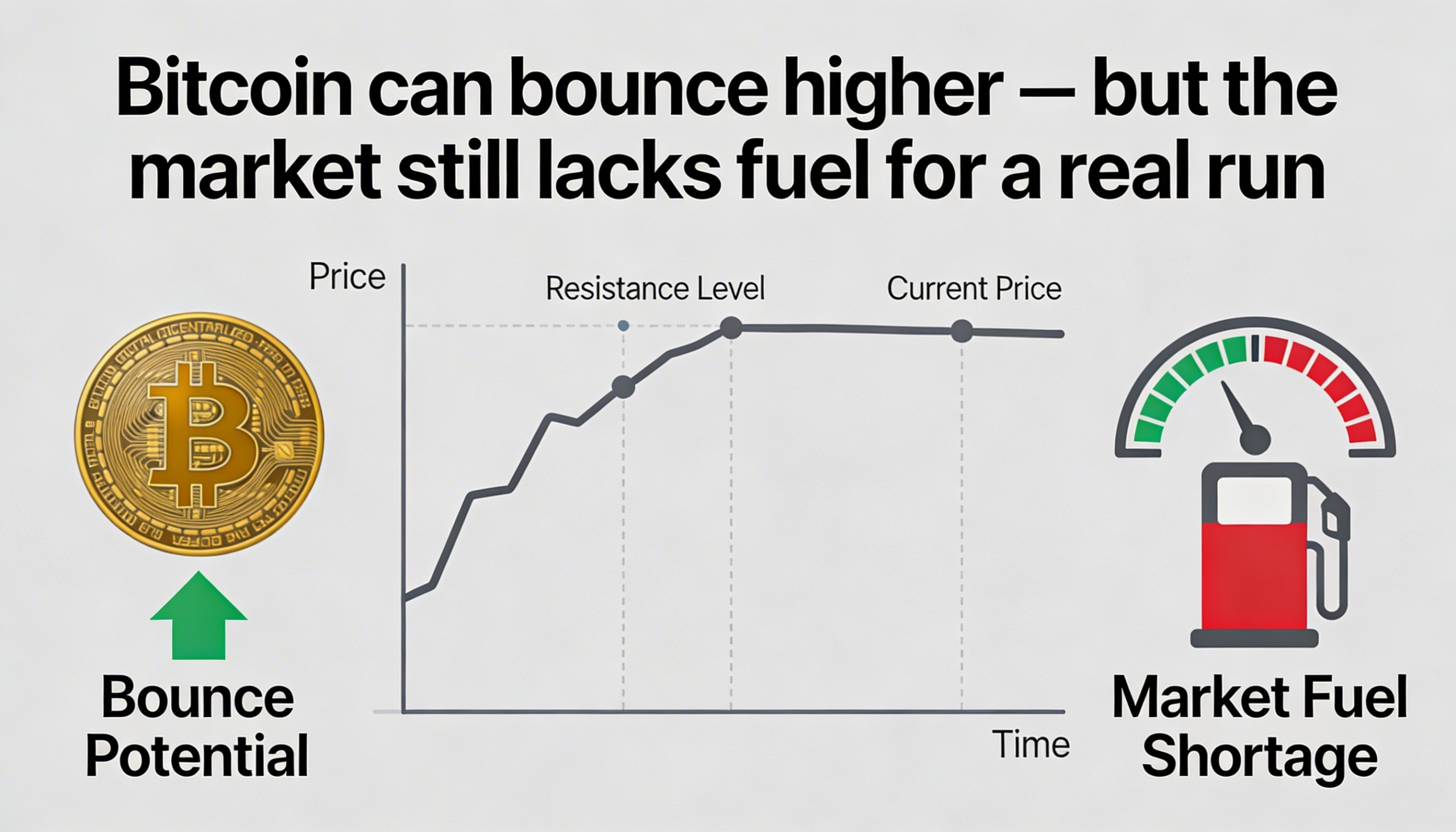
Bitcoin continues to stage sharp but short-lived recoveries, with each bounce running into a wall of dollar strength, cautious Federal Reserve messaging and steady selling pressure.
There is room for upside — just not yet the conditions for a sustained breakout.
Recent inflation data has modestly improved the macro narrative, reinforcing expectations that the Fed could deliver multiple rate cuts this year. That has revived the traditional risk-on framework in which easier policy supports liquidity and, by extension, assets like bitcoin that thrive in looser financial conditions.
Even so, policymakers are signaling restraint. Rather than launching into an aggressive easing cycle, the Federal Reserve appears inclined toward a gradual approach. That suggests liquidity may rebuild slowly, creating an environment where tactical rallies are possible but durable uptrends are harder to sustain.
Analysts at Bitfinex characterize the market as one moving in waves instead of clean breakouts. Upside squeezes can materialize when positioning becomes excessively defensive, but a lasting structural rally would likely require clearer confirmation of sustained disinflation and consistent spot demand.
Recent price action reflects that dynamic. Bitcoin climbed toward $68,500 overnight before reversing in U.S. trading, sliding below $66,000 as the dollar strengthened and hawkish Fed minutes crossed the wires. The swift intraday reversal underscored how fragile rallies remain, with traders quick to sell when macro signals turn less accommodating.
According to Alex Kuptsikevich, chief market analyst at FxPro, bitcoin’s growing sensitivity to dollar moves is notable. If investors become convinced that dollar strength represents a broader trend, volatility in crypto markets could increase sharply.
He also highlighted the contrast with equities. Major stock indices have seen active dip-buying near key moving averages — the 50-day for the Dow Jones and Russell 2000 and the 200-day for the Nasdaq 100. Bitcoin, by comparison, remains well below both its 50- and 200-day averages, signaling weaker technical footing.
Sentiment remains fragile. A widely tracked crypto fear indicator has printed single-digit readings on nine of the past fourteen days — territory typically associated with late-cycle stress. Meanwhile, data from Glassnode show stablecoin outflows from major exchanges and signs of strain among long-term holders, echoing conditions seen in the latter stages of the 2022 bear market.
For now, bitcoin is caught between slightly improving macro conditions and persistent supply overhang. Short-term rallies remain possible, especially when positioning leans too bearish. But a more convincing advance will likely require firmer evidence of disinflation, a softer dollar and sustained spot buying. Until then, progress higher may continue to unfold in fits and starts.