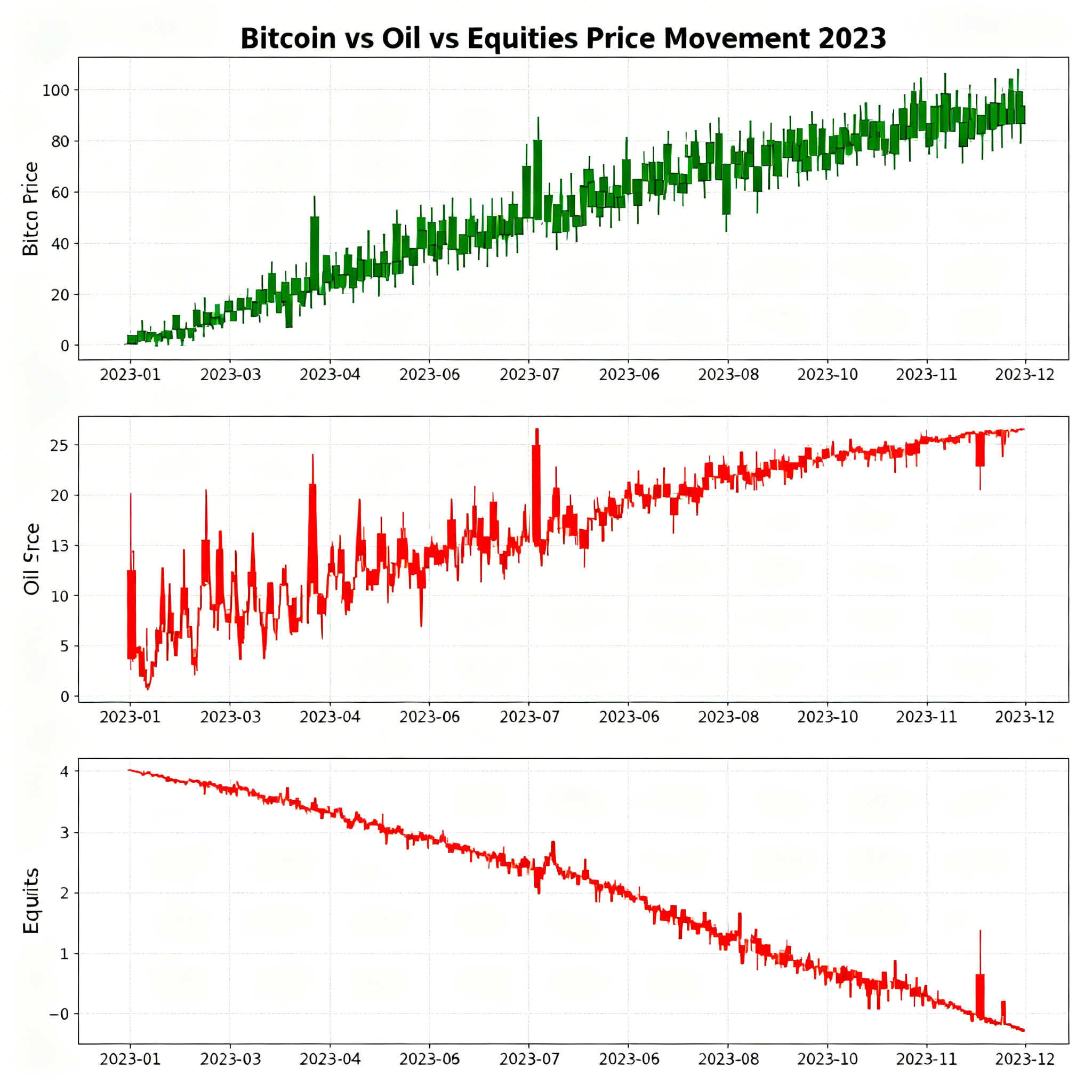
Bitcoin strengthened during European trading hours, even as several traditional assets came under pressure, highlighting the cryptocurrency’s resilience amid rising geopolitical tensions and surging energy prices.
The world’s largest cryptocurrency climbed about 2.8% since midnight UTC after global markets initially slid when futures trading began earlier in the day.
In contrast, equity markets moved lower. Futures tied to the Nasdaq-100 and the S&P 500 each fell more than 1.5% as oil prices surged to as high as $115 per barrel—the highest level since June 2022. Precious metals also declined, with gold losing 1.6% and silver falling 1.1%, weakening their safe-haven appeal as investors shifted toward the U.S. dollar.
Despite the broader market turbulence, sentiment around bitcoin has been improving. The asset has remained relatively steady even as tensions surrounding Iran and disruptions to shipping through the Strait of Hormuz raise concerns about global energy supply.
Crypto trading firm QCP Capital noted that bitcoin’s practical role in the financial system may be gaining relevance.
“While BTC has yet to fully establish itself as digital gold, its utility as a digital escape mechanism is becoming increasingly important, particularly in Gulf nations facing currency volatility and political uncertainty,” the firm said in a Monday note.
Derivatives positioning
Volatility across markets triggered a wave of liquidations in crypto derivatives. Exchanges have closed nearly $400 million worth of crypto futures positions over the past 24 hours, with traders betting against oil suffering the largest losses as crude prices surged.
Open interest in bitcoin futures remains near weekly lows at roughly 650,000 BTC, suggesting that derivatives traders have not fully participated in the latest rally. Meanwhile, open interest in Ether futures increased to around 13 million tokens.
Open interest in XRP climbed to 1.72 billion tokens, the highest level since late February. A smaller increase was also observed in Solana futures, indicating fresh capital entering those markets.
At the same time, open interest declined in several other tokens, including PAX Gold, Avalanche, and Litecoin, suggesting that some investors are reducing exposure during the current price rebound.
Volatility indicators for bitcoin and ether remain relatively stable. Their 30-day implied volatility indexes have shown little change, signaling a calm derivatives market despite sharp swings in oil and Asian equities.
On the derivatives platform Deribit, put options for bitcoin and ether continue to trade at a premium compared with call options, indicating persistent demand for downside protection. However, the size of that premium remains largely unchanged from last week, suggesting the recent oil spike has not dramatically increased hedging demand.
Bitcoin’s implied volatility curve also remains in backwardation, meaning traders expect higher volatility in the near term than further out—a sign of uncertainty surrounding the evolving geopolitical situation.
Token market activity
Altcoins broadly advanced overnight. Privacy-focused tokens such as Dash, Monero, and Zcash posted gains between roughly 3.8% and 5.2%.
Decentralized finance tokens also outperformed. Ether.fi and Morpho both delivered stronger gains than bitcoin and ether during the same timeframe.
Momentum in the broader altcoin market appears to be improving. The “Altcoin Season” indicator tracked by CoinMarketCap currently stands at 36 out of 100, well above its February low of 22.
Among sector benchmarks, the CoinDesk Computing Select Index—which includes assets such as Chainlink and Bittensor—was the strongest performer over the past 24 hours, rising 2.7%. It was followed by the CoinDesk Smart Contract Platform Select Index, which gained 0.92% since Sunday morning.
On the downside, the institutional-focused token Canton Network Token declined 3.4% over the past day. Meanwhile, Worldcoin—a project associated with Sam Altman—fell roughly 2% during the same period.