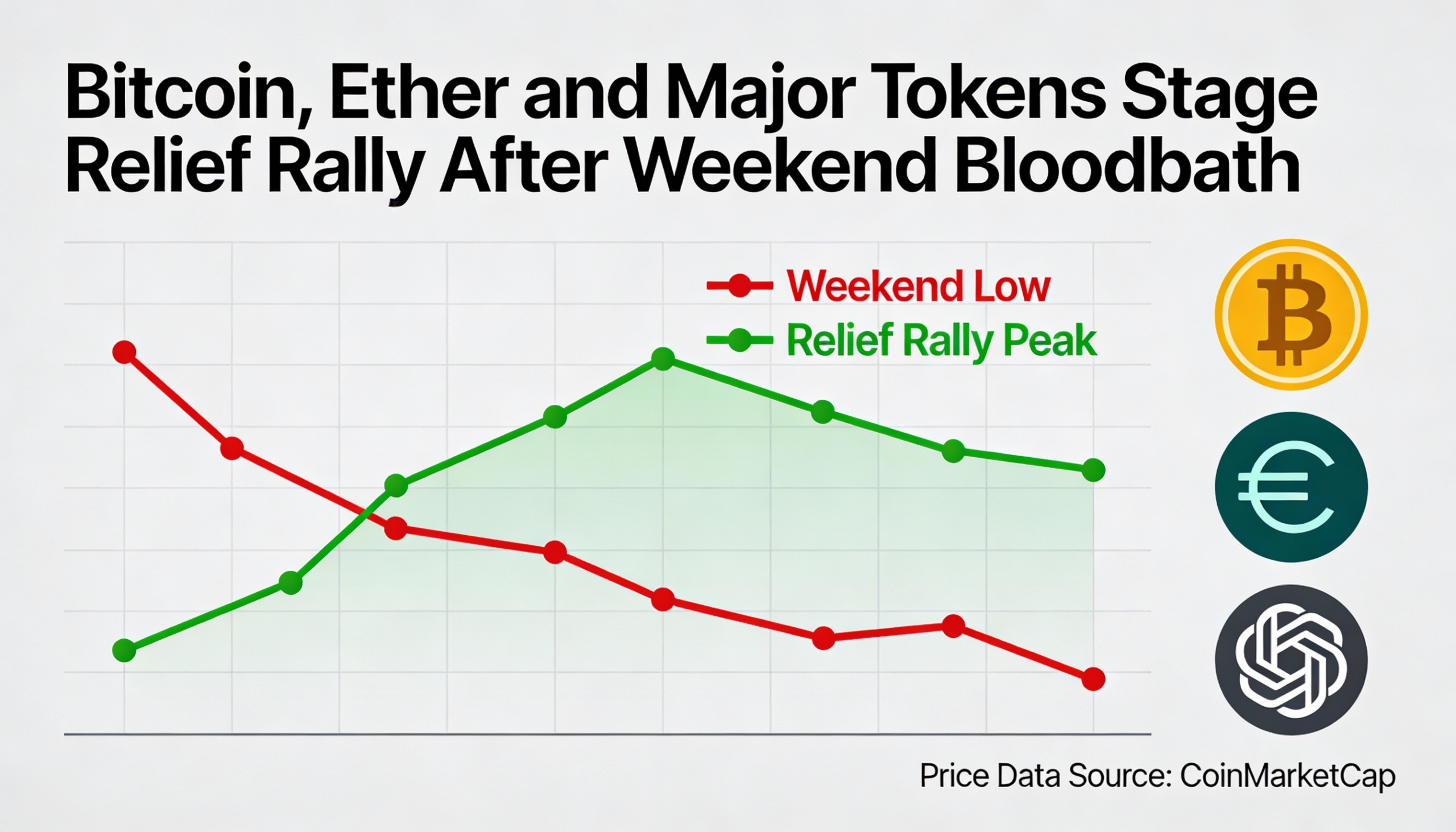
Bitcoin rebounded toward $79,000 after briefly slipping below $75,000 over the weekend, as markets assessed a liquidation-driven selloff against improving macro sentiment and signs of a potential turning point for crypto.
Major cryptocurrencies posted gains over the past 24 hours following a sharp weekend rout that pushed prices to multi-month lows and triggered billions of dollars in forced liquidations across derivatives markets. Bitcoin was trading just below $79,000 during Asian morning hours, according to CoinDesk data, recovering from lows near $74,000.
Ether climbed back above $2,340, while Solana, BNB, XRP and Cardano rose between 3% and 6% on the day. Despite the rebound, most large-cap tokens remain deeply in the red on a weekly basis, with losses of as much as 20%.
The bounce follows a broad capitulation across crypto markets over the weekend, characterized by heavy long liquidations and thin liquidity conditions. According to CF Benchmarks, the selloff may represent the conclusion of a prolonged bearish phase that began with the October 10, 2025 deleveraging event.
“Bitcoin has completed the bearish sequence that started with the October 10 deleveraging, with the latest washout retesting — and briefly breaking below — the April 2025 ‘Liberation Day’ lows around $74,000,” said Gabe Selby, head of research at CF Benchmarks, a Kraken subsidiary.
Selby said the weekend move was driven by “massive long liquidations” amid broader risk-off positioning and mixed earnings results from U.S. technology firms. He added that bitcoin’s weakness continues to reflect regulatory headwinds, including stalled U.S. crypto market structure legislation, alongside early signs of a hawkish repricing in expectations for Federal Reserve policy.
By contrast, Selby noted that recent declines in gold and silver were more a function of crowded positioning after strong rallies, rather than shared macroeconomic pressures.
“Now that the April lows have been cleared, bitcoin is at a clear inflection point,” Selby said. “Sustained, high-volume buying is needed to establish a new bullish market structure. Failure to hold above these levels leaves downside risks intact, with liquidation clusters sitting below $70,000.”
Broader markets showed signs of stabilization, with Asian equities rebounding after their steepest selloff in more than two months. The MSCI Asia Pacific Index jumped 2.4%, its strongest session since April’s “Liberation Day” rebound, while South Korean stocks surged more than 5%.
U.S. equity futures edged higher following upbeat guidance from Palantir, although uncertainty persists around Federal Reserve leadership and the future path of monetary policy.