Bitcoin Climbs 1% as Trump-Powell Feud Sends Stocks and Dollar Lower
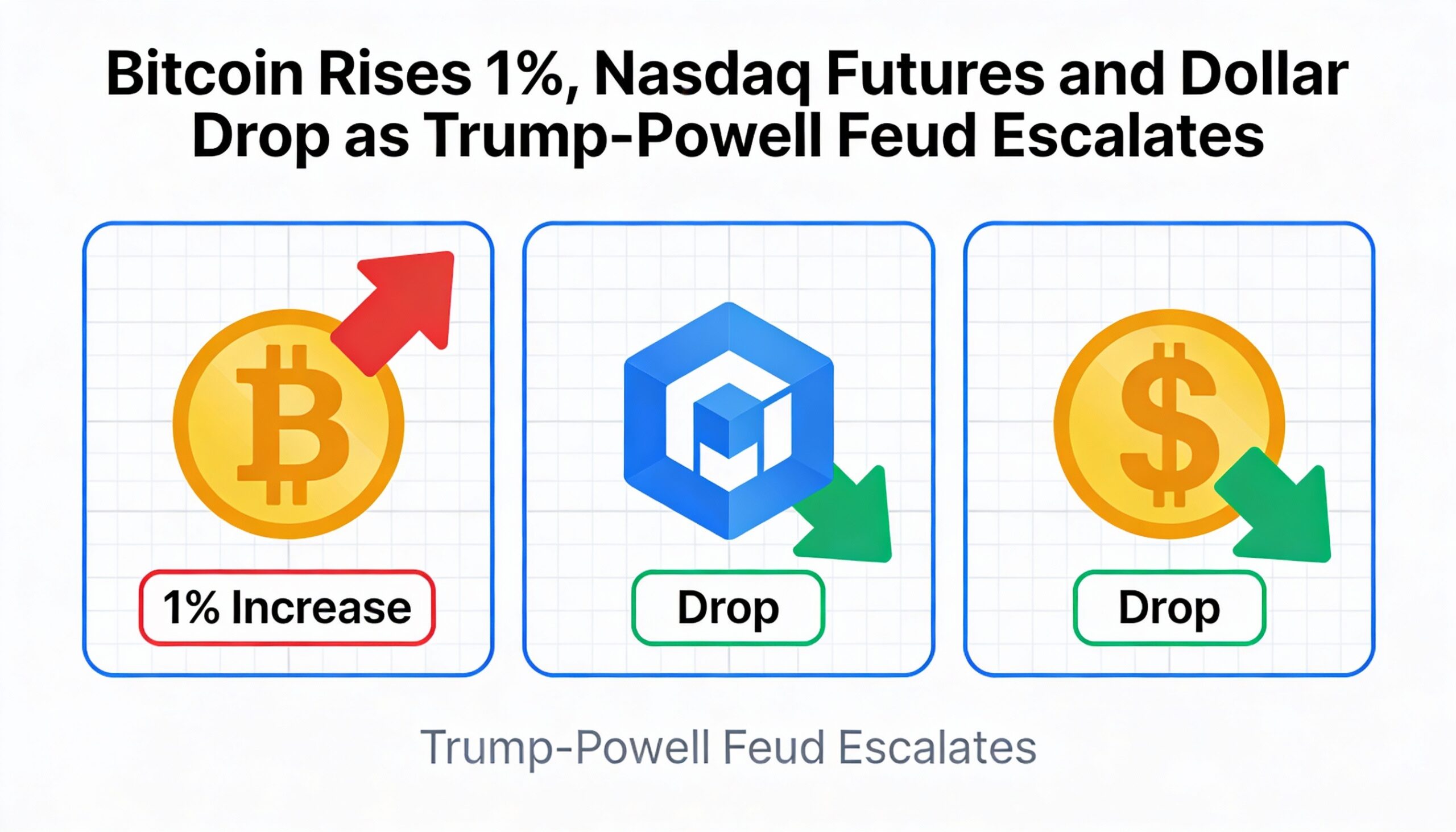
Bitcoin (BTC $91,233.29) rose 1% Monday afternoon in Hong Kong, diverging from a weaker U.S. equity market as tensions between President Donald Trump and Federal Reserve Chair Jerome Powell rattled investors. Nasdaq futures fell nearly 0.8%, S&P 500 futures dropped 0.5%, and the dollar index slid to 99.00 from Friday’s 99.26 peak.
Bitcoin briefly touched $92,000 but remained within last week’s trading range of $89,000 to $95,000, according to CoinDesk data. The cryptocurrency’s decoupling from Nasdaq futures suggests safe-haven demand, as investors sought refuge amid escalating political friction. BTC supporters have long promoted it as an anti-establishment asset and a hedge against fiscal and monetary mismanagement. Meanwhile, gold, the traditional safe haven, surged to a record $4,600 per ounce.
The tensions escalated over the weekend after Powell revealed that the Trump administration had threatened him with a criminal indictment over renovations at the Federal Reserve’s headquarters. Powell described the threat as politically motivated, intended to pressure the Fed into cutting interest rates.
Trump has frequently criticized Fed policies, particularly its cautious approach to rate cuts. Since his 2025 inauguration, he has repeatedly urged Powell to lower rates aggressively, even calling him a “numbskull” and threatening to intervene in monetary policy decisions. Trump has advocated for interest rates to drop to 1% or below. The Fed recently cut rates by 25 basis points to 3.5%, but expectations are for rates to remain steady at least until March, with ultra-low rates unlikely in the near term.
Despite the White House’s intensifying attacks, prediction markets show little chance of Powell being removed early; his term is set to expire in May. However, repeated pressure on central banks during persistent inflation can undermine investor confidence and weaken the domestic currency. Turkey’s lira collapse, fueled by President Recep Tayyip Erdogan’s interference with central bank independence, serves as a cautionary example. Still, the U.S. dollar’s role as the global reserve currency makes a sudden collapse highly improbable.