Bitcoin’s push toward $70,000 fizzled out within days, with the market reversing sharply as inflation concerns and equity weakness dampened risk appetite ahead of the weekend.
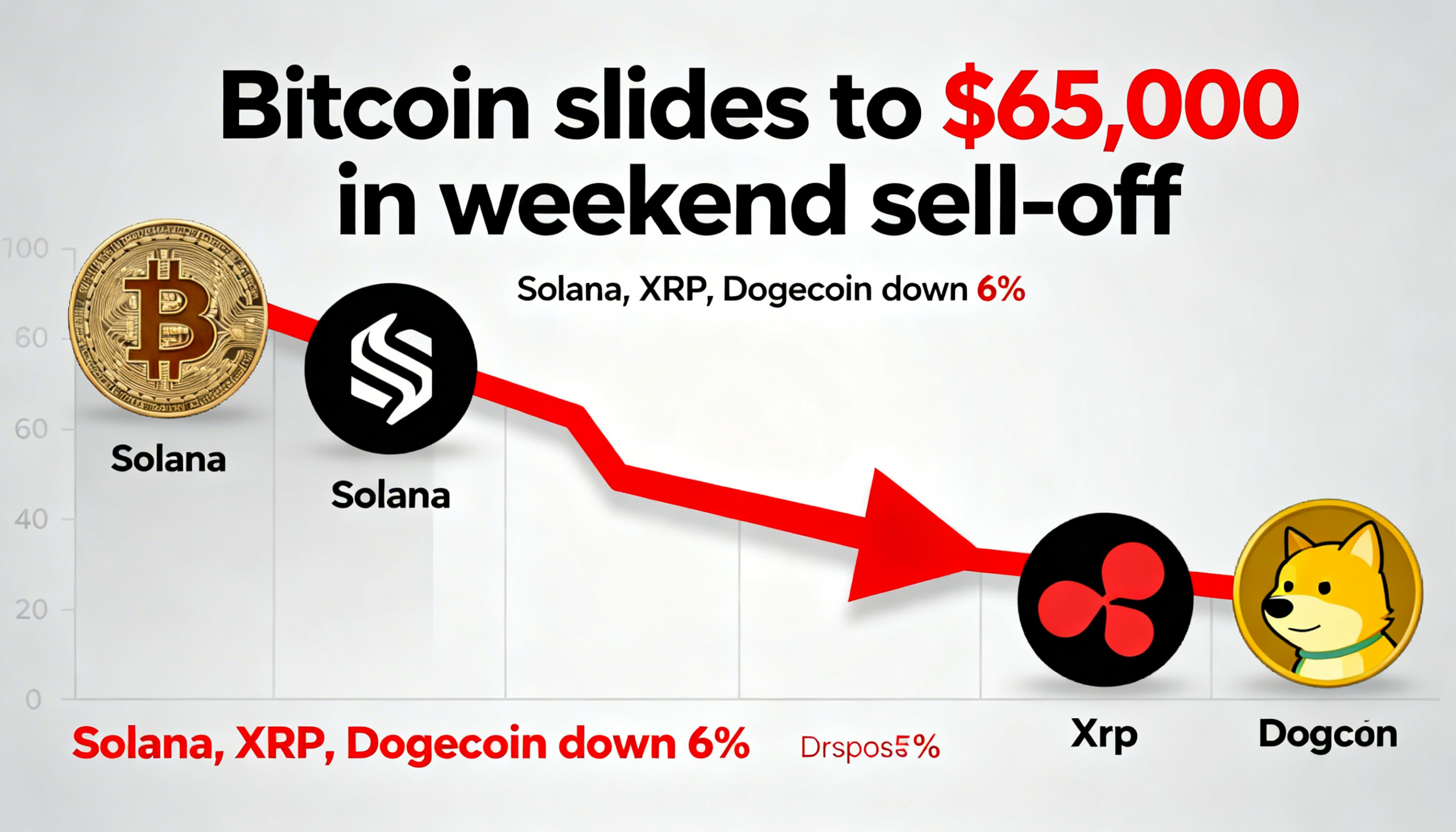
Bitcoin slipped to $65,735 in early Asian trading Saturday, marking a 3% decline over the past 24 hours and a 2.8% loss for the week. The rally that briefly carried prices close to $70,000 on Wednesday has now retraced more than half its gains as broader sentiment soured during the final U.S. trading sessions of the week.
Losses were steeper across altcoins. Solana dropped 6.7%, Ethereum fell 6.2%, Dogecoin declined 5.1%, and XRP shed 4%. The pullback erased earlier weekly gains and reversed what had been a brief stretch of altcoin outperformance. BNB proved relatively resilient, down 2.5%.
Traditional markets also weakened. The S&P 500 closed 0.4% lower on Friday, while the Nasdaq-100 fell 0.3% and the Dow Jones Industrial Average slid 1.1%. Shares of Nvidia dropped another 4.2% as investors continued to reassess its post-earnings outlook.
A stronger-than-expected 0.5% rise in producer prices added to the pressure, reinforcing concerns that the Federal Reserve may keep interest rates elevated for longer. Meanwhile, large-scale layoffs at Block, Inc. fueled worries that artificial intelligence adoption could be displacing jobs more broadly across the economy.
Crypto once again amplified the moves seen in equities. A modest 0.4% decline in the S&P translated into a 3% drop in bitcoin and losses exceeding 6% for several major altcoins. The leverage that built up during Wednesday’s rally was quickly unwound during the downturn.
Ironically, institutional flows had shown strength earlier in the week. U.S. spot bitcoin ETFs recorded $1.1 billion in inflows over three days, putting them on track for their strongest weekly performance in months. Still, those inflows were not enough to offset mounting macroeconomic headwinds.
“Over-analyzing short-term price swings can be misleading,” said Dom Harz, co-founder of bitcoin finance firm BOB. “Volatility is part of bitcoin’s nature. What’s different today is the type of capital now participating in the market.”
On-chain metrics also signaled caution. Data from CryptoQuant show that Tether reserves on exchanges have declined from $60 billion to $51.1 billion over the past two months. The firm warned that a drop below $50 billion could heighten the risk of a broader sell-off.
Elsewhere, shares of Strategy ranked among the most shorted large-cap U.S. stocks, as investors question the durability of its debt-funded bitcoin acquisition strategy.
Within the Ethereum ecosystem, some large holders have begun exiting positions at a loss. Digital asset firm ETHZilla announced it would abandon its ether accumulation strategy and pivot toward tokenized real-world assets.
Bitcoin now trades squarely within the $60,000–$70,000 range that has contained price action since the Feb. 5 downturn. This week’s failed breakout reinforced resistance near the upper boundary. As March approaches, attention turns to whether support at the lower end of the range will remain intact.