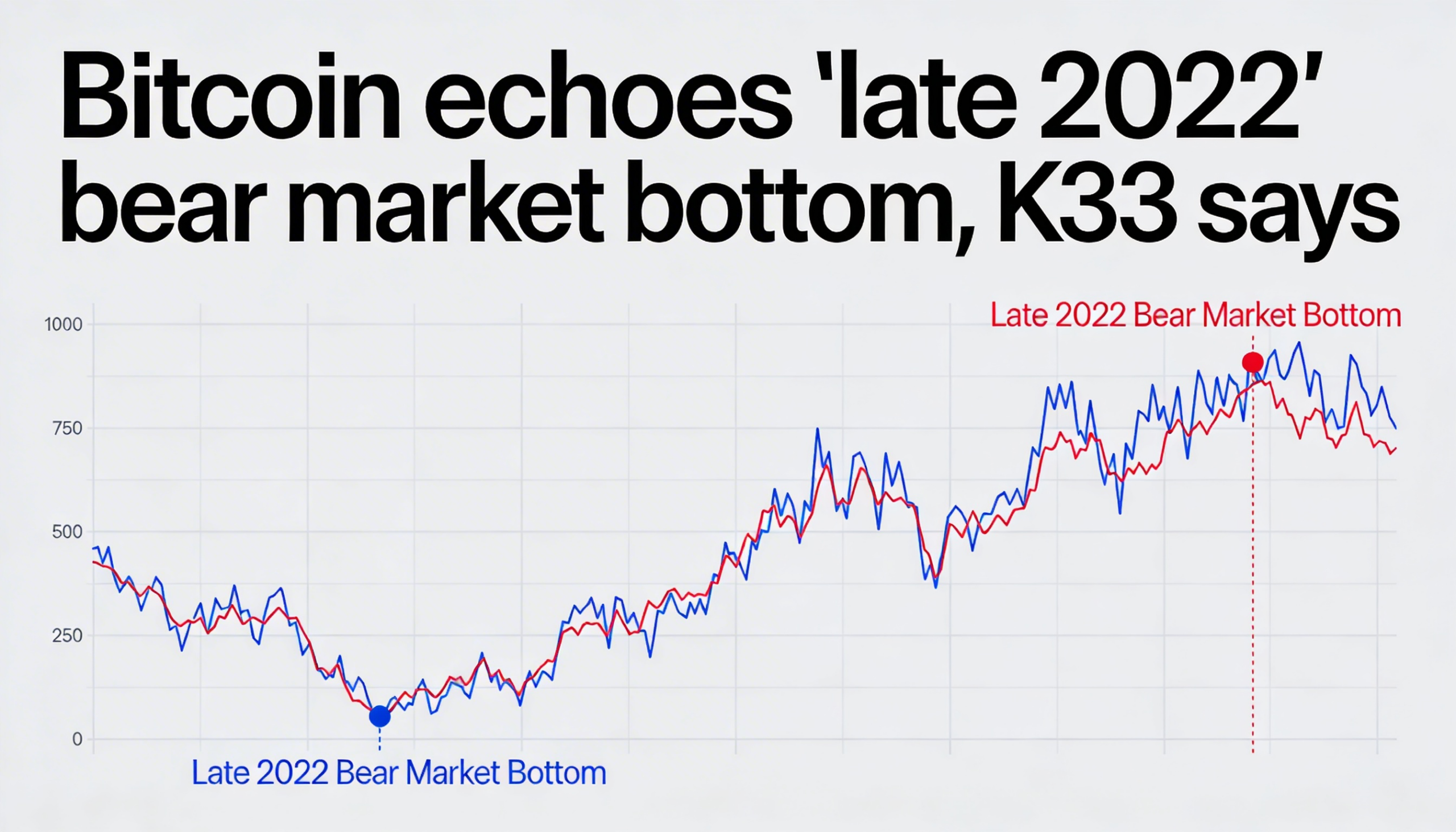
Bitcoin’s steep pullback earlier this month could be evolving into a classic late-bear-market phase, though a rapid recovery is unlikely, according to Vetle Lunde, head of research at K33.
Lunde said the current backdrop closely resembles late September and mid-November 2022 — periods that marked the tail end of the previous bear cycle and preceded a drawn-out stretch of sideways trading. During that phase, bitcoin hovered between $15,000 and $20,000, about 70% below its 2021 record high.
Now, BTC has settled into a tighter $65,000–$70,000 range. K33’s regime model — incorporating derivatives data, ETF flows, technical indicators and macro signals — suggests the market may once again be nearing a cyclical bottom.
Signs of exhaustion
One of the clearest indicators of late-cycle behavior is a sharp drop in activity. Spot trading volumes fell 59% week-over-week, while perpetual futures open interest declined to a four-month low. Funding rates have remained negative, pointing to diminished speculative appetite.
Lunde noted that such slowdowns are typical after aggressive liquidation waves, as traders digest losses and reset positions.
U.S.-listed spot bitcoin ETFs have also experienced a record peak-to-trough decline of 103,113 BTC in holdings since early October. Still, despite bitcoin retracing nearly 50%, more than 90% of peak ETF exposure in BTC terms remains intact.
Sentiment indicators paint a similarly bleak picture. The Crypto Fear and Greed Index recently dropped to a record low of 5 and has lingered below 10 for much of the past week — levels associated with extreme market pessimism.
Bottoming, but no quick breakout
Taken together, the data suggests bitcoin is “likely near, or at, a global bottom,” Lunde said. However, he anticipates an extended consolidation range between $60,000 and $75,000, echoing previous bear-market endgames that produced limited near-term returns.
For long-term investors, such periods have historically provided attractive accumulation opportunities — though patience may be tested.
James Check, on-chain analyst and co-founder of Checkonchain, underscored that bitcoin typically spends long stretches doing little before erupting in sharp repricing moves. Those bursts often occur within a small cluster of trading days, frequently early in a bull run and again in later-cycle acceleration.
He cautioned against trying to perfectly time the market, as waiting for confirmation can result in missing the early stages of a major rally.
While prolonged sideways action can feel frustrating, past cycles suggest that consistent positioning — rather than precision timing — has tended to reward disciplined investors.