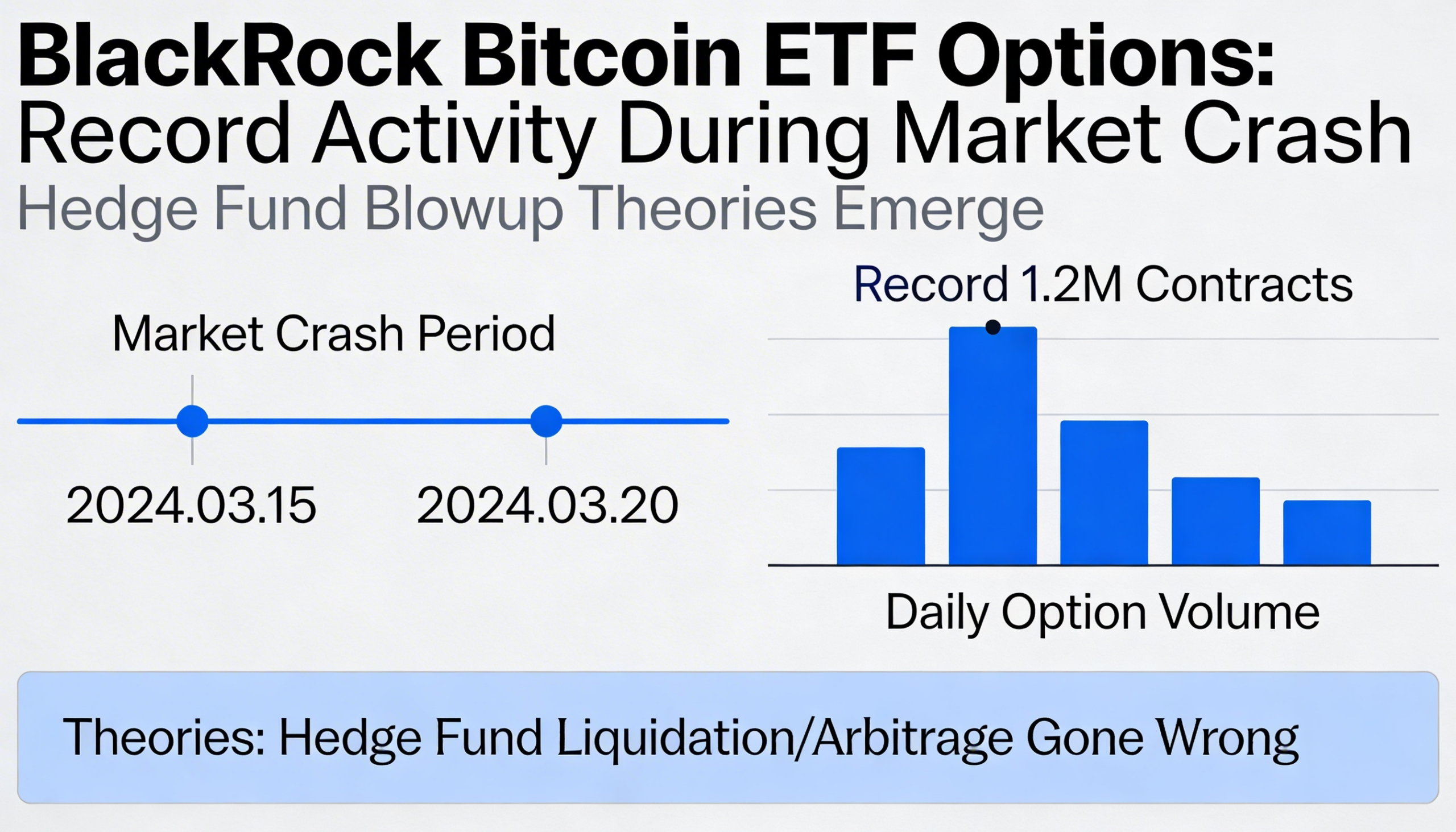
Options trading tied to BlackRock’s spot bitcoin ETF, IBIT, surged to unprecedented levels on Thursday as bitcoin plunged, fueling speculation over whether a hedge fund blowup amplified the market selloff.
IBIT, which has attracted billions of dollars since its launch by offering investors crypto exposure without the complexity of wallets or exchanges, has become a closely watched proxy for institutional positioning. Until now, market participants have largely focused on ETF inflows. Last week’s price action suggests options activity may be just as important.
As bitcoin slid sharply, options volume in IBIT jumped to a record 2.33 million contracts. By Friday, the ETF had fallen 13% to its lowest level since October 2024, with put options narrowly outpacing calls—an indication that traders were rushing to hedge against further downside, a common pattern during selloffs.
Options allow investors to manage price risk or take leveraged directional bets. Call options give the right to buy IBIT at a predetermined price, offering upside exposure with limited downside, while put options allow holders to sell at a set price, providing protection against declines. Losses are capped at the premium paid.
One striking data point was the roughly $900 million in total premiums paid by IBIT options buyers that day—the largest single-day total on record. The figure rivals the market capitalizations of many mid-tier crypto tokens.
Hedge fund blowup theory gains traction
A viral post on X by market analyst Parker argued that the surge in premiums and trading volume stemmed from the collapse of one or more hedge funds with concentrated exposure to IBIT. According to the theory, the fund had accumulated large positions in out-of-the-money call options following the October correction, betting on a rapid rebound.
Those calls, purchased using leverage, lost value as IBIT continued to fall. As prices dropped further on Thursday, brokers reportedly issued margin calls. Unable to meet collateral demands, the fund was allegedly forced to liquidate significant IBIT holdings, contributing to roughly $10 billion in spot trading volume. At the same time, the fund may have rolled or closed expiring options, driving premium payments to record levels.
Shreyas Chari, director of trading and head of derivatives at Monarq Asset Management, pointed to forced selling dynamics rather than speculative positioning alone.
“Systematic selling across the majors yesterday was probably tied to margin calls, especially in the ETF with the highest crypto exposure, IBIT,” Chari said. He added that rumors circulated of an options-focused entity forced to sell the underlying asset aggressively as key price levels broke, accelerating the move lower.
Others see routine market chaos
Not everyone is convinced a single fund collapse explains the data. Tony Stewart, founder of Pelion Capital, said IBIT options likely added to volatility but argued the evidence for a large-scale hedge fund blowup is inconclusive.
Citing data from Amberdata, Stewart noted that roughly $150 million of the $900 million in premiums came from traders buying back put options they had previously sold. As IBIT fell and those puts surged in value, short sellers moved to limit losses—a “painful” but common response during sharp declines.
Stewart said the remaining premium activity appeared to consist largely of smaller trades typical of a highly volatile session. “From the options standpoint, this is inconclusive,” he wrote, adding that the size alone does not definitively point to a single forced liquidation.
Still, he acknowledged that some activity may have occurred in over-the-counter markets, where positions are less transparent.
Whether driven by one distressed player or by broad-based panic, last week’s surge underscores the growing role of ETF options in shaping crypto market dynamics—and why traders may increasingly need to watch derivatives, not just inflows, to understand institutional behavior.