Fresh cracks in the U.S.-Iran ceasefire are quickly reintroducing uncertainty into global markets, less than 48 hours after the agreement sparked a broad risk rally.
Iran has signaled that parts of the deal have already been violated, with Parliament Speaker Mohammad Bagher Ghalibaf saying three clauses were breached, without elaborating. Meanwhile, Israeli strikes in Lebanon have continued, and the Strait of Hormuz—the critical artery for global oil shipments—remains largely closed, with only minimal tanker traffic despite earlier commitments to reopen it.
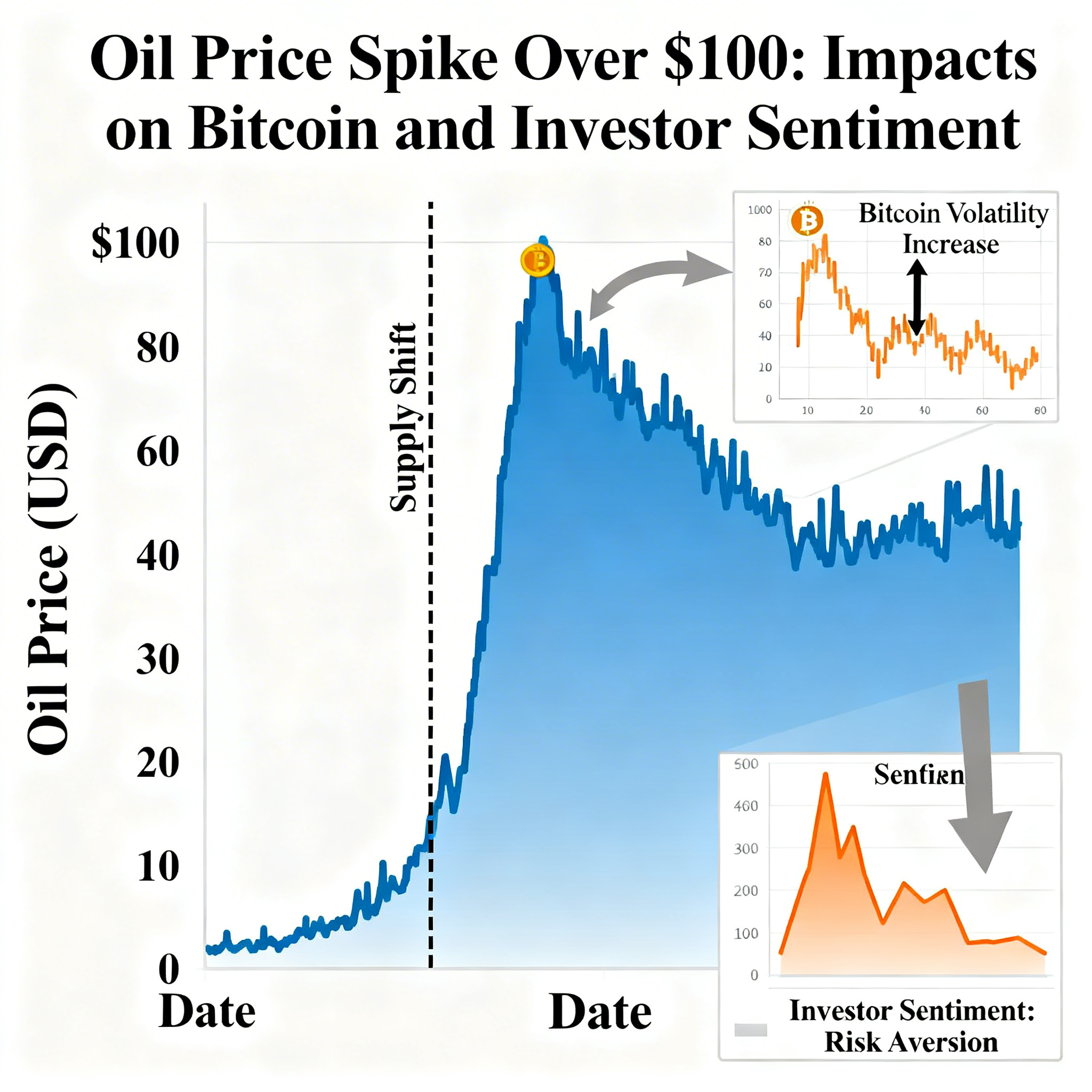
Oil markets have responded swiftly. Brent crude rebounded 2% to around $97 after tumbling more than 10% the previous day, highlighting a rapid shift from pricing in de-escalation to renewed geopolitical risk.
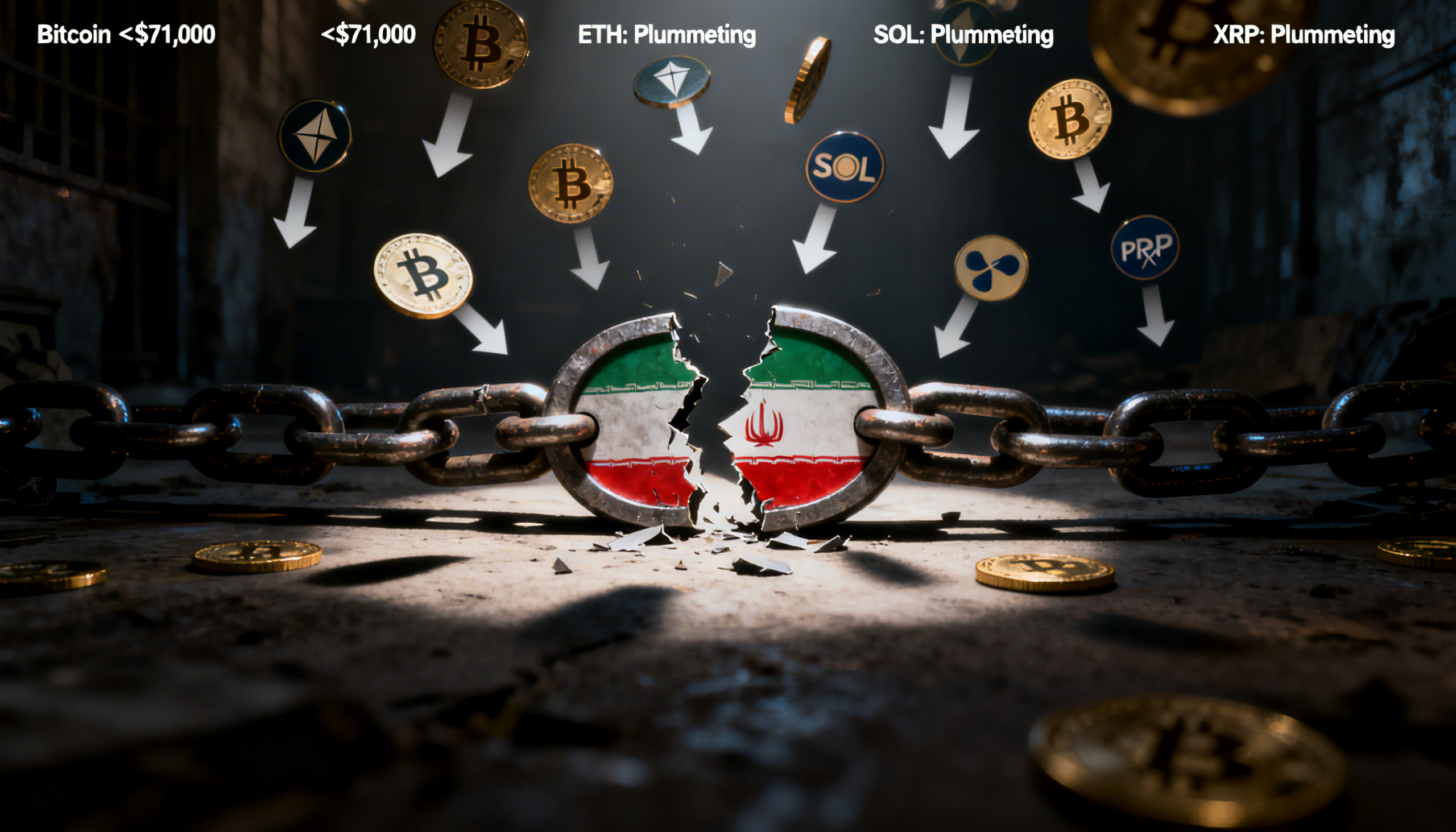
Bitcoin (BTC) slipped to $70,981, down 0.5% on the day but still holding onto a 6.1% weekly gain. The cryptocurrency had surged earlier in the week on ceasefire optimism, climbing from around $67,000 to above $72,000, and has so far managed to stay above the $70,000 mark despite the latest wobble.
Altcoins showed broader weakness. Ether dropped 2.6% to $2,180 after leading the earlier advance, while Solana (SOL) fell 3.1% to $81.96. XRP declined 3% to $1.33, and Dogecoin lost 3.4% to $0.091. BNB was comparatively steady, easing 2.2% to around $600.
Equity markets also turned cautious. The MSCI Asia Pacific Index fell 0.9% after posting its strongest gain in a year the day prior, with decliners outpacing advancers two-to-one. Futures tied to the S&P 500 and European markets pointed to a modest 0.2% pullback, suggesting the recent global equity rally may be losing steam. U.S. Treasuries held steady as concerns grew that higher oil prices could feed back into inflation.
The macro backdrop remains challenging. The Federal Reserve continues to flag upside inflation risks even as labor markets show signs of cooling, reinforcing a higher-for-longer rate outlook. In Japan, wage growth has accelerated to multi-decade highs, strengthening the case for further tightening.
Together, these forces reflect a broader environment of tightening financial conditions across major economies, layered on top of geopolitical uncertainty that complicates the outlook for risk assets.
Against this backdrop, bitcoin’s price action appears relatively resilient. The rally from $67,000 to $72,700 following the ceasefire announcement—and the ability to hold above $70,000—marks its most constructive stretch since the conflict began six weeks ago.
The broader $65,000–$73,000 range that has contained price action since late February remains intact, but bitcoin is now trading closer to the upper end of that band, rather than drifting near the lows—a shift that could prove important if support continues to hold.