Bitcoin’s bear phase could persist into late 2026 when viewed in dollar terms, but its valuation relative to gold suggests a potential turning point may arrive much sooner, according to research from Mercado Bitcoin.
Rony Szuster, the exchange’s head of research, notes that past bitcoin bear markets have typically lasted 12 to 13 months. The cryptocurrency last peaked near $126,000 in October 2025 in USD terms. If the current cycle follows historical precedent, the downturn could extend toward the end of 2026, he wrote in a report shared with CoinDesk.
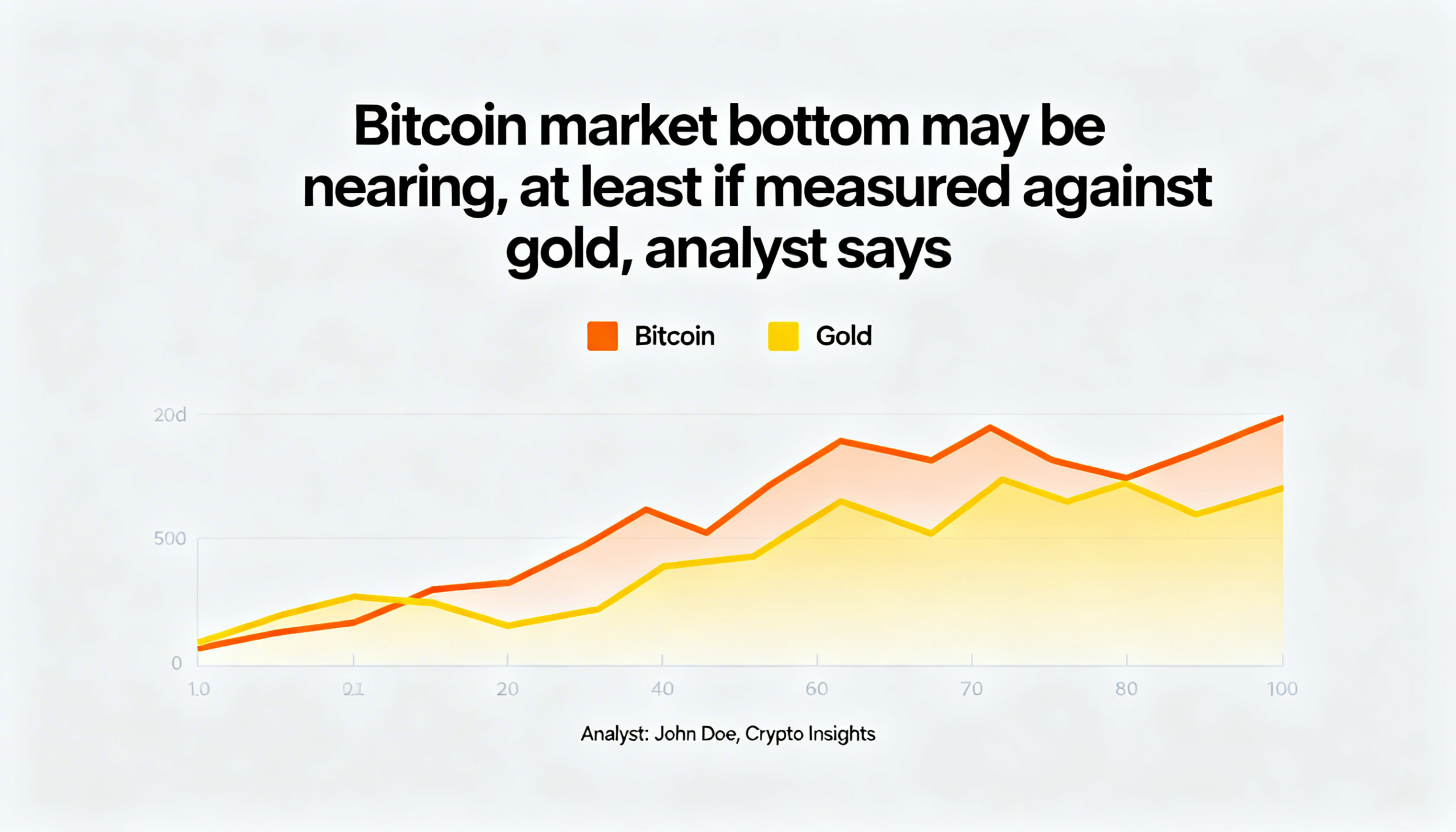
However, bitcoin’s trajectory looks different when priced in gold. The BTC-gold pair reached its high in January 2025. Applying the same historical cycle length would imply a potential bottom around February 2026, with a recovery phase possibly beginning the following month.
The discrepancy underscores the impact of broader macroeconomic forces. Since the beginning of President Donald Trump’s new term, global markets have been weighed down by renewed trade tariffs, domestic political tensions in the U.S., and escalating frictions with China and Iran, the latter of which have evolved into active military conflict.
Amid rising uncertainty — reflected in a sharp increase in the World Uncertainty Index — gold has benefited significantly. The precious metal has surged more than 80% over the past year to roughly $5,280, attracting capital seeking safety. As investors rotated into bullion, bitcoin weakened against gold more quickly than it did against the dollar.
Exchange-traded fund flows have added further pressure. Since November, roughly $7.8 billion has been withdrawn from spot bitcoin ETFs, accounting for about 12% of the sector’s $61.6 billion in total assets, signaling defensive positioning among shorter-term investors.
Still, the broader picture is more nuanced. While some capital has exited, larger players appear to be accumulating during the downturn. The report points to mid-February purchases of spot bitcoin ETF exposure by Abu Dhabi-based investment groups, including Mubadala Investment Company and Al Warda Investments.
Given this backdrop, Szuster encourages investors to adopt a disciplined accumulation approach, such as dollar-cost averaging, to mitigate volatility and avoid attempting to precisely time the bottom.
“Historically, buying during periods of heightened fear has delivered better long-term results than chasing euphoric rallies,” he wrote. “That doesn’t confirm the bottom is already in place, but statistically, we’re operating in the zone where attractive average entry prices are typically formed.”