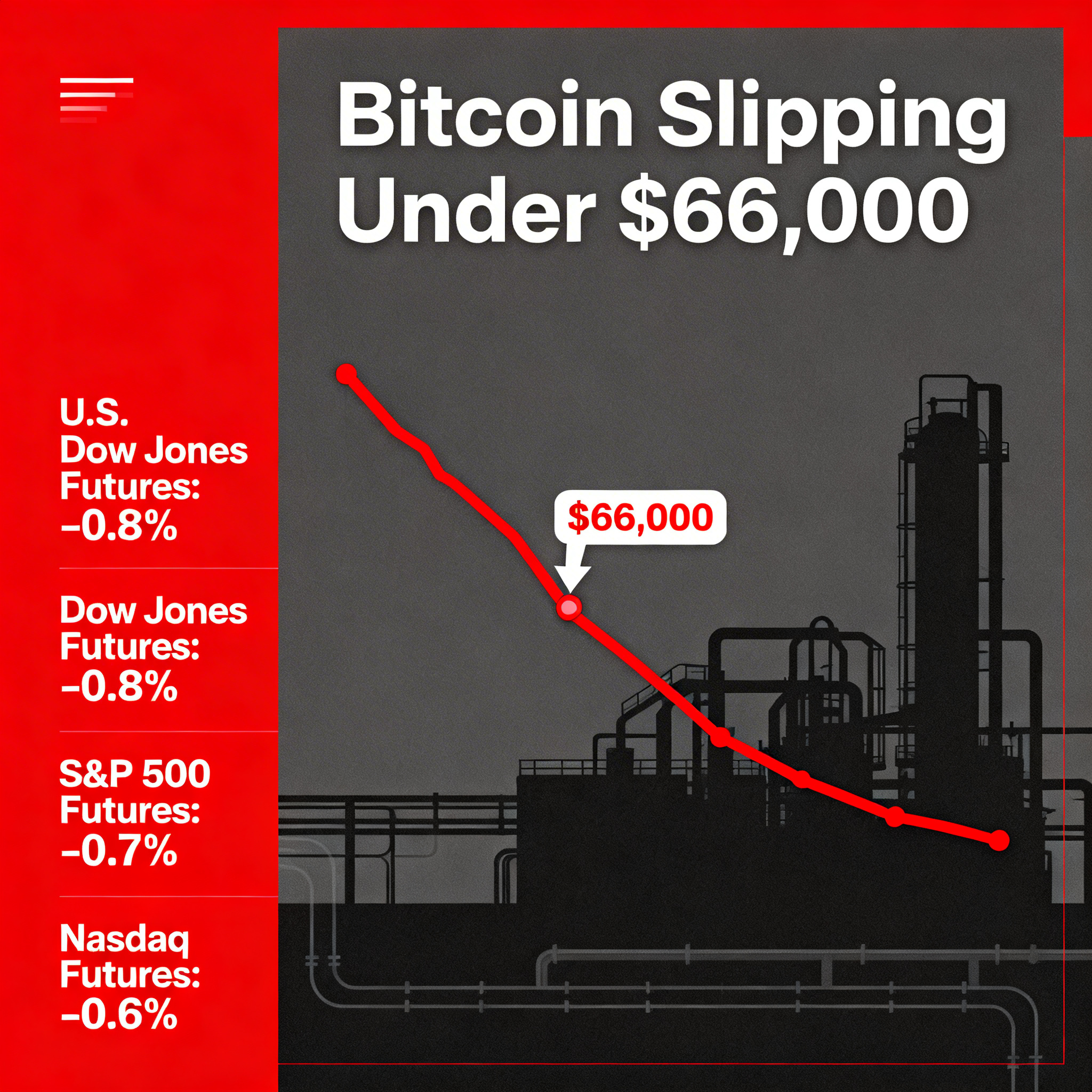
Bitcoin gave up early gains during Asian trading hours as geopolitical tensions escalated in the Middle East, dragging U.S. equity futures lower while oil prices surged.
The cryptocurrency briefly climbed toward $67,000 before slipping back below $66,000. At the same time, S&P 500 e-mini futures fell 1.4% to 6,790 after touching 6,857 earlier in the session. Crude prices extended their rally, rising more than 7% across global markets amid concerns over potential supply disruptions.
Open-source intelligence accounts on X reported that Iran intensified missile strikes against U.S. assets in Bahrain, Kuwait and the UAE. The widely followed War & Gore OSINT account also said Iran targeted the Ras Tanura refinery operated by Saudi Aramco — the world’s largest oil producer.
Separately, the BBC reported that Israel conducted another wave of airstrikes in Lebanon, aimed at Hezbollah, Iran’s primary regional ally.
Stephen Coltman, head of macro at 21Shares, said Iran appears to be attempting to raise the economic and strategic costs for the U.S. by widening the conflict geographically and threatening energy infrastructure. Disruptions to oil and LNG shipments through the Strait of Hormuz could intensify inflationary pressures globally.
“Wars are typically inflationary, pushing up commodity prices and widening fiscal deficits,” Coltman noted, adding that while markets initially reacted with a knee-jerk sell-off, prolonged instability could eventually support perceived store-of-value assets such as bitcoin.
The conflict escalated over the weekend after U.S. and Israeli forces launched strikes described as preemptive actions targeting Iran’s missile systems and nuclear program. Despite the heightened uncertainty, bitcoin has yet to attract clear safe-haven flows, instead trading in line with broader risk sentiment.