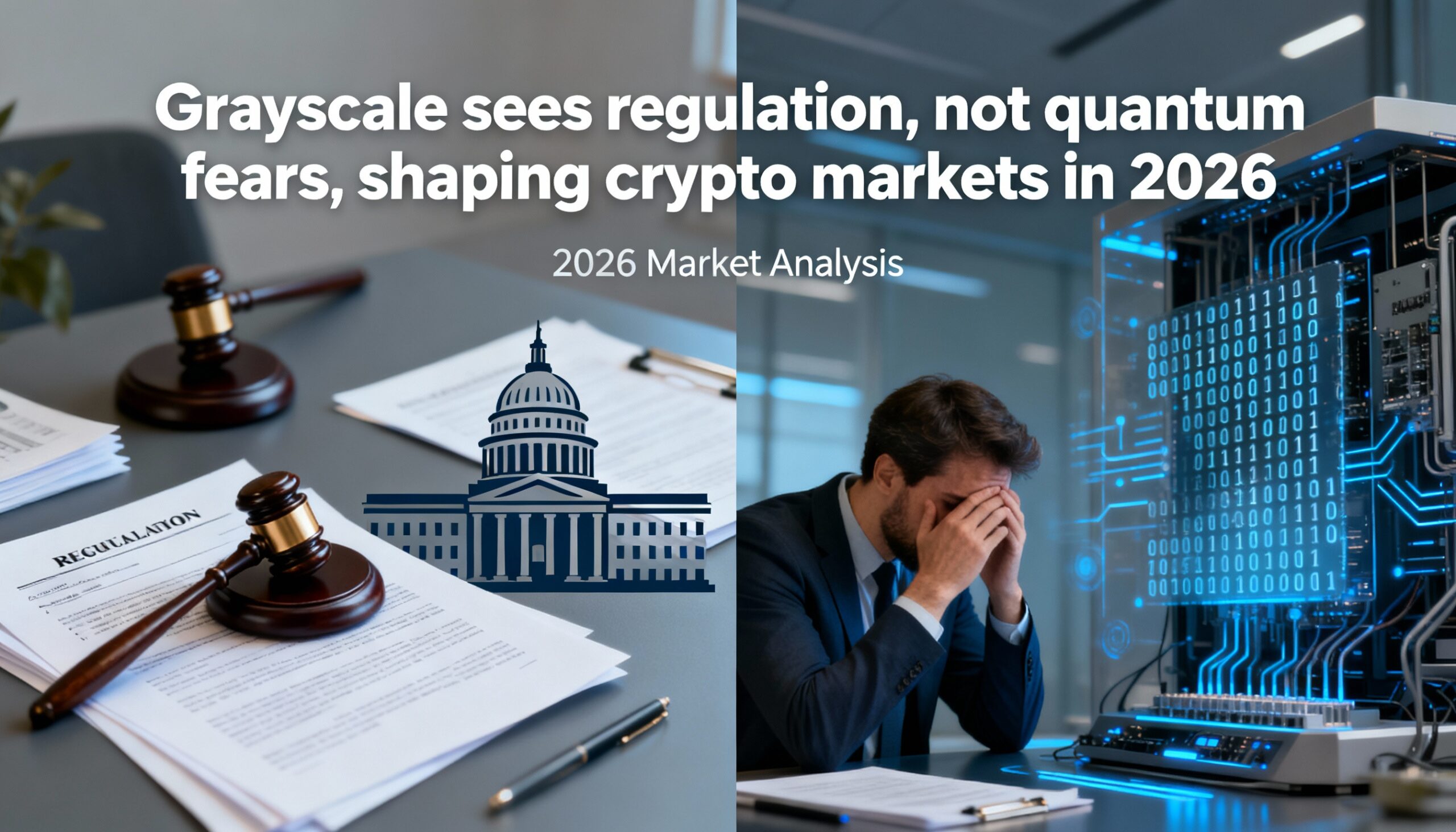
As 2025 draws to a close, investors are focusing on two major questions for digital assets: when Washington will implement a comprehensive regulatory framework, and whether advances in quantum computing pose an immediate threat to blockchain security, according to a Monday report from crypto asset manager Grayscale.
Grayscale analysts argue that one of these debates will shape markets in the near term, while the other is likely to be more of a distraction. The firm expects a bipartisan crypto market structure bill to become law in 2026, a milestone for the asset class. While details are still being negotiated, lawmakers appear set to establish a traditional financial-market rulebook for crypto, including registration and disclosure requirements, clearer classifications of digital assets, and insider guardrails.
A harmonized regulatory framework in the U.S., and potentially other major economies, could have practical adoption implications. Regulated financial firms may feel more comfortable holding digital assets on their balance sheets, while legal clarity could encourage institutions to transact directly on blockchains. Grayscale says these developments signal the early stages of a more institutional era for crypto markets.
In contrast, the firm views quantum computing concerns as legitimate but overstated for 2026. While sufficiently powerful quantum computers could theoretically derive private keys from public ones and enable fraudulent transactions, Grayscale expects the topic to generate headlines without materially affecting near-term asset prices. Over the long term, blockchains, including Bitcoin, will need to transition to post-quantum cryptography, but for now, these risks remain distant.