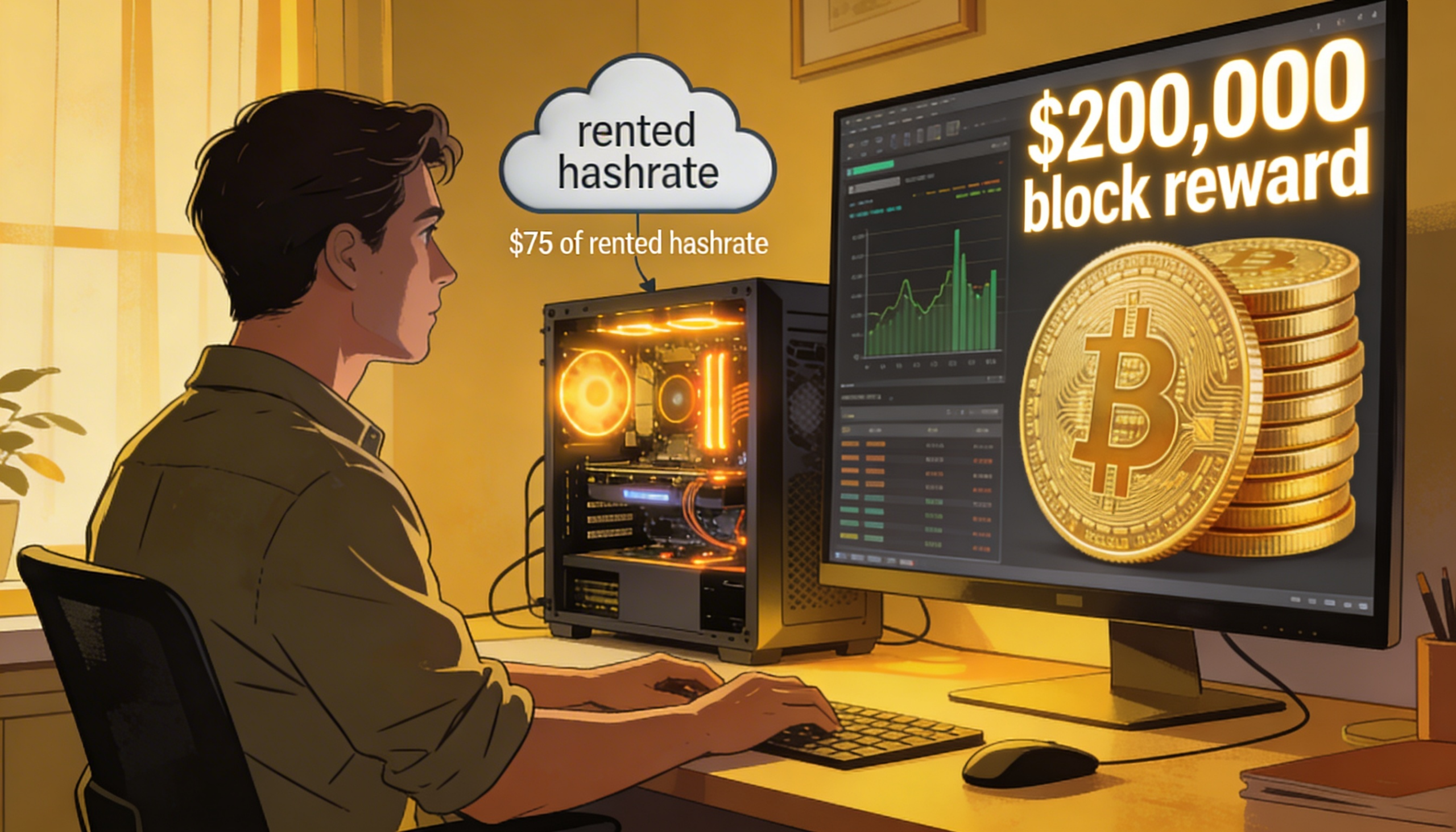
A solo Bitcoin miner has pulled off a rare feat, pocketing more than $200,000 after successfully mining block 938,092 with just $75 worth of rented hashpower.
Blockchain data from Mempool.space shows the block was validated at approximately 8:04 a.m. UTC on Tuesday. The miner claimed the full 3.125 BTC reward by leasing 1 petahash per second (PH/s) of computing power through an on-demand cloud mining service, spending about 119,000 satoshis — roughly $75 — to take the shot.
The miner operated through CKPool, a platform that allows individuals to mine solo while using a shared server to submit completed blocks to the Bitcoin network. Unlike traditional mining pools that distribute rewards among participants, solo miners keep 100% of the payout if they succeed.
The result represents an extraordinary return — roughly 2,600 times the initial outlay — underscoring the lottery-like nature of small-scale solo mining. While the odds are measurable, they are extremely slim.
Bitcoin’s network adds a new block approximately every 10 minutes. Miners compete to solve a cryptographic puzzle, and the first to find a valid solution earns the block subsidy plus transaction fees. Success probability is determined by hashrate, or the amount of computing power dedicated to solving the puzzle. The more hashes generated per second, the higher the chances of winning.
With just 1 PH/s, the solo miner was competing against industrial-scale operations that command massive shares of the global network hashrate. Statistically, the likelihood of a single petahash finding a block ahead of large mining farms is exceedingly low — akin to picking a single winning grain of sand from a beach.
Even so, solo wins are not unheard of. Data from solo mining tracker Bennet shows that 21 individual miners have validated blocks independently over the past year, earning a combined 66 BTC — about $4.1 million at current market prices. That figure marks a 17% year-over-year increase in solo-mined blocks, with one occurring on average every 17 days.
The growing availability of on-demand hashpower rentals has helped lower the barrier to entry. Miners no longer need to purchase and operate expensive hardware; instead, they can lease computing capacity for relatively small amounts, transforming solo mining into a high-risk, high-reward probability play.
The timing of this win also comes amid shifting mining conditions. Bitcoin’s network difficulty recently rose 15% to 144.4 trillion, reversing an 11% decline earlier in the month that followed severe winter storms in the United States. Those weather disruptions temporarily reduced hashrate, making blocks slightly easier to find before the network adjusted upward again.
At current difficulty levels, miners collectively must perform an average of 144.4 trillion hash attempts to discover a valid block — a stark contrast to the network’s early days in 2009, when competition was minimal.
For one solo miner, a $75 bet on rented hashpower — combined with favorable timing — was enough to defy the odds.