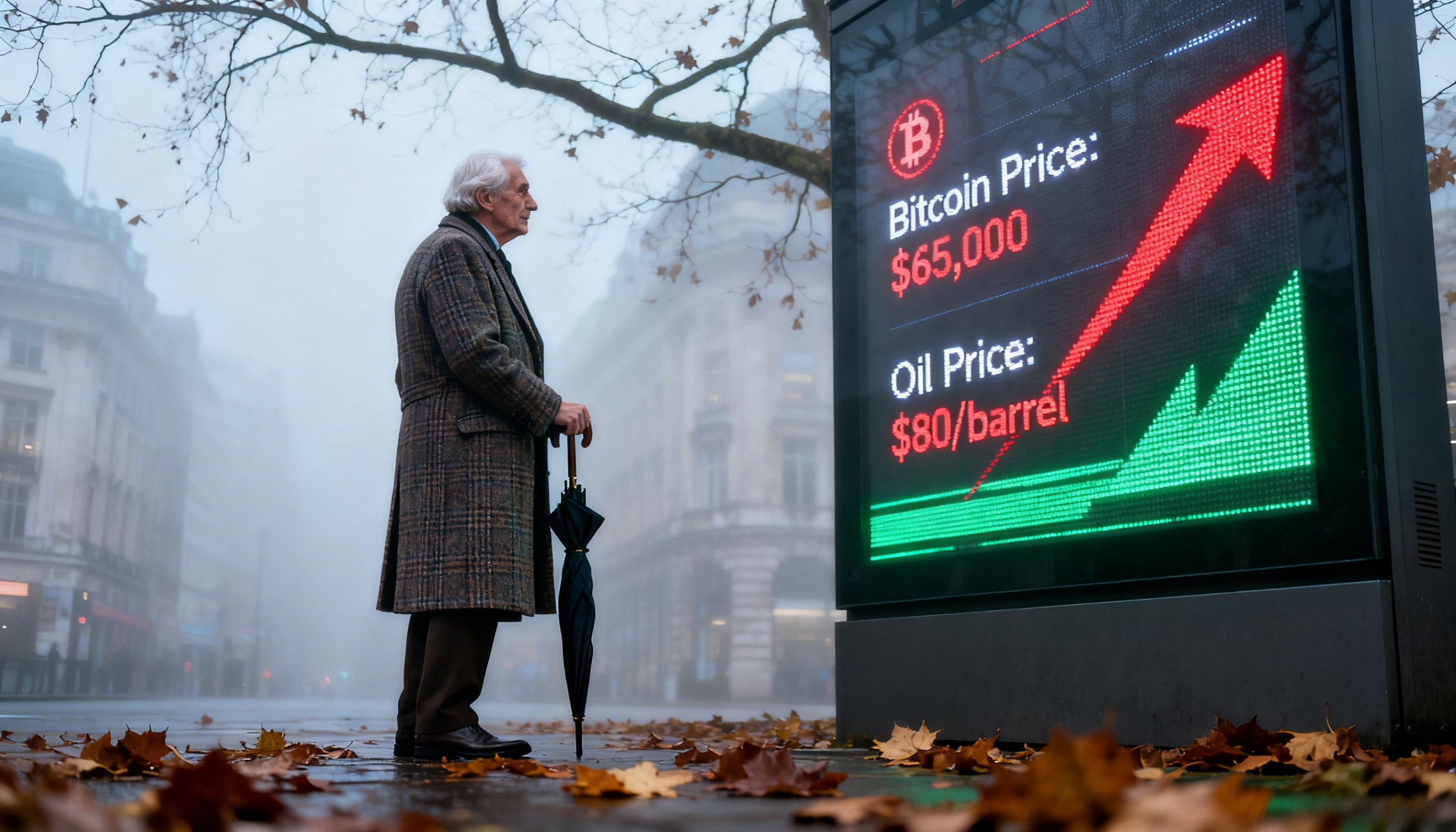
Bitcoin’s (BTC) next directional move may be dictated less by crypto-specific catalysts and more by the path of oil prices, as macro forces continue to steer sentiment.
BTC has rebounded to around $70,900 from weekly lows near $67,000, riding a broader risk-on wave after the U.S.-Iran ceasefire triggered a roughly 15% drop in crude prices to below $100 per barrel.
Even so, the market remains unconvinced. Bitcoin has reclaimed $70,000 multiple times in recent weeks, only for rallies to stall—highlighting the lack of sustained momentum.
According to Bitfinex analysts, the key variable now is whether oil weakness persists.
A sustained 15%–16% decline in crude could accelerate expectations for monetary easing, prompting markets to price in earlier rate cuts. That shift would act as a structural tailwind for non-yielding assets like bitcoin.
Falling oil prices would also help ease inflation pressures, potentially giving the Federal Reserve more flexibility to loosen policy later this year.
If that backdrop materializes, bitcoin could see a sharp upside extension driven by positioning. Derivatives data shows a heavy concentration of short exposure just above current levels.
“Roughly $6 billion in leveraged shorts are clustered between $72,200 and $73,500,” said Adam Saville Brown of Tesseract Group. “A breakout through that zone could trigger a liquidation cascade, opening the path toward $80,000.”
For now, however, rate-cut expectations remain limited. Some analysts warn that elevated energy prices could keep inflation sticky, leaving the Fed in a prolonged holding pattern with rates near 3.5%.
Meanwhile, the geopolitical backdrop is already shifting. The ceasefire that sparked the initial rally is showing signs of unraveling, with renewed tensions in the region and disruptions to tanker traffic through the Strait of Hormuz.
That raises the risk of a rebound in oil prices—an outcome that could quickly flip sentiment back to risk-off.
“The bear case is straightforward: if talks break down and oil moves back above $100, markets could revert to where they were before the ceasefire,” Brown said.
Bitfinex analysts added that crude could spike toward $120 if the Strait of Hormuz remains closed, further undermining the case for rate cuts.
With the ceasefire window limited to two weeks, markets are effectively facing a binary setup. Traders are navigating a narrow timeframe where the direction of oil—and by extension, monetary policy expectations—could determine bitcoin’s next major move.