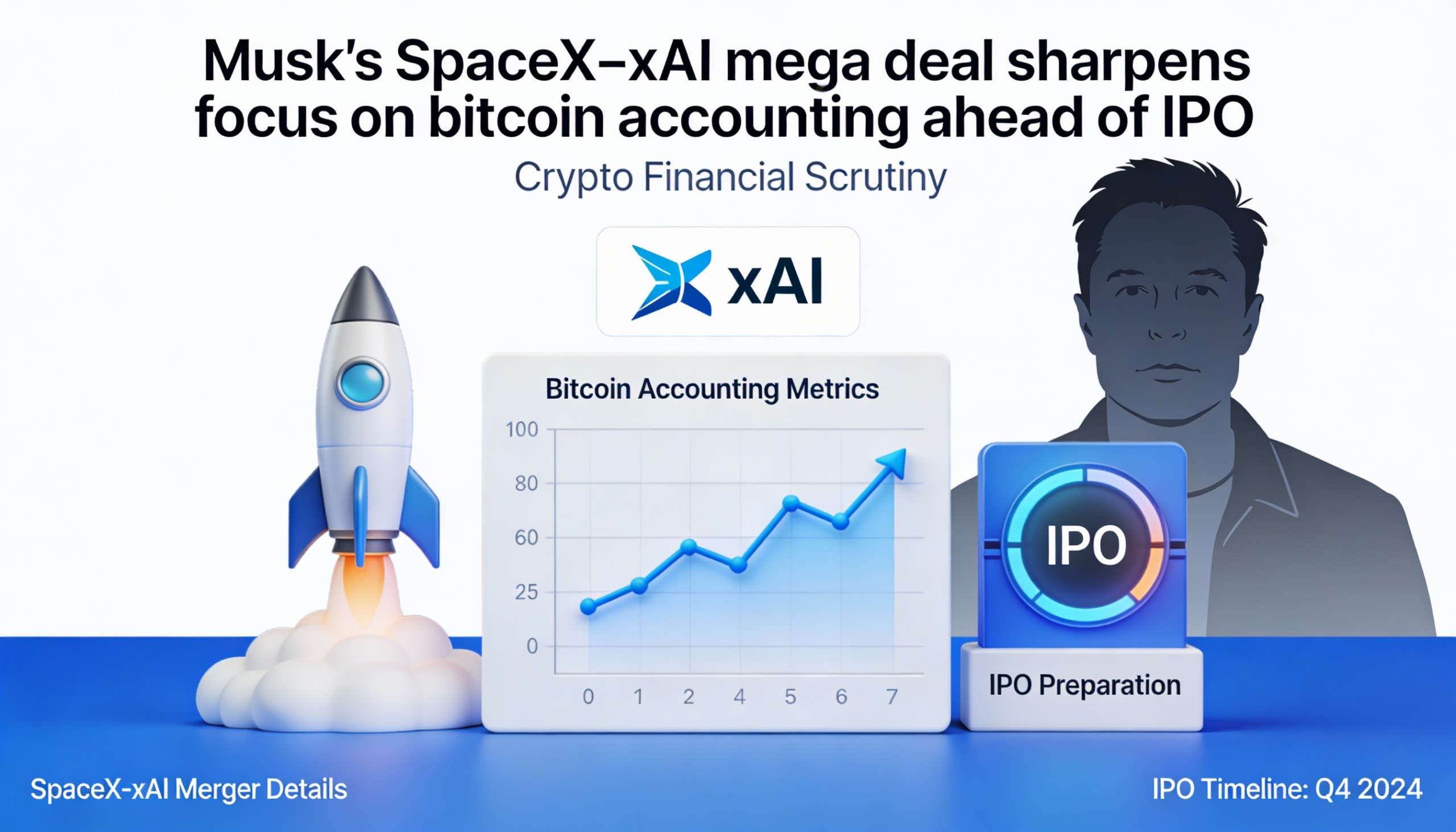
Elon Musk’s decision to merge SpaceX with artificial intelligence firm xAI has effectively created a technology giant with a potential valuation approaching $1 trillion — while also bringing renewed attention to one of the world’s larger corporate bitcoin holdings as the company moves closer to a possible public listing.
Though the transaction has been positioned as a push toward building “space-based AI,” the combined entity also inherits SpaceX’s longstanding bitcoin position, estimated at roughly 8,300 BTC based on past disclosures. At current prices, that stake is worth about $650 million — modest relative to a trillion-dollar valuation, but significant enough to influence accounting treatment, disclosure requirements, and investor perception ahead of an IPO.
SpaceX first revealed its bitcoin purchase in 2021 and, unlike Musk’s publicly listed electric-vehicle maker Tesla, has remained private. That status has insulated its crypto holdings from the quarter-to-quarter earnings volatility public companies face under fair-value accounting rules. As IPO preparations advance, that insulation would fade.
Tesla’s experience serves as a cautionary example. The automaker has previously reported hundreds of millions of dollars in paper losses tied to bitcoin price swings, even during periods when it made no changes to its holdings. Similar dynamics could come into play for SpaceX once it enters public markets.
The SpaceX–xAI merger also concentrates crypto exposure within a single corporate structure at a time when bitcoin has returned to heightened volatility following liquidation-driven selloffs. Unlike Tesla, which has both sold and later repurchased bitcoin, SpaceX has shown little inclination to actively trade its position. That long-term stance may appeal to some investors, but it also reduces flexibility if market conditions worsen during an IPO window.
More broadly, the deal highlights unresolved questions around how digital assets are managed across Musk’s business empire. Tesla, SpaceX, and xAI have historically operated under different disclosure standards, accounting frameworks, and capital structures, reflecting their mix of public and private ownership — differences that may now require closer alignment as Musk’s crypto exposure becomes more concentrated and more visible.