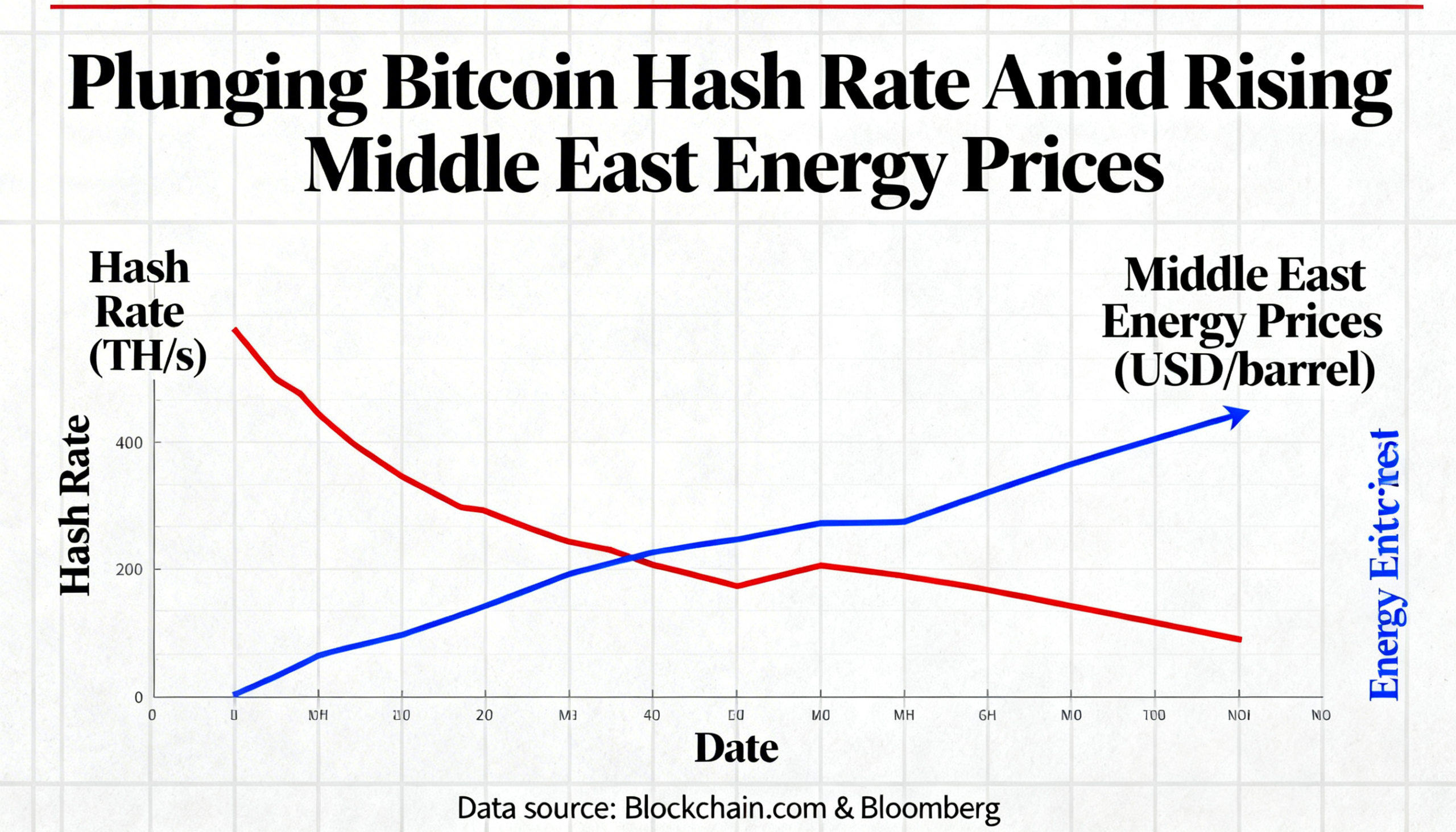
Bitcoin’s hash rate is falling as rising energy costs linked to the Middle East conflict strain miners and the wider market.
Over the past week, the network’s hash rate dropped roughly 8% to 920 EH/s, largely driven by geopolitical tensions from the Iran war and soaring oil prices. Analysts note that 8% to 10% of global mining operates in regions highly sensitive to energy costs, making the sector particularly vulnerable.
The decline raises the prospect of another miner capitulation phase, historically associated with downward pressure on bitcoin prices. The cryptocurrency is trading below $72,000, around 5% off Monday’s high.
The network is expected to undergo an 8% downward difficulty adjustment—the second-largest in five years—following a major decline in mid-February, reflecting ongoing volatility in mining activity.
Squeezed by low transaction fees, increased competition, and bitcoin price swings, miners are increasingly diversifying into AI and high-performance computing, while selling more bitcoin to support operations, creating additional headwinds for the market.