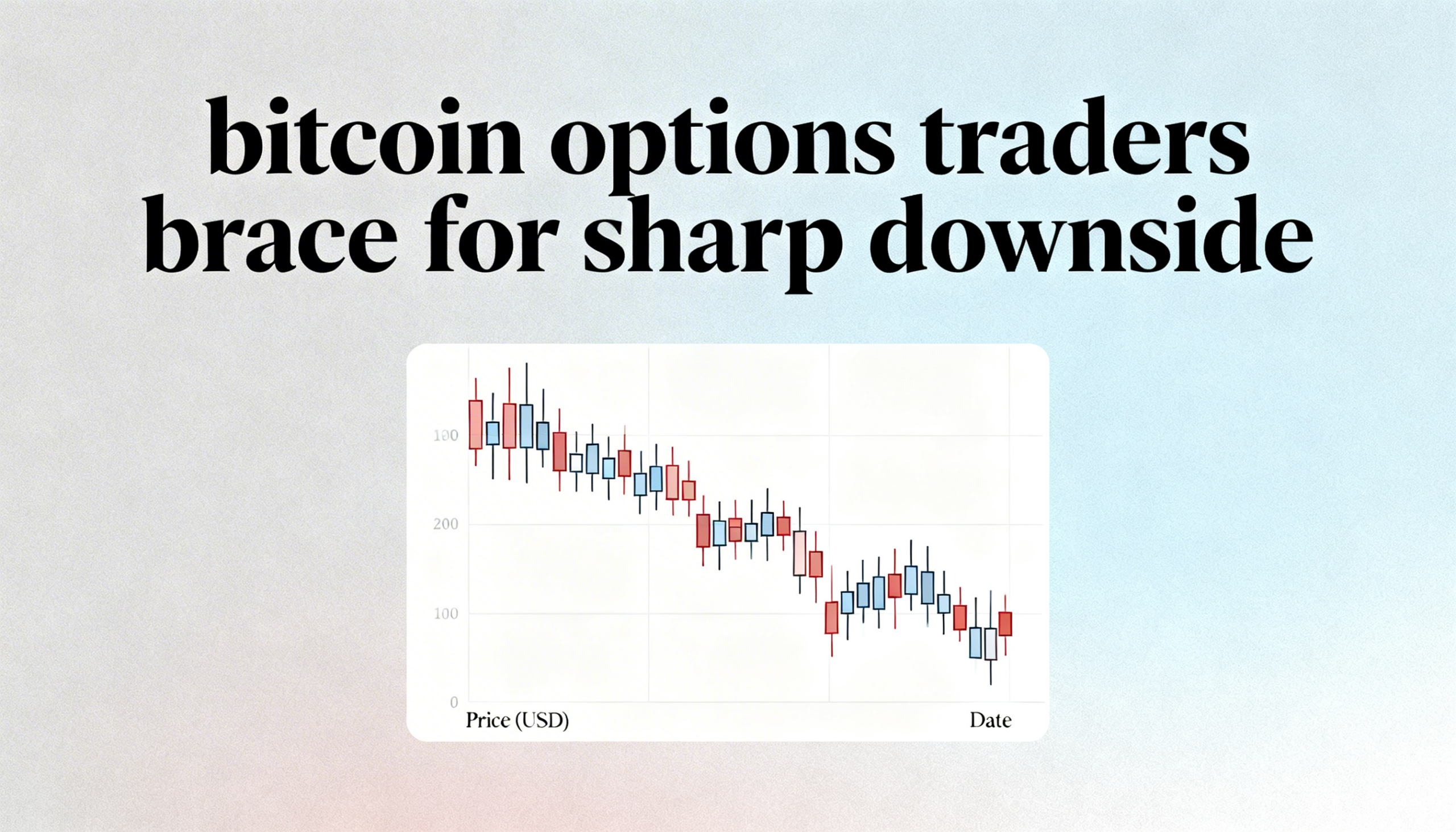
Bitcoin’s subdued price action is masking growing downside risks in derivatives markets, where traders are increasingly positioning for a potential sharp decline, according to a report from Bitfinex.
Options data shows a widening gap between implied and realized volatility, with implied volatility holding between 48% and 55% despite relatively calm spot price movements. This divergence suggests traders are paying up for downside protection even as bitcoin trades in a narrow range.
A key risk lies just below current levels. Analysts highlight a “negative gamma” zone under $68,000, where market makers may be forced to sell bitcoin into falling prices to hedge their exposure. This dynamic can amplify declines, turning gradual weakness into a more pronounced move.
Such conditions create what the report describes as a self-reinforcing cycle, where hedging activity accelerates selling pressure as prices fall. If support levels break, bitcoin could quickly move toward the $60,000 region.
Recent liquidations—totaling more than $247 million in long positions—have done little to fully reset the market, leaving positioning vulnerable.
Despite limited volatility, the market reflects low conviction. Traders are not aggressively bearish, but they remain unwilling to ignore tail risks, signaling that the current range may not be sustainable.
Meanwhile, underlying demand remains fragile. Bitcoin’s range between roughly $64,000 and $74,000 gives the appearance of stability, but weakening spot demand and declining participation suggest a thinner base of buyers.
Corporate treasury demand has also softened. While firms like Strategy continue accumulating, others—including Marathon—have reduced exposure, concentrating demand among fewer participants.
At the same time, supply overhang near $74,000 is capping upside, as investors look to exit positions on rallies.
Taken together, these factors suggest bitcoin’s current calm may be temporary, with the market increasingly exposed to a sharper downside move.