Crypto traders are heading into a pivotal macro week on the defensive, with key U.S. economic releases — including the Federal Reserve’s January meeting minutes and the core PCE inflation report — looming on the calendar.
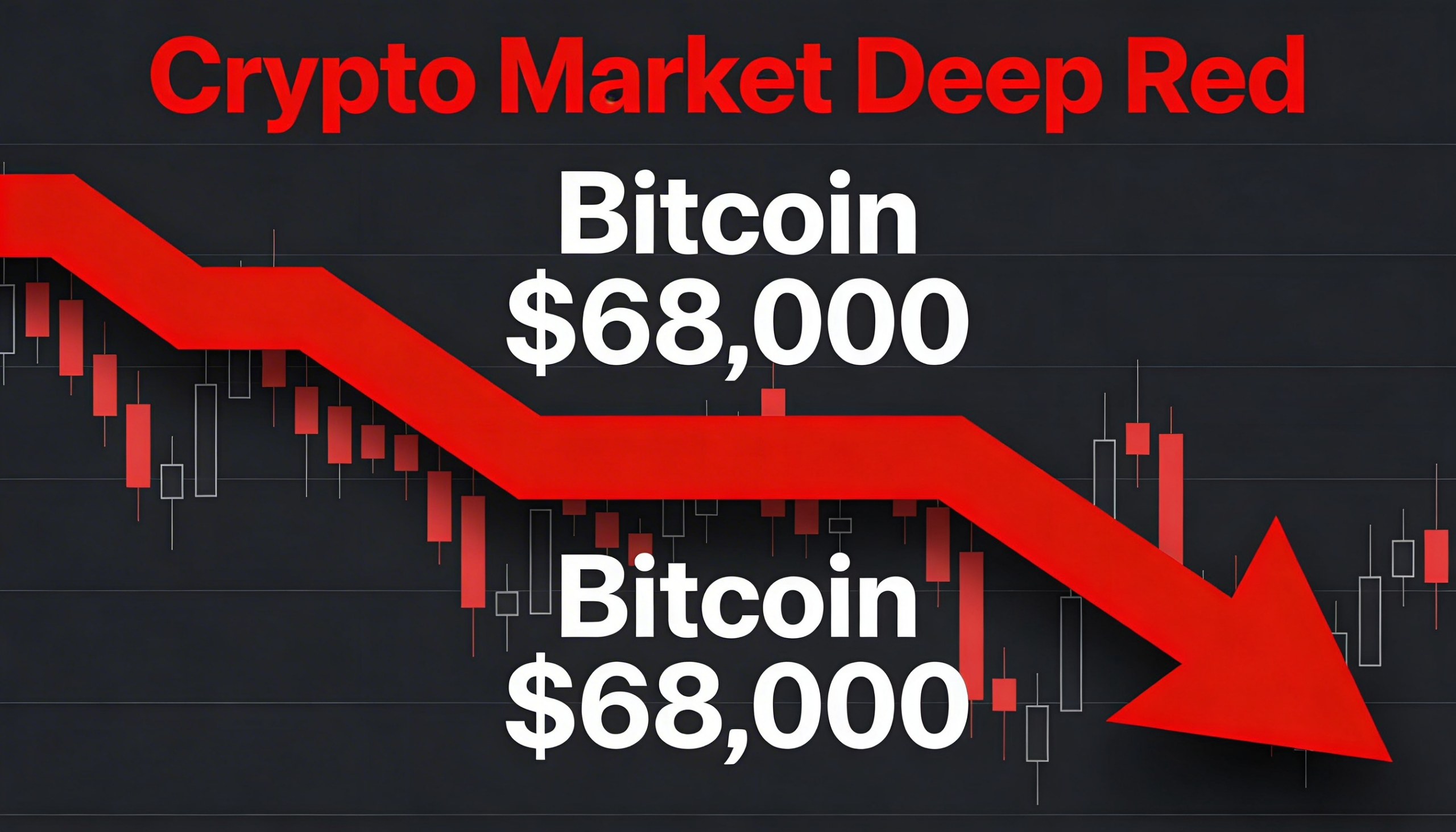
Digital assets were broadly lower on Monday, led by bitcoin’s pullback ahead of the data-heavy stretch. Bitcoin (BTC) was trading near $68,200 at press time, down almost 3% over the past 24 hours. Losses were steeper across major altcoins, with XRP, ether (ETH) and dogecoin (DOGE) all under heavier pressure.
The weakness was widespread: roughly 85 of the top 100 tokens by market capitalization were in the red. Privacy-focused coins such as monero (XMR) and zcash (ZEC) fell about 10% and 8%, respectively. Smart contract platforms also came under strain, with the CoinDesk Smart Contract Platform Select Capped Index sliding nearly 6%, extending its year-to-date decline to 28%.
The downturn comes despite last week’s softer U.S. inflation data, which had initially buoyed risk sentiment. Consumer price index (CPI) growth slowed to 2.4% year-on-year in January from 2.7% in December, reinforcing expectations that the Federal Reserve could deliver at least two 25-basis-point rate cuts this year. The 10-year U.S. Treasury yield dropped to 4.05%, its lowest level since early December.
Bitcoin responded by rallying from around $66,800 on Friday to above $70,000 over the weekend. However, it failed to sustain momentum at those levels, slipping back as traders reassessed positioning.
Vikram Subburaj, CEO of India-based exchange Giottus, attributed the market’s inability to hold gains to selective risk appetite and continued deleveraging in derivatives markets.
“Risk appetite stayed selective and macro cross-currents kept traders defensive,” Subburaj said. “In derivatives, the market continues to behave as if it is ‘de-leveraging first, asking questions later.’ Rallies have struggled to hold and dips are being bought only selectively near obvious levels.”
Attention now shifts to upcoming macro catalysts. Investors are watching for signals from the Fed’s January meeting minutes and, more importantly, the release of the core personal consumption expenditures (PCE) price index — the central bank’s preferred inflation gauge.
Dessislava Ianeva, dispatch analyst at Nexo, said markets will scrutinize the PCE report for confirmation that price pressures are easing meaningfully. While CPI showed gradual disinflation, inflation remains above the Fed’s 2% target, leaving policymakers cautious. Traders will focus on both the monthly reading and the year-over-year trend to gauge the likely path of monetary policy.
In traditional markets, currency dynamics are also drawing attention. Mark Nash of Jupiter Asset Management, previously known for his bearish stance on the Japanese yen, has turned constructive, forecasting an 8–9% appreciation in the currency, particularly against the Swiss franc.
The shift is notable for crypto markets because bitcoin and the yen have developed a strong positive correlation in recent months. Any sustained yen strength could therefore emerge as an additional tailwind for bitcoin bulls, even as macro uncertainty keeps the broader market on edge.