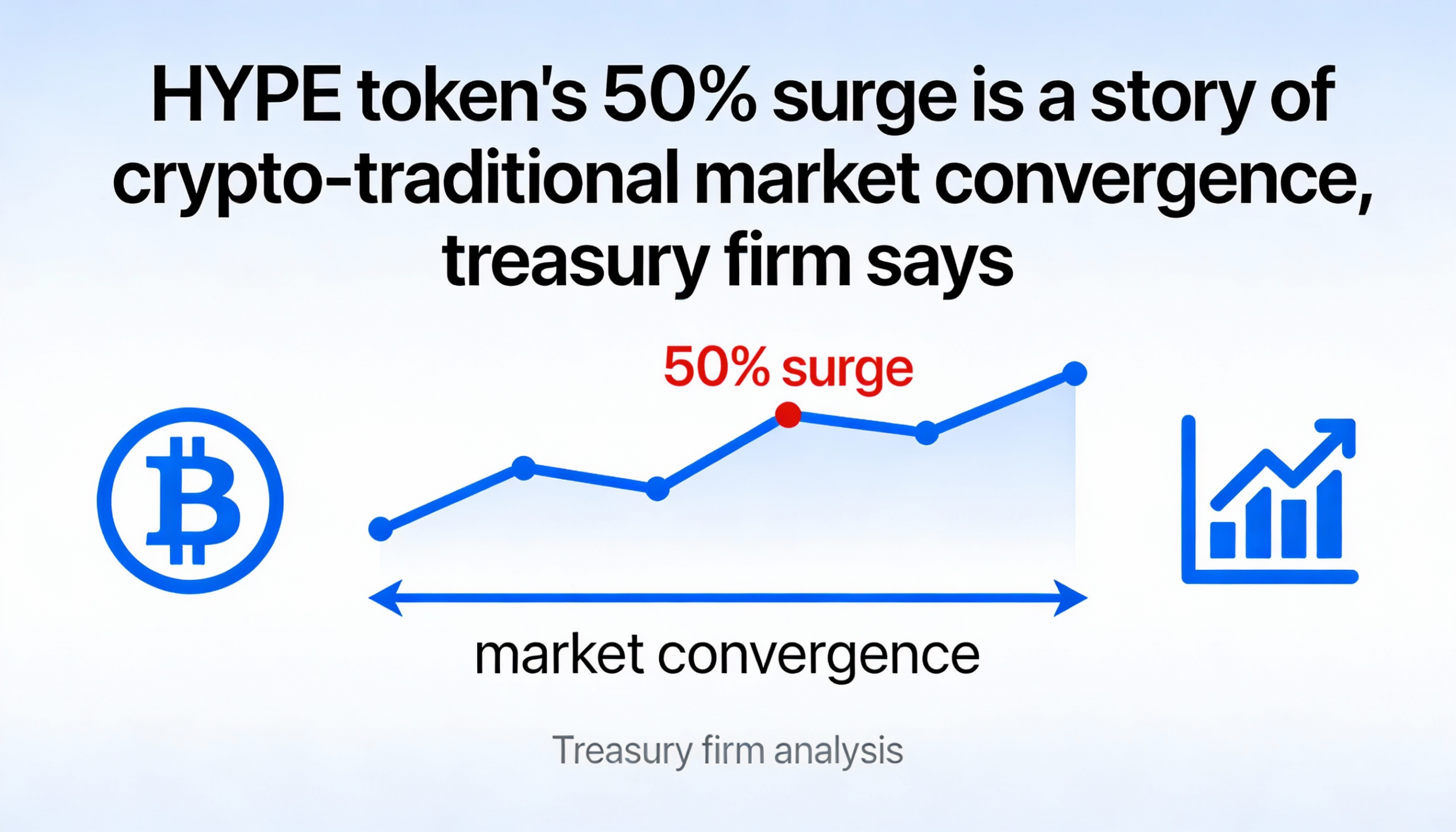
HYPE has jumped more than 50%, dramatically outperforming bitcoin, ether, and the broader crypto market.
In crypto’s early years, the industry was framed as a challenger to traditional finance—a parallel system built in opposition to Wall Street. Over time, that distinction has faded as familiar financial instruments such as futures and exchange-traded funds brought institutional capital into digital assets.
Now, those two worlds are converging directly on decentralized platforms.
The sharp rally in Hyperliquid’s HYPE token reflects that shift, according to Hyunsu Jung, CEO of Nasdaq-listed Hyperion DeFi. The firm is the first U.S. publicly traded company to establish a long-term strategic treasury position in HYPE and held more than 1.4 million tokens as of late last year.
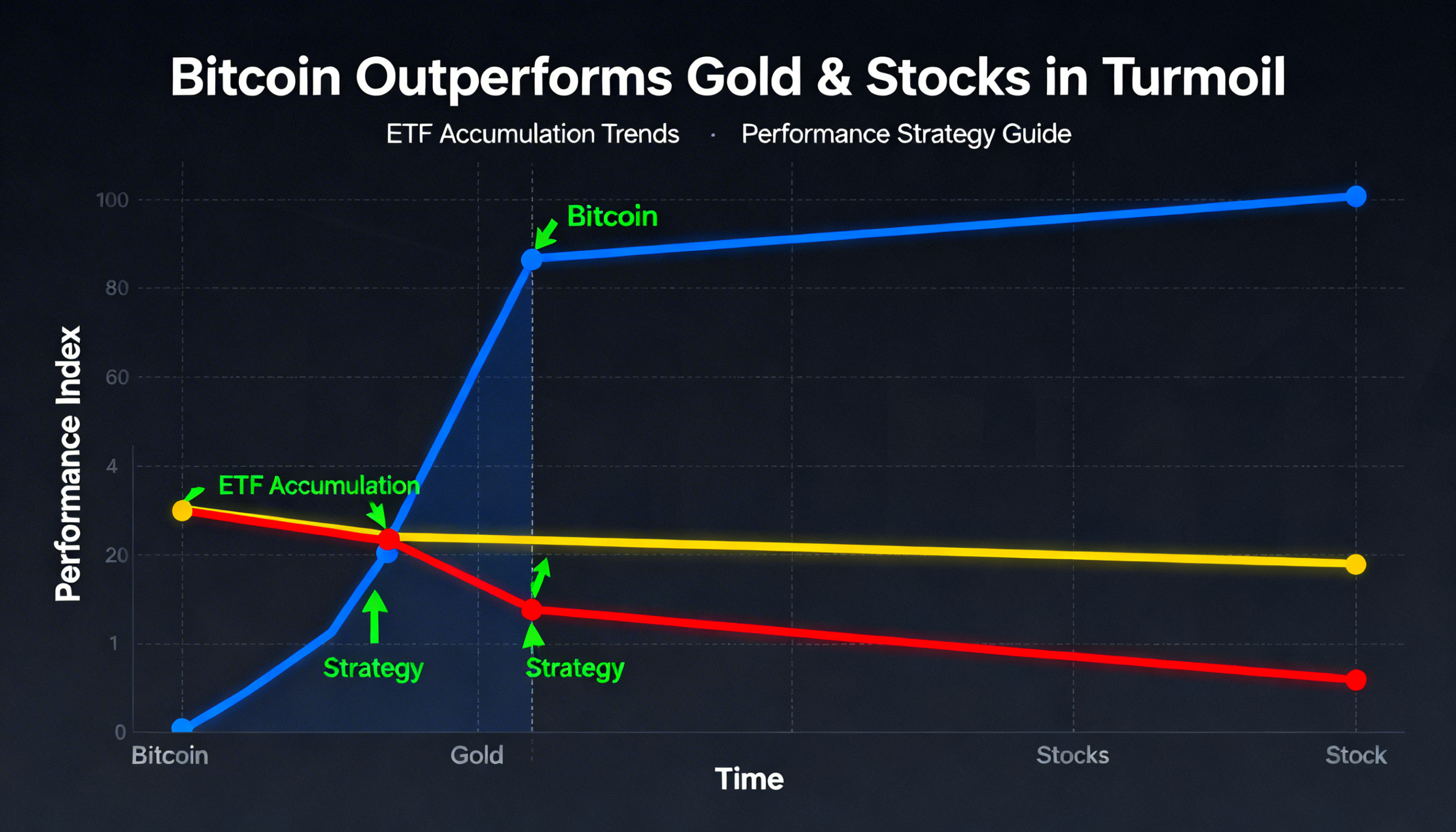
HYPE rose over 50% this week to roughly $34, leaving major cryptocurrencies well behind. Bitcoin gained just 1.84% over the same period, while ether also lagged, and the CoinDesk 20 Index advanced a little more than 4%, according to CoinDesk data.
“This is a story of asset-class convergence driven by the megatrend of tokenization in an increasingly financialized world,” Jung said. “More and more of that activity is happening on Hyperliquid.”
Hyperliquid initially launched as a decentralized exchange focused on crypto perpetual futures. It has since broadened its offerings to include trading in equity indices, individual stocks, commodities, and major fiat currency pairs.
That expansion was enabled by Hyperliquid Improvement Proposal-3 (HIP-3), introduced in October 2025, which allows anyone staking 500,000 HYPE tokens to create markets tied to non-crypto assets.
The timing proved favorable. Traditional markets—particularly precious metals—have seen heightened volatility since late 2025, driving strong trading activity and fee generation on Hyperliquid. The platform’s silver-USDC market alone recorded more than $1 billion in trading volume in the past 24 hours.
Growth across HIP-3 markets has been rapid. “Within just three months of this upgrade, Hyperliquid’s HIP-3 markets have captured over $1 billion in open interest, approximately $25 billion in total trading volume, and more than $3 million in fees, all transparently on-chain,” Jung said. He added that the platform now enables users worldwide to access equities—especially in regions with limited access to U.S. markets—and to gain exposure to the recent rally in metals.
Rising fee revenue feeds directly into HYPE’s token economics. Hyperliquid operates an automated buyback-and-burn mechanism, using up to 97% of protocol fees to repurchase HYPE tokens and permanently remove them from circulation.
“It’s a deflationary structure unlike anything else in the blockchain ecosystem and a powerful long-term tailwind for our treasury,” Jung said.
Jung also pointed to the platform’s continuous, 24/7 trading environment as a differentiator, allowing traders to respond immediately to global events and enabling price discovery outside traditional market hours, including weekends.