Bitcoin Rally Falters as Macro Pressures Outweigh Institutional Momentum
Growing institutional involvement in crypto continues to strengthen the industry’s ties to traditional finance, but broader economic forces are limiting bitcoin’s ability to sustain upward momentum.
Earlier this week, bitcoin briefly climbed toward $74,000, supported by a series of positive developments linking the crypto ecosystem more closely with major financial institutions. Some analysts saw the move as the beginning of a stronger upward trend, with one suggesting the rally could have staying power.
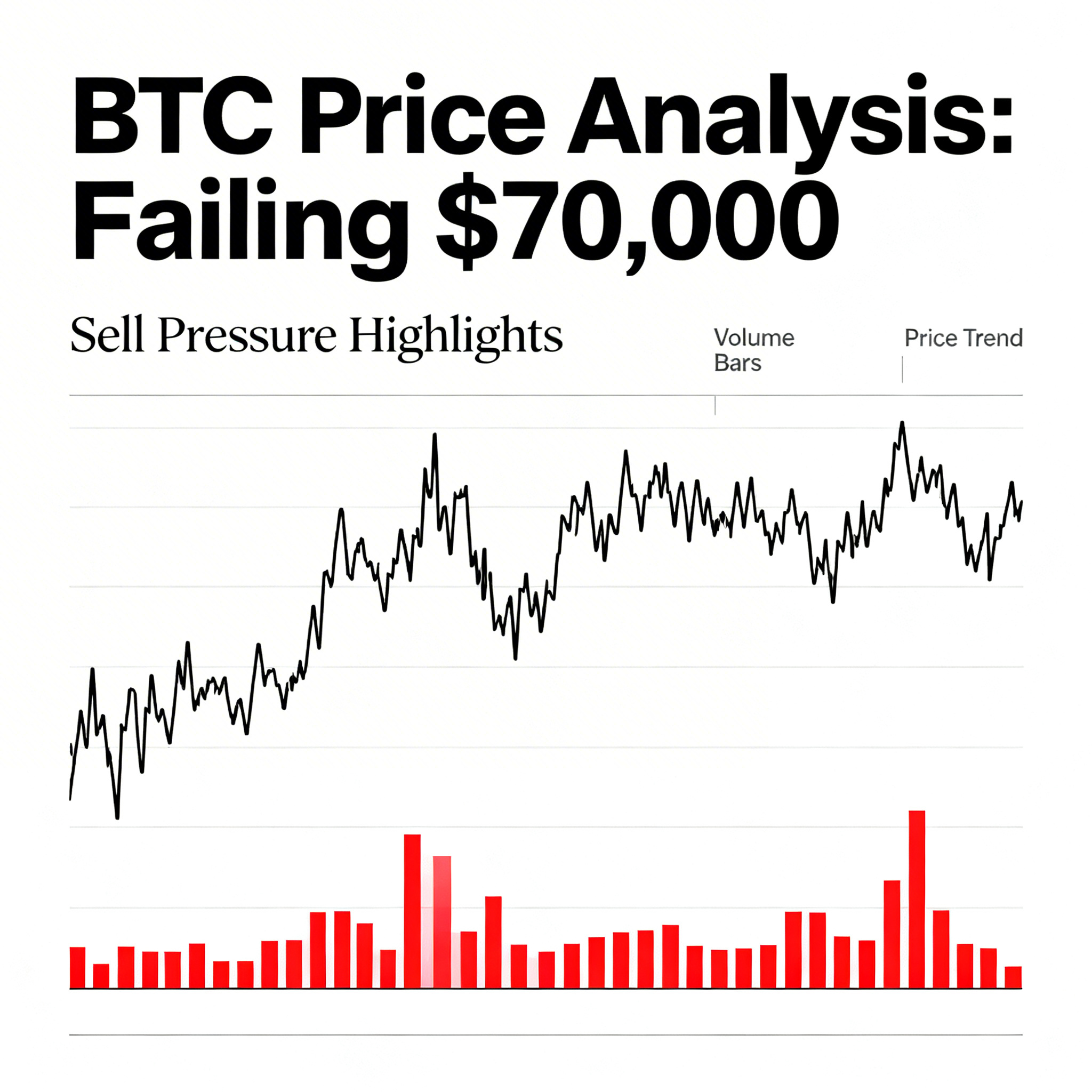
That optimism proved short-lived. By week’s end, bitcoin had dropped back below $69,000, wiping roughly $110 billion from its total market value.
The retreat came even though the crypto industry experienced one of its most encouraging waves of institutional news in months.
Several key announcements underscored how deeply digital assets are becoming integrated with traditional finance. Morgan Stanley selected Bank of New York Mellon to serve as a custodian for its exposure to spot bitcoin ETFs, further strengthening Wall Street’s infrastructure around the asset. Meanwhile, crypto exchange Kraken gained access to the Federal Reserve’s payment system, marking a major step in linking crypto companies with the U.S. banking network.
In another sign of growing institutional interest, Intercontinental Exchange (ICE), the parent company of the New York Stock Exchange, invested in crypto exchange OKX, valuing the platform at around $25 billion. At the same time, U.S. President Donald Trump suggested that traditional banks should develop workable relationships with the crypto sector.
In earlier market cycles, developments like these would likely have sparked a powerful rally, as institutional adoption was widely seen as the key catalyst for a sustained bull market. Now, however, the market appears more focused on macroeconomic forces than on industry-specific news.
The latest downturn was largely triggered by a stronger U.S. dollar as geopolitical tensions intensified in the Middle East. After President Trump dismissed the possibility of negotiating with Iran, declaring that “there will be no deal with Iran,” oil prices surged.
The jump in oil raised concerns about renewed inflation, prompting investors to reassess expectations for interest rates. Even though recent employment data suggested a softening labor market, the combination of geopolitical uncertainty and rising energy prices pushed the dollar higher.
As a result, risk assets around the world came under pressure. Equities moved lower while the dollar strengthened, and cryptocurrencies — which increasingly trade in tandem with technology stocks and other risk assets — followed suit.
At the same time, worries about stress in the global private credit market added to investor caution. Reports indicated that BlackRock had begun limiting withdrawals from its $26 billion private credit fund amid rising redemption requests. The situation echoed earlier developments at Blue Owl, which sold $1.4 billion in loans last month to meet investor withdrawals.
Together, these events unsettled markets and contributed to the broader risk-off environment.
The episode highlights a key shift in crypto markets: macroeconomic conditions are now playing a larger role in price movements than crypto-specific developments.
Over recent years, bitcoin has become increasingly correlated with the Nasdaq and other risk-sensitive assets as institutional investors entered the space. Hedge funds, asset managers, and ETF investors now tend to treat bitcoin as part of a broader macro portfolio, responding to factors such as liquidity, interest rates, and currency strength.
In a sense, the institutional adoption long sought by the crypto industry has helped drive this change. As bitcoin becomes more integrated into traditional investment portfolios, its price is influenced by the same forces that move stocks, commodities, and currencies. When the dollar strengthens or expectations for higher interest rates rise, liquidity tightens across markets — and crypto assets are often affected.
That said, the steady progress of institutional integration remains significant for the long-term development of the market. Expanded custody services, improved banking access, and new investments in crypto exchanges all signal that a more mature financial infrastructure is forming beneath the surface.
In the short term, however, macro uncertainty appears to have unsettled many short-term bitcoin holders, prompting them to lock in profits when prices approached $74,000.
According to CryptoQuant analyst Darkfost, short-term investors moved more than 27,000 BTC — worth roughly $1.8 billion — to exchanges within 24 hours, one of the largest such transfers in recent months.
Short-term holders are typically the most responsive participants in the market, often trading quickly to capture gains rather than holding assets for the long term. Given bitcoin’s relatively thin liquidity, concentrated selling from this group can have an immediate impact on price movements.
Blockchain data suggests that only investors who bought bitcoin between one week and one month ago — at an average realized price of about $68,000 — remain in profit among short-term holders. This indicates that some recent buyers who entered above that level may be choosing to secure gains rather than maintain their positions.
For now, with the crypto market still navigating a broader downturn that began in early October and macro uncertainty lingering, investors remain highly sensitive to price movements.
Signs of Support
Despite recent volatility, there are indications that institutional demand may be returning.
A report from Binance Research showed that U.S. spot bitcoin ETFs recorded about $787 million in net inflows last week — their first week of positive flows since mid-January. The shift suggests that some institutional investors may be cautiously reentering the market after several weeks of steady outflows.
Large university endowment funds also recently indicated that they are exploring new alternative investments, including digital asset-related ETFs. With traditional equity markets trading at elevated valuations, some long-term investors are seeking diversification through emerging asset classes.
The Binance report also pointed to a decline in speculative activity. Bitcoin funding rates have dropped to their lowest levels since 2023, indicating that many leveraged long positions have already been unwound.
Historically, this type of environment can create a stronger foundation for more sustainable price increases driven by genuine spot demand rather than short-term speculation.
Still, market sentiment remains fragile.
Some traders have labeled the sharp rally earlier this week a “bull trap” — a brief surge that attracts buyers before reversing sharply. While institutional participation continues to expand, a combination of thin liquidity, cautious investor sentiment, macroeconomic pressures, and a lack of clear catalysts suggests that volatility may remain a defining feature of the market in the near term.