The policy outlook for the Federal Reserve grew more uncertain on Friday as signs of a weakening labor market emerged at the same time inflation risks appeared to be intensifying.
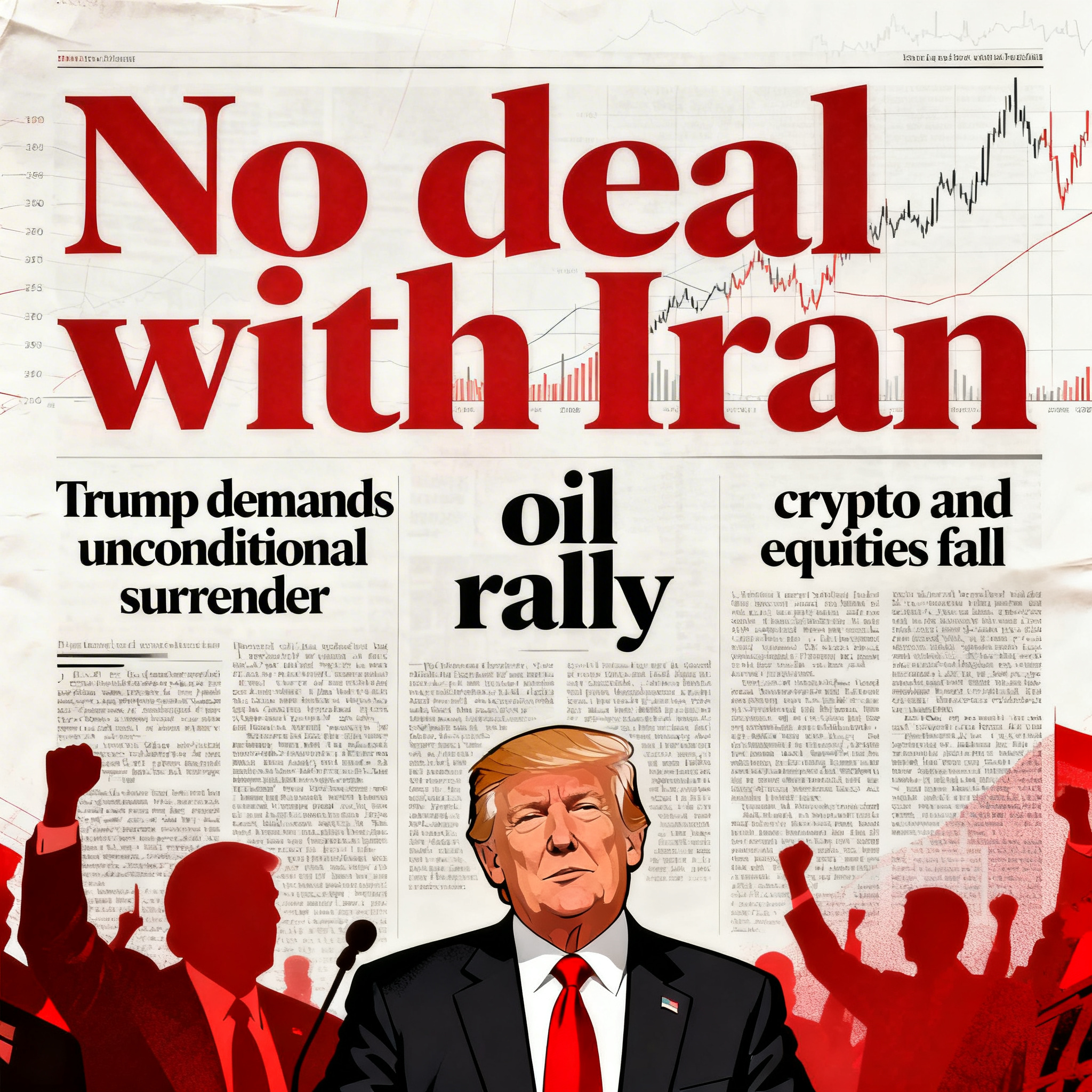
Risk assets extended their decline after Donald Trump indicated that the possibility of a negotiated settlement with Iran was effectively off the table.
“There will be no deal with Iran except UNCONDITIONAL SURRENDER,” the U.S. president wrote in a post on Truth Social.
The comments rattled markets, sending West Texas Intermediate crude oil surging toward a multi-year high near $90 per barrel. Equity futures also dropped, with contracts tied to the Nasdaq Composite falling roughly 1.8%. The sell-off spread to digital assets, pushing Bitcoin about 5% lower to around $68,800, marking fresh intraday lows.
Labor market weakens
At the same time, new economic data signaled further cooling in the U.S. job market. According to the U.S. Bureau of Labor Statistics, nonfarm payrolls unexpectedly fell by 92,000 in February. The unemployment rate also edged up to 4.4% from 4.3% in January.
The report highlights a broader slowdown in hiring that has been building over the past year.
“Let me put this another way: The U.S. economy has lost jobs since April 2025,” economist Heather Long wrote on X. “Total job gains from May 2025 to February 2026 are now -19,000. Companies are not hiring in the face of all of these headwinds and uncertainty.”
Ordinarily, labor market weakness of this magnitude might prompt the Federal Reserve to consider lowering interest rates. However, policymakers are still grappling with inflation that remains above the central bank’s 2% target, and the recent surge in oil prices could further complicate the outlook.
For now, traders see little chance of near-term easing. Market pricing suggests only about a 4% probability of a rate cut in March and roughly a 17% chance of a reduction in April.