As gold prices soar, Aurelion is repositioning its treasury around tokenized bullion to mitigate risks in the paper gold system.
Gold has been on a tear, climbing more than 80% over the past year and emerging as one of the top-performing assets in global markets. Yet beneath the rally, structural vulnerabilities are forming in how most investors gain exposure to the precious metal, according to Björn Schmidtke, chief executive of gold-treasury firm Aurelion (AURE).
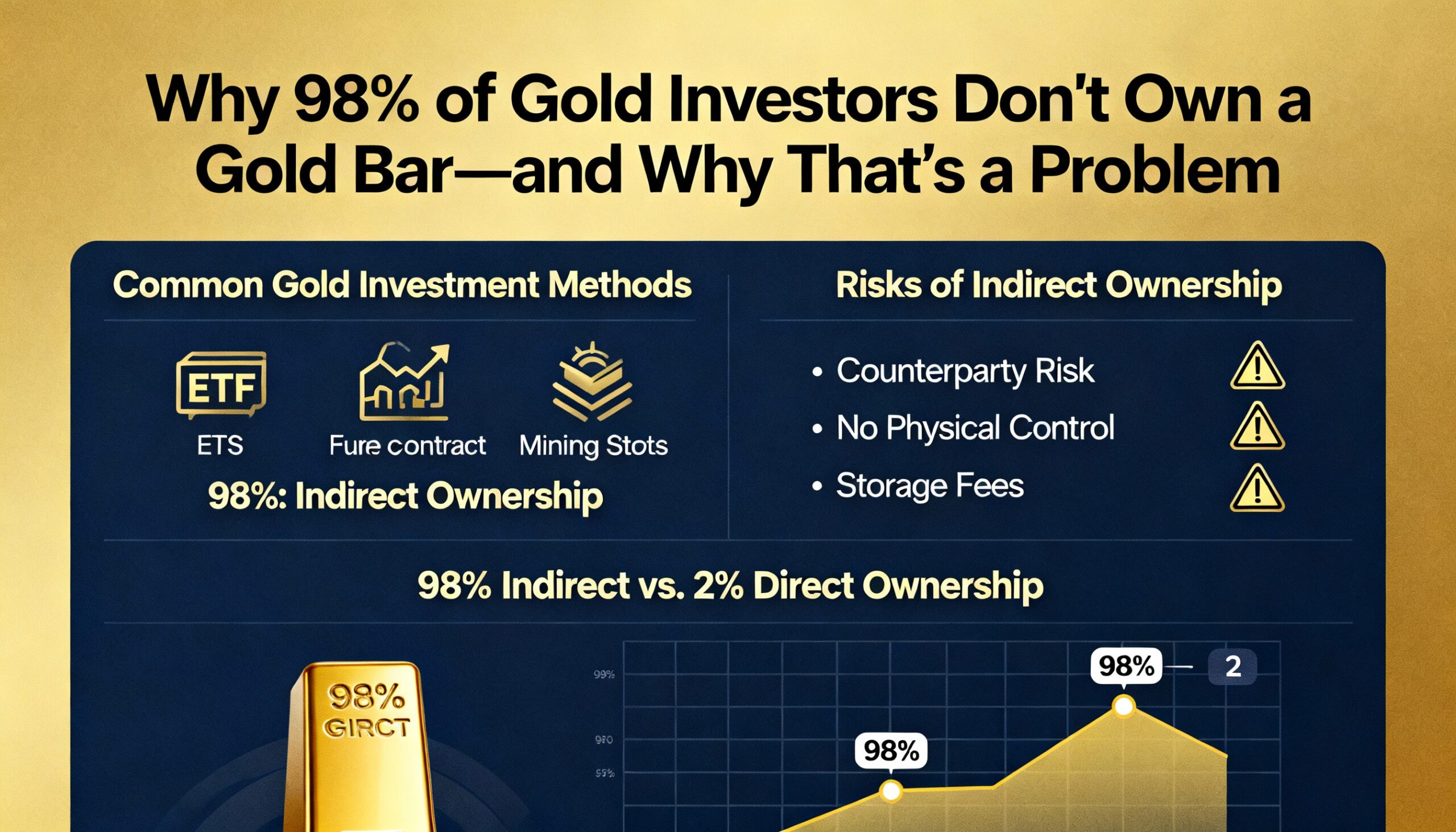
Those vulnerabilities, Schmidtke argues, stem from the dominance of “paper gold”—financial instruments such as exchange-traded funds that mirror gold prices without conferring direct ownership of physical bars.
“For most investors, owning gold really means owning a claim on gold,” Schmidtke said in an interview with CoinDesk. “It’s an IOU, not a bar sitting in your name.”
The fragility of paper claims
Paper gold has long been popular for practical reasons. It eliminates storage and insurance costs and allows investors to buy and sell gold as easily as a stock. But Schmidtke says this convenience masks a fundamental weakness.
He estimates that roughly 98% of global gold exposure is unallocated, meaning investors hold claims that are not tied to specific bars. The system has functioned smoothly for decades largely because few investors ever demand physical delivery.
That stability could be tested during a crisis.
In a scenario where fiat currencies rapidly lose value, investors may rush to claim the physical gold they believe they already own. Without clear records showing who owns which bars, fulfilling those claims would be extremely difficult.
“You can’t deliver billions of dollars’ worth of gold overnight,” Schmidtke said. “And without provable ownership, the process becomes even more constrained.”
Such stress could cause a split between physical and paper markets, with premiums on physical gold surging while paper prices lag. Schmidtke points to past dislocations in the silver market as a warning sign of how quickly these dynamics can emerge.
“We’ve already seen physical markets break away from paper pricing,” he said. “Gold won’t necessarily be different.”
Why tokenized gold matters
Schmidtke sees tokenized gold as a way to address these ownership and settlement risks.
He compares the current system to a real estate project in which investors buy shares promising future delivery of apartments but never receive deeds. When it’s time to hand over the properties, determining who owns which unit becomes slow and contentious.
Tokenized gold, by contrast, embeds ownership at the outset. With Tether Gold (XAUT), each token corresponds to a specific, allocated gold bar held in a Swiss vault. Ownership is recorded onchain, effectively creating a digital title deed that can be transferred instantly without moving the physical metal.
While physical redemption still requires logistics, Schmidtke says the key difference is certainty. Investors can verify their ownership, and settlement can occur transparently even in periods of market stress.
“Ownership and delivery are no longer tangled together,” he said.
Aurelion’s strategic shift
That logic has driven Aurelion to overhaul its treasury strategy.
The firm now holds its gold reserves in XAUT, favoring tokenized, fully allocated bullion over traditional paper exposure. Schmidtke says the structure preserves the benefits of digital assets—speed, portability, and efficiency—while retaining physical backing.
“How you own gold is just as important as whether you own it,” he said.
Schmidtke believes tokenized gold is still early in its adoption curve, particularly as investors become more focused on counterparty and settlement risk. Aurelion does not plan to reduce its holdings unless market prices fall to a “significant and sustained discount” relative to underlying gold values.
“This isn’t a short-term trade,” Schmidtke said. “It’s about building durable exposure that compounds over time.”
The firm plans to raise additional capital over the coming year to expand its gold treasury. According to CoinGecko data, Aurelion currently holds 33,318 XAUT tokens, valued at roughly $153 million.