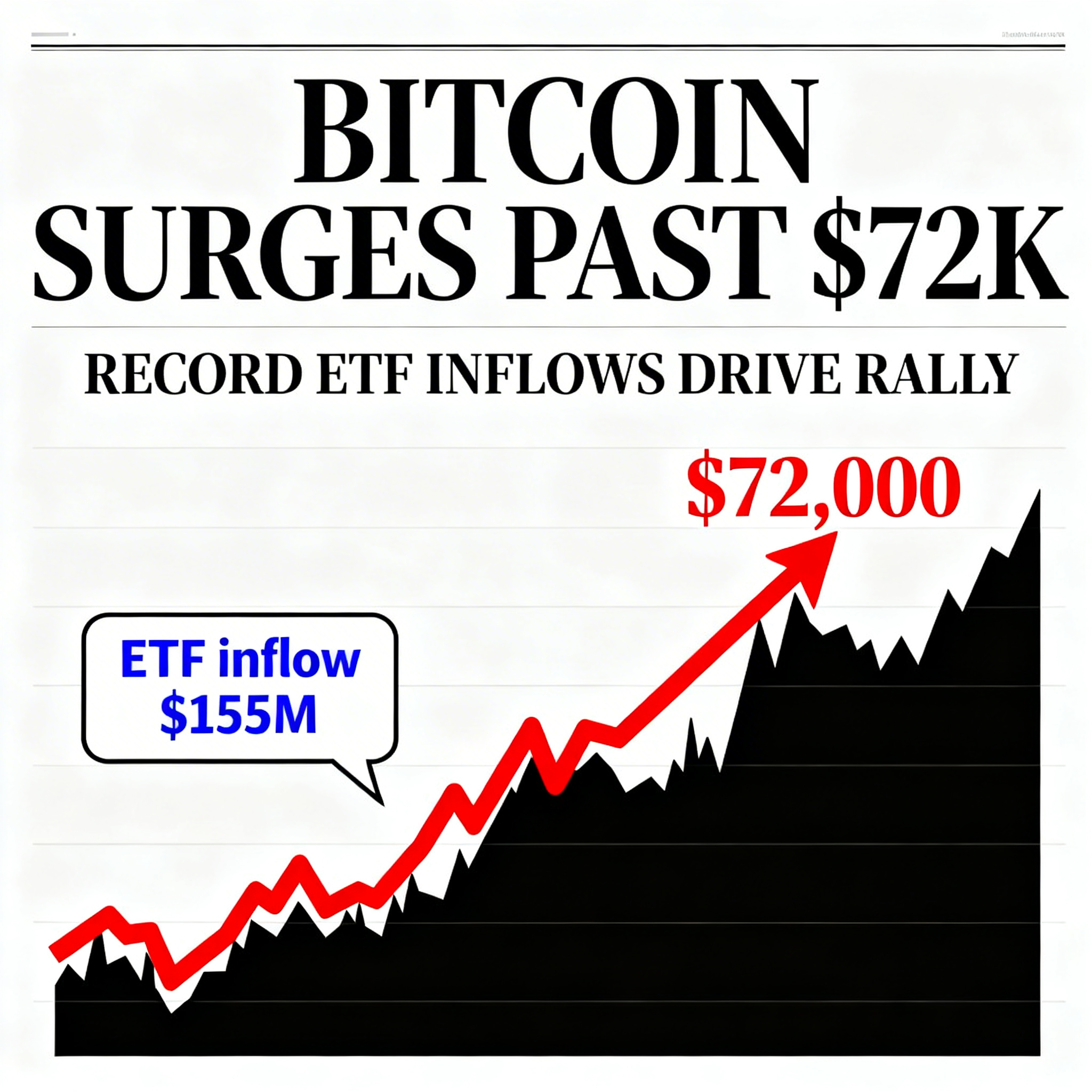
U.S. spot bitcoin ETFs recorded another $155 million in net inflows on Wednesday, extending a two-week stretch of institutional buying even as on-chain indicators suggest underlying demand for the asset remains delicate.
Bitcoin held firm on Thursday, trading near $72,500 based on market data from CoinDesk. Continued inflows into spot exchange-traded funds have helped support prices following several weeks of subdued market activity.
The latest inflows pushed total allocations into U.S.-listed spot bitcoin ETFs to about $1.47 billion over the past two weeks, according to figures compiled by SoSoValue. The surge represents a sharp shift after earlier weeks this year when the funds experienced consistent outflows.
Institutional demand appears to be regaining momentum after a slow start to the year. Since Feb. 24, investors have funneled approximately $1.7 billion into U.S. spot bitcoin ETFs, according to data from Bloomberg Intelligence previously cited by CoinDesk. The inflows suggest that some market participants are increasingly confident the market may have established a short-term price floor.
Still, analysts at Bitfinex have cautioned that ETF inflows do not always translate directly into immediate spot market demand. Authorized participants can create and even short ETF shares before purchasing the underlying bitcoin, which may delay the effect of fund flows on the asset’s price.
Even so, bitcoin’s resilience alongside steady ETF inflows during periods of geopolitical uncertainty is reinforcing its evolving position in global markets, according to some industry observers.
“Bitcoin is increasingly being repriced by the market as a geopolitical hedge rather than just a risk asset,” said Livio Weng, CEO of Bitfire. “Unlike gold, bitcoin trades around the clock and can move across borders instantly, making it a natural channel for capital during times of geopolitical stress.”
On-chain signals remain cautious
Despite the rebound in ETF flows, blockchain data indicates that underlying demand may still be weak. In a recent report, analytics firm Glassnode said buy-side momentum has cooled significantly, with the 30-day moving average of realized profits dropping about 63% since early February.
The proportion of bitcoin’s circulating supply currently held in profit has also slipped to roughly 57%, a level historically linked to the early stages of deeper bear market phases.
Glassnode further noted that the cost basis of short-term holders—around $70,000—could act as a key psychological threshold. As prices approach that level, traders who entered the market at higher prices may look to exit positions near breakeven, potentially turning rallies into distribution phases.