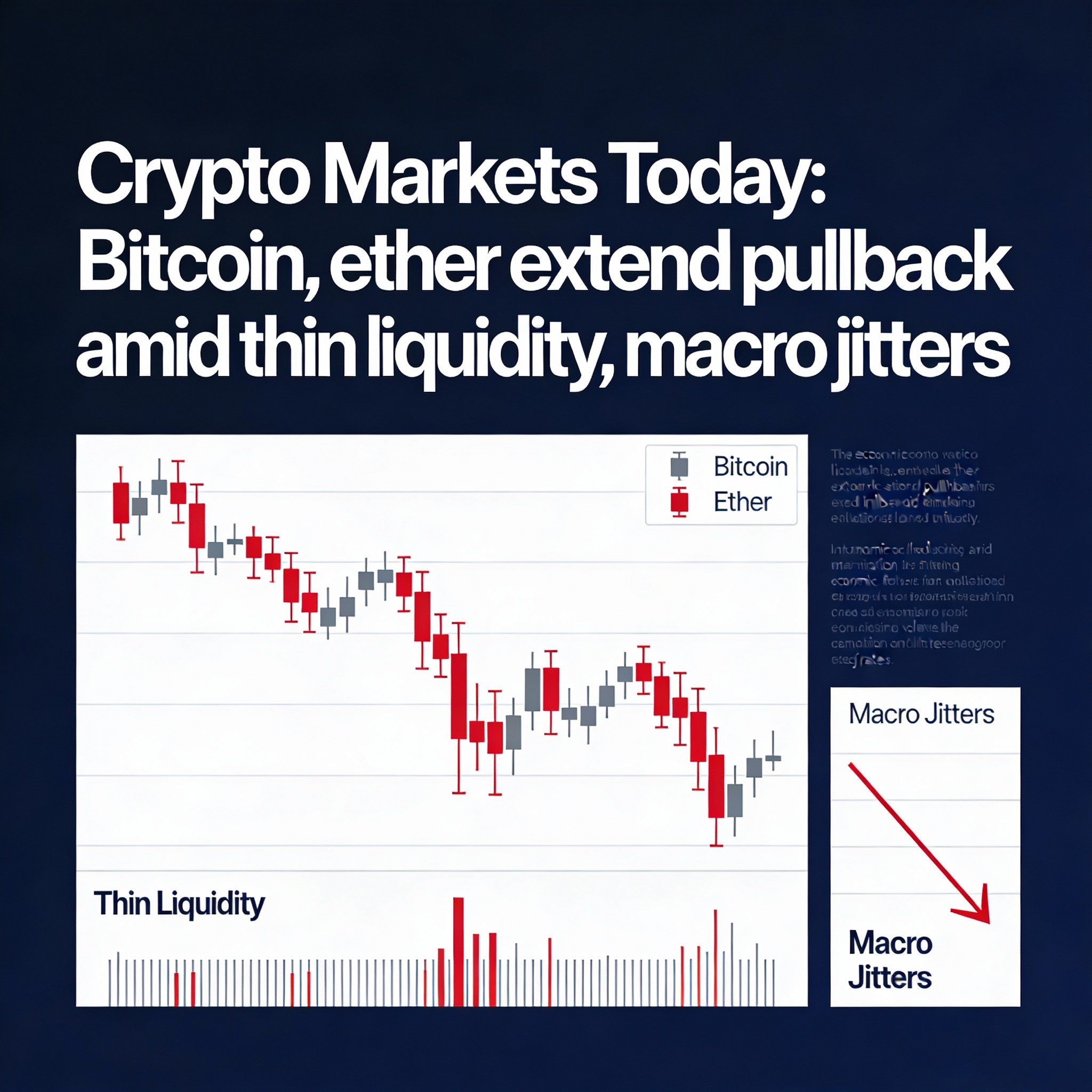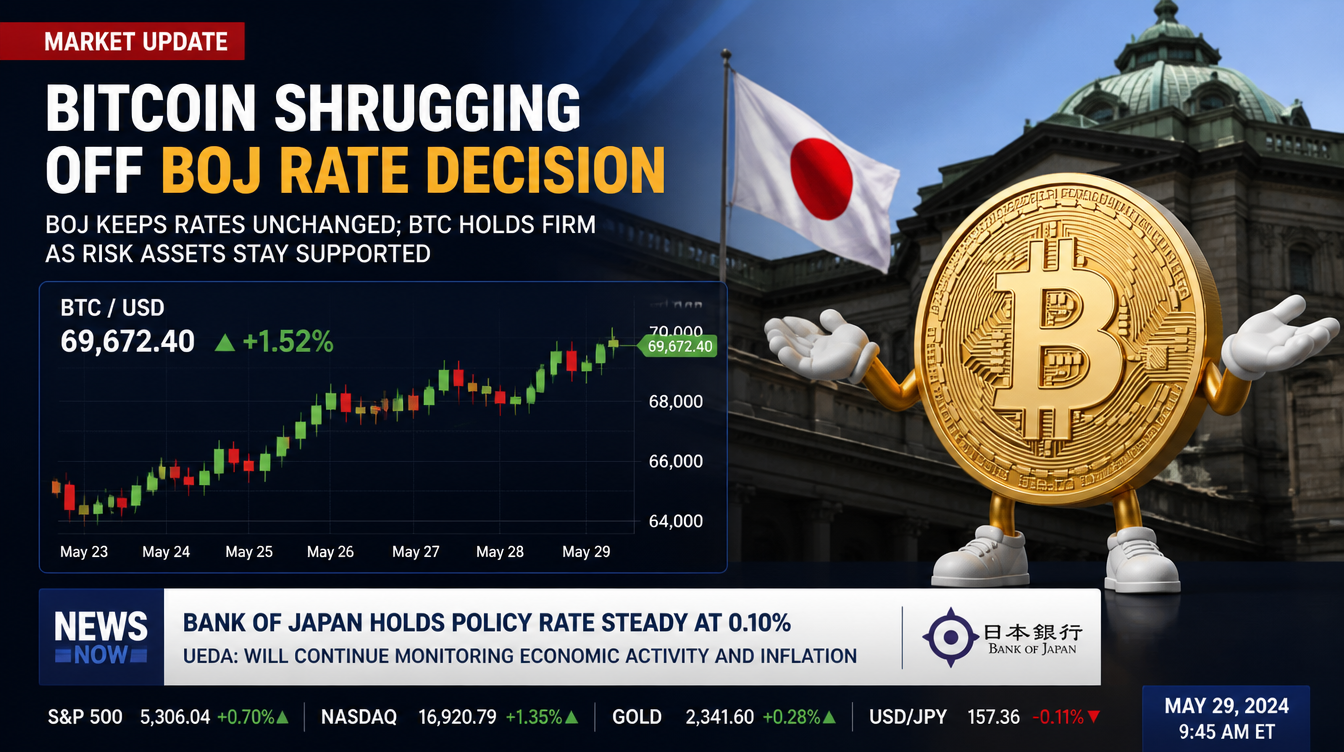
Bitcoin News Today: BTC briefly dropped to around $65,600 during the June 16 Asian session before rebounding toward $66,000 after the Bank of Japan (BOJ) raised its policy rate by 25 basis points to 1.0%—the highest level since 1995. This marks the fourth increase in its normalization cycle, which began with the exit from negative rates in March 2024.
Market reaction remained muted, with no sustained sell-off or meaningful rally. While the price action appeared stable, it reflects underlying uncertainty. Alongside the hike, the BOJ confirmed it would maintain Japanese government bond (JGB) purchases at roughly ¥2 trillion per month from April 2027, effectively pausing its previous tapering path. This dovish adjustment likely helped stabilize risk assets around the announcement.
The focus now shifts beyond whether the BOJ move is a macro shock for crypto. Instead, attention centers on whether the yen carry trade overhang—linked to four major Bitcoin corrections since early 2024—has eased or remains a latent risk. Current derivatives positioning, historical behavior, and post-decision yen trends offer no clear conclusion.
Why Bitcoin Held Steady: Fully Priced-In Move and Dovish Signals
Polymarket data showed a 98–99% probability of a rate hike ahead of the decision, leaving little room for surprise. When an outcome is nearly certain, market reactions tend to be limited, as positioning adjustments occur beforehand. This explains the absence of a sharp sell-off more accurately than narratives of Bitcoin decoupling from Japanese policy.
The BOJ’s decision to pause bond tapering reinforced a dovish tone. By maintaining JGB purchases rather than shrinking its balance sheet further, policymakers signaled that tightening would remain gradual. This matters for yen-funded carry trades, which depend more on the pace of normalization and currency strength than on rate levels alone.
Following the decision, the yen remained above 156 per US dollar, keeping the rate differential with the Federal Reserve wide and allowing carry trades to persist. Crypto derivatives data from TradingPedia showed $488 million in liquidations on June 16, including $365 million in short positions—pointing to a short squeeze rather than forced long liquidations.
Bitcoin and BOJ Tightening: A Pattern of Drawdowns
Despite the current calm, historical patterns suggest caution. Bitcoin has experienced four notable corrections tied to BOJ tightening cycles since 2024. After the March 2024 hike—the first in 17 years—BTC fell roughly 23%. The July 2024 hike preceded a 25% decline, while the January 2025 increase was followed by a drop exceeding 30%.
Bitget research places these declines within an 18–28% range, consistent with SignalPlus analysis linking BOJ tightening cycles to yen strength and Bitcoin sell-offs driven by carry trade unwinds.
The mechanism is structural. Institutions borrow yen at low rates and deploy capital into higher-yielding assets such as equities, bonds, and cryptocurrencies. When the yen strengthens sharply, the cost of servicing those loans rises, forcing deleveraging. Assets are sold to repay debt, and Bitcoin—given its deep liquidity and continuous trading—absorbs a significant share of that selling pressure.
Applying this framework to the current cycle is complicated by one key difference: previous corrections followed hikes that included elements of surprise or a more hawkish tone than markets had priced in, a factor less evident this time.
However, this does not eliminate downside risk. As noted by Blockonomi, Bitcoin’s near-term stability depends on continued yen weakness and a gradual BOJ policy path—conditions that can shift quickly. Notably, prior sell-offs also began with brief periods of stability before accelerating as yen strength triggered broader carry trade unwinds.