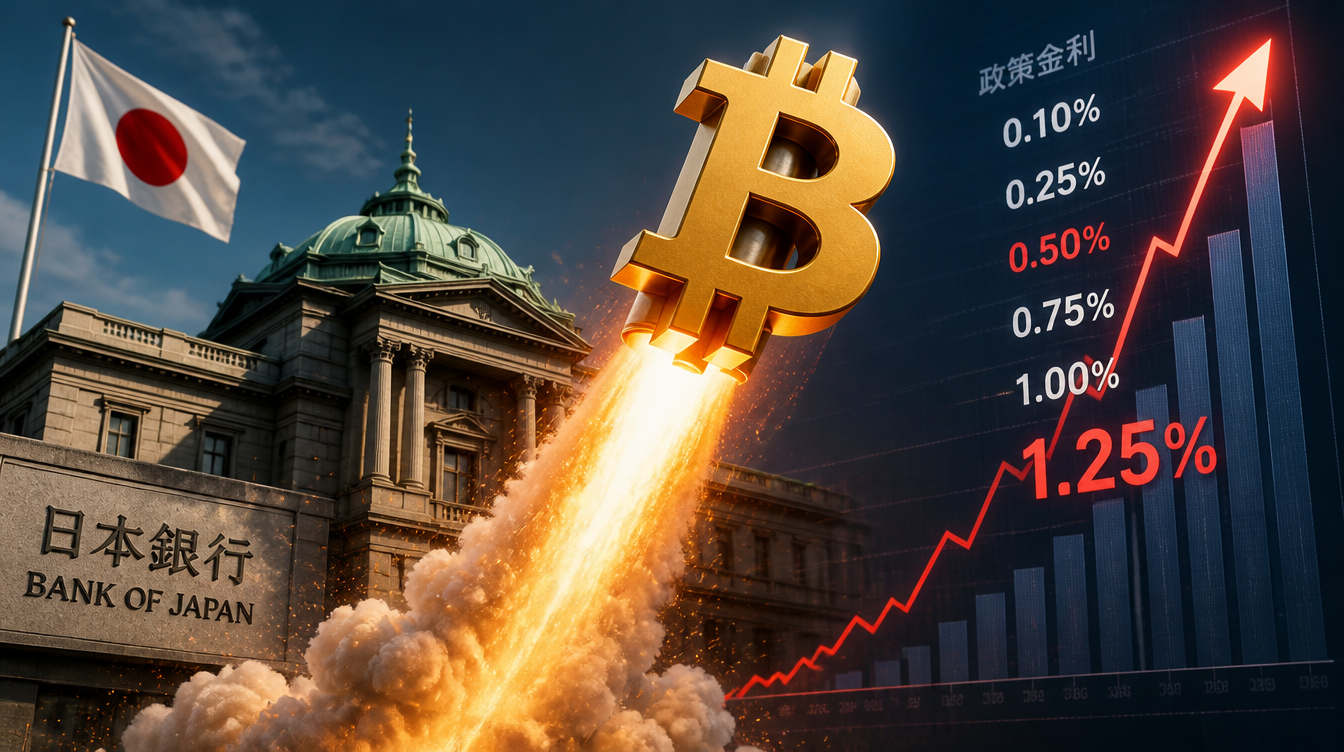
The Bank of Japan raised its benchmark interest rate by 25 basis points to 1%, the highest level since 1995.
Bitcoin (BTC) bounced back from early Asian-session losses after the BOJ delivered a widely anticipated rate hike to a 31-year high in its ongoing effort to tackle inflation.
The decision, announced at around 3:19 UTC on June 16, lifted rates from 0.75% to 1%. While broadly in line with expectations, policymakers also signaled the possibility of further tightening, while emphasizing the need to maintain financial stability.
The central bank pointed to rising inflation risks, noting that higher oil prices are being passed through to consumers faster than expected amid geopolitical tensions. This suggests the BOJ remains open to additional hikes if price pressures persist.
Japan is now seeing stronger inflation after years of subdued price growth, with wholesale inflation climbing more than 6% year-on-year in May, the fastest pace in three years. Headline inflation stood at 1.4% in April, still below the BOJ’s 2% target.
Following the announcement, Bitcoin moved from around $65,600 to roughly $66,000, while the Japanese yen edged slightly weaker against the U.S. dollar.
Although rate hikes are typically negative for risk assets like cryptocurrencies, the BOJ’s long history of ultra-loose monetary policy means its actions often have broader implications for global liquidity.
In this case, Bitcoin’s recovery appeared to be supported by a more dovish detail in the policy statement: the decision to pause its bond tapering plan.
By keeping monthly Japanese government bond purchases steady at around 2 trillion yen from April 2027, the BOJ signaled an effort to prevent excessive upward pressure on long-term yields. This helped ease concerns about rising borrowing costs and supported broader market sentiment.
Overall, while the rate hike itself was expected, the softer stance on bond purchases likely helped reassure investors and contributed to Bitcoin’s rebound.