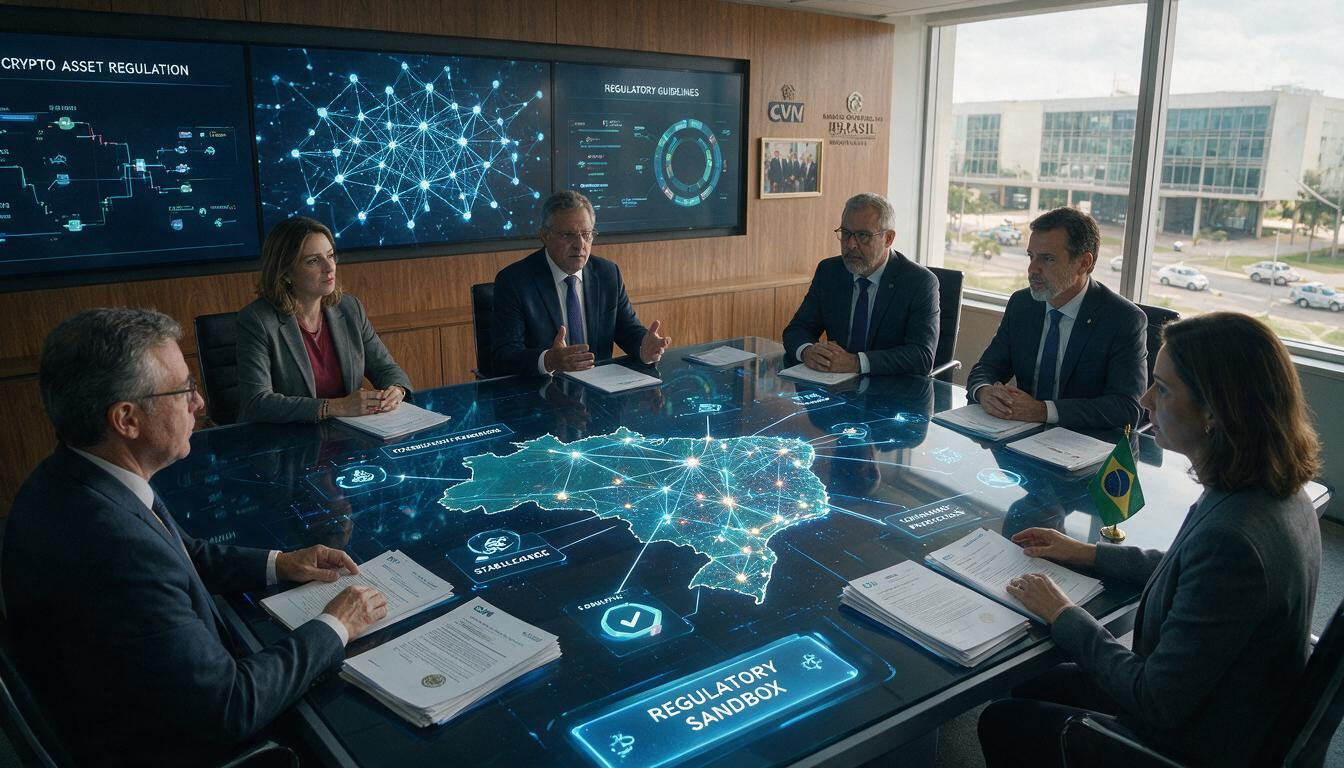
Brazil’s securities watchdog, the Comissão de Valores Mobiliários (CVM), has formed a dedicated working group to design a pilot framework for regulating tokenized securities.
The proposed framework will address several important issues linked to blockchain-based securities, including how ownership records are maintained, how private keys are managed, the possibility of reversing transactions and determining liability when technical problems occur.
According to the regulator, the initiative will cover the registration, custody, trading and settlement of securities that rely on distributed ledger technology.
The newly created group is expected to present its initial proposal to the CVM board within 60 days of its official launch. The regulator will then conduct a wider review over a 120-day period, with the option to extend the process by an additional month.
The task force includes representatives from 14 CVM departments and may bring in feedback from government bodies, industry associations, self-regulatory organizations and outside experts. The review will also examine cybersecurity threats, international regulatory frameworks and insights gained from earlier blockchain sandbox projects.
Brazil’s current securities rules are based on the economic nature of an asset rather than the technology behind it. The CVM previously stated in 2022 that the use of blockchain does not automatically change an asset’s classification under securities law.
The latest review will instead focus on the broader infrastructure and market structure supporting tokenized assets.
Blockchain-based systems can combine responsibilities traditionally handled by separate financial institutions, including exchanges, custodians, registrars, depositories and settlement platforms. This creates new regulatory challenges around identifying the official holder of an asset, protecting private keys, managing transaction reversals and deciding who bears responsibility during system failures.
Brazil’s tokenized asset industry has continued to expand. According to RWA Monitor, a Brazilian tracking platform, the country’s real-world asset market has reached nearly 12 billion reais, equivalent to about $2.34 billion. Debentures and commercial paper account for approximately $1.3 billion of that value.
The CVM has already experimented with blockchain-based securities issuance and secondary market trading through its regulatory sandbox program. The new working group will analyze these previous trials while developing a broader framework for securities that are issued, stored and traded using distributed ledger technology.