Spot Bitcoin ETFs drew $226.8 million in inflows on July 20, closing out a five-day streak that totaled $723 million, with BlackRock’s IBIT, Fidelity’s FBTC, and ARK’s ARKB leading the charge.
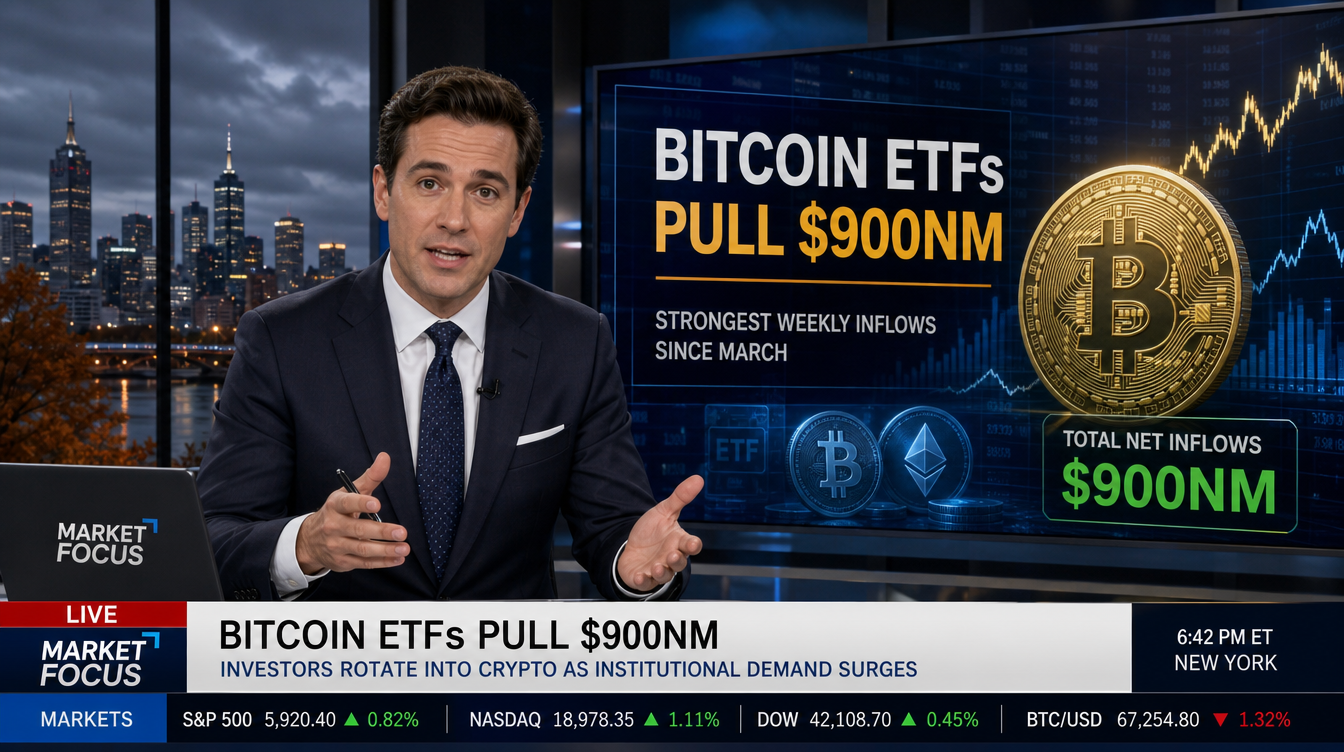
The trend extended on July 21, when U.S. spot Bitcoin ETFs added another $206 million in net inflows, according to CoinGlass. This marked six straight days of positive flows, lifting the total above $900 million—the longest uninterrupted streak since May.
The inflow momentum aligned with Bitcoin briefly reclaiming the $66,000 level before pulling back, while overall market sentiment shifted back to neutral after weeks in negative territory.
This development points to more than a simple recovery. It reflects a renewed wave of institutional participation following one of the harshest periods of outflows since spot Bitcoin ETFs launched in January 2024.
Focus has now shifted from whether June’s sell-off has fully played out to whether the current inflow pace can meaningfully influence the medium-term supply-demand balance.
The reversal began after a 10-day stretch of outflows in late June that saw more than $2.7 billion exit the ETF complex. Momentum flipped on July 2, when a single session brought in $221.7 million in inflows.
Fidelity’s FBTC and ARK’s ARKB led that session, while BlackRock’s IBIT recorded a rare outflow of roughly $40 million before rebounding in subsequent days.
The recovery quickly gained traction. By July 6, inflows reached $265.7 million, with IBIT alone contributing around $209 million—highlighting a shift in leadership that carried through later sessions.
After a brief pause, inflows resumed between July 14 and 17, posting daily totals of $181 million and $108 million, before culminating in the $226.8 million recorded on July 20. Over the two-week span, total inflows reached roughly $273 million, marking a second consecutive week of gains.
Throughout this period, IBIT, FBTC, and ARKB consistently drove inflows, with leadership rotating among issuers—suggesting demand is broadly distributed across institutional mandates rather than concentrated in a single fund.
Regulatory tailwinds have also supported sentiment. In the U.S., the White House resolved an ethics dispute that had stalled the CLARITY Act, a bipartisan bill aimed at defining regulatory responsibilities between the SEC and CFTC.
This breakthrough increases the chances of Senate progress before the August recess, removing a key layer of uncertainty that had weighed on institutional positioning.
Meanwhile, Russia’s State Duma approved a wide-ranging crypto law on July 21, formally recognizing digital assets as property, introducing trading and custody frameworks under the Bank of Russia, enabling cross-border settlements, and banning domestic crypto payments.
The legislation is set to take effect on September 1, 2026, with some provisions phased in later. Non-qualified retail investors will face an annual cap of 300,000 rubles (around $3,800), while qualified investors will remain uncapped but subject to risk assessments.
On-chain data from CryptoQuant provides additional context, showing that wallets holding between 1,000 and 10,000 BTC sharply increased accumulation after Bitcoin dropped below $55,000 earlier in July. Total whale accumulation for the month surpassed 66,700 BTC, valued at roughly $4.4 billion.
CryptoQuant noted that the buying surge intensified specifically after the sub-$55,000 level, reflecting behavior consistent with previous large-holder accumulation phases.
At the same time, Strategy raised $500 million through a convertible notes offering while keeping its Bitcoin holdings unchanged—signaling balance sheet strengthening without adding immediate selling pressure to the market.