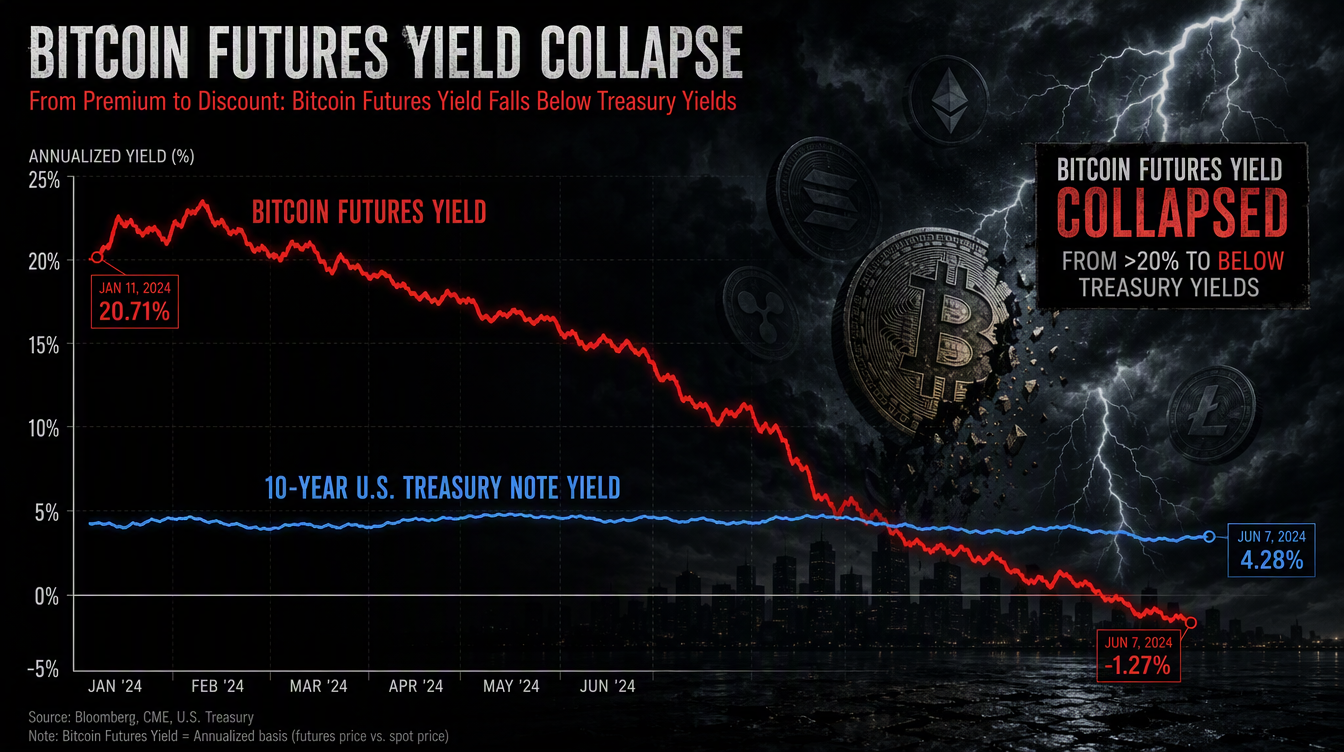
Bitcoin futures’ once-attractive carry trade has nearly vanished, with quarterly basis yields staying below two-year U.S. Treasury yields since February. The trend highlights fading arbitrage opportunities and points to a more mature digital asset market.
A strategy that once generated significant profits for traders has lost its advantage, as bitcoin futures have consistently delivered weaker returns than traditional government bonds for several months.
During the 2021 crypto boom, bitcoin futures carry trades regularly produced annualized yields above 20% across both regulated and offshore exchanges. The strategy typically involved shorting bitcoin futures while maintaining a matching spot bitcoin position, allowing traders to capture the premium between futures and spot prices. Today, those returns have dropped to roughly 3%, compared with an average yield of about 3.8% on two-year U.S. Treasury notes.
Traders have historically used futures contracts to profit from differences between futures prices and spot prices, a gap known as the basis. However, annualized bitcoin futures basis returns have remained below two-year Treasury yields for more than five months, according to Glassnode data.
Glassnode noted that three-month bitcoin futures basis yields have stayed below Treasury rates since February, representing one of the longest such periods ever recorded. The only comparable stretch occurred from August 2022 to January 2023, ending near the previous market cycle low.
The current decline has pushed the duration of below-Treasury futures yields to 157 consecutive days.
When futures carry returns fall beneath short-term Treasury yields, investors lose much of the incentive to allocate capital toward arbitrage strategies. A trader can now earn a higher return from government bonds while avoiding the added volatility and risk associated with bitcoin futures positions.
The weaker carry environment has also contributed to slowing activity in bitcoin derivatives markets. July futures trading volume dropped to slightly above $880 million, extending the decline from February’s peak of $1.47 trillion, according to Coinglass. Broader weakness across the crypto market has further reduced trading demand.
Despite the decline in futures premiums, the trend may indicate a healthier and more efficient market. Basis trades rely on pricing differences between related markets, so shrinking yields suggest those gaps are narrowing. This could lead to improved liquidity, tighter bid-ask spreads, more efficient hedging, and fewer extreme arbitrage opportunities as bitcoin markets continue to develop.