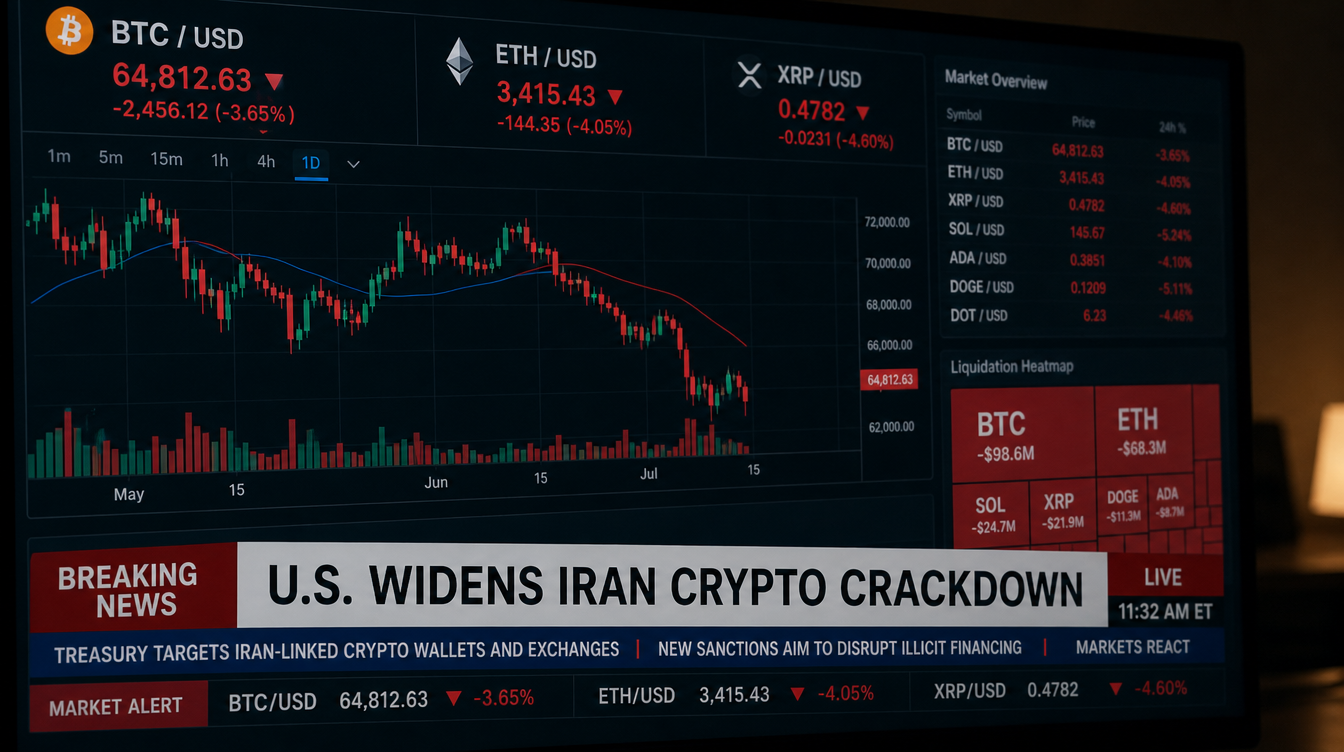
The U.S. Treasury has expanded its crackdown on Iran’s crypto sector by sanctioning two exchanges, Shelbit and Iran-based Aban Tether, as Washington seeks to limit Tehran’s access to digital assets and foreign currency.
The Treasury said the platforms helped Iranian entities move money beyond the reach of the conventional banking system. The action is part of a broader U.S. campaign targeting cryptocurrency networks allegedly used to support the Islamic Revolutionary Guard Corps (IRGC).
The Treasury’s Office of Foreign Assets Control (OFAC) announced the sanctions Friday. The agency also designated Siavash Kayvanpour and several companies linked to him in Georgia, Poland, and the United Arab Emirates.
Despite its name, Aban Tether does not appear to be affiliated with Tether, the company behind the USDT stablecoin. Tether has been contacted to confirm the relationship.
Treasury officials said IRGC-linked wallets transferred more than $1 million in crypto to Shelbit addresses, while more than $2 million moved from Shelbit wallets to addresses associated with the IRGC. Wallets connected to Kayvanpour also reportedly sent more than $2 million to Nobitex, Iran’s largest crypto exchange.
OFAC said Aban Tether handled millions of dollars in transactions involving Iranian exchanges that have already been sanctioned, including Nobitex, Wallex, Bitpin, and Ramzinex.
The Treasury also imposed sanctions on a separate network of foreign-exchange firms, shell companies, and individuals that it accused of helping Iran’s shadow banking system move hundreds of millions of dollars. Some of the funds were allegedly linked to overseas oil sales.
Treasury Secretary Scott Bessent said Iran’s use of cryptocurrency and shadow financial networks demonstrates why Washington’s “Economic Fury” campaign remains necessary. He said the department would continue dismantling illicit financial channels operating through dollars, rials, and digital assets.
The new designations come as the U.S.-Iran conflict raises the stakes in Washington’s efforts to isolate Tehran from global financial markets and foreign currency. Crypto can offer sanctioned entities another way to move money after traditional financial institutions cut them off, although blockchain transactions can also leave records that investigators and analytics companies can trace.
The latest action follows several previous U.S. measures targeting Iran’s cryptocurrency infrastructure.
In January, the Treasury sanctioned Zedcex and Zedxion, becoming the first crypto exchanges targeted under Iran-specific financial sanctions. Nobitex and several other Iranian exchanges were added to the blacklist in June.
Last month, the U.S. sanctioned four crypto wallets linked to Iran’s central bank. Tether then froze roughly $131 million held in those wallets. Washington also sanctioned two Iranian maritime insurance companies over an alleged operation to channel funds to the IRGC.
The widening campaign is increasing scrutiny on crypto exchanges and stablecoin issuers, which face growing pressure to identify Iranian-linked assets and prevent sanctioned entities from transferring funds through digital-asset networks.